Showing posts with label STS-135. Show all posts

Sunday, April 12, 2026

Photo of the Day: Marking 45 Years Since the Launch of STS-1...

Space shuttle Columbia lifts off from Launch Complex 39A at NASA's Kennedy Space Center in Florida...on April 12, 1981.
NASA

Hail, Columbia! Just thought I'd share this iconic image of NASA's first space-worthy orbiter lifting off from Kennedy Space Center's Launch Complex 39A on April 12, 1981. And two days later, this test flight—known as STS-1—would come to a successful end when astronauts Robert Crippen and John Young piloted Columbia to a landing in the middle of a dry lake bed at Edwards Air Force Base in California. And so began the 30-year space shuttle program that included such highlights as the launch of the Hubble Space Telescope, the deployment of the Magellan robotic probe to Venus, the send-off of the Galileo orbiter to Jupiter, and eventually, the commencement of construction on the International Space Station.

But sadly, this program would also include two tragedies that claimed the lives of 14 brave astronauts (in 1986 and 2003), and the in-flight loss of Columbia herself.

Even though Columbia didn't ultimately make her way into a museum like Enterprise, Discovery, Atlantis and Endeavour did, her legacy will live on. The storied space shuttle program gave rise to Artemis...which utilizes shuttle hardware on the Space Launch System and Orion, respectively, as they are now looking ahead to their third lunar flight on Artemis 3. Columbia may have spent all of her career in low-Earth orbit, but the amount of knowledge gleamed from flying her and her sister ships (excluding Enterprise, the orbiter prototype) for over three decades have no doubt played a role in guiding astronauts back to the Moon for the first time since Apollo 17 in 1972.

Columbia may be gone, but the spirit of human spaceflight (which began 60 years ago today with the launch of Soviet cosmonaut Yuri Gagarin on Vostok 1) remains stronger than ever. Ad astra.

Thursday, February 27, 2025

Katy Perry Will Be Among the Six All-Female Passengers Flying on the Next Suborbital Flight from Texas!

The all-female crew for Blue Origin's NS-31 mission.
Blue Origin

Blue Origin Announces Crew For New Shepard’s 31st Mission (News Release)

Blue Origin today announced the six people flying on its NS-31 mission. The crew includes Aisha Bowe, Amanda Nguyen, Gayle King, Katy Perry, Kerianne Flynn and Lauren Sánchez, who brought the mission together. She is honored to lead a team of explorers on a mission that will challenge their perspectives of Earth, empower them to share their own stories, and create lasting impact that will inspire generations to come.

Meet the NS-31 Crew:

Aisha Bowe

Aisha is a former NASA rocket scientist, entrepreneur and global STEM advocate. She is the CEO of STEMBoard, an engineering firm recognized twice on the Inc. 5000 list of America’s fastest-growing private companies, and the founder of LINGO, an edtech company on a mission to equip one million students with essential tech skills. Of Bahamian heritage, Aisha hopes her journey from community college to space will inspire young people in the Bahamas and around the world to pursue their dreams.

Amanda Nguyen

Amanda is a bioastronautics research scientist. She graduated from Harvard, and conducted research at the Harvard Center for Astrophysics, MIT, NASA and the International Institute for Astronautical Sciences. Amanda worked on the last NASA shuttle mission, STS-135, and the Kepler exoplanet mission.

For her advocacy for sexual violence survivors, she was nominated for the Nobel Peace Prize and awarded TIME’s Woman of the Year. As the first Vietnamese and Southeast Asian woman astronaut, Amanda’s flight is a symbol of reconciliation between the United States and Vietnam, and will highlight science as a tool for peace.

Gayle King

Gayle is an award-winning journalist, co-host of CBS Mornings, editor-at-large of Oprah Daily, and the host of Gayle King in the House on SiriusXM radio. In a career spanning decades, King has been recognized as a gifted, compassionate interviewer able to break through the noise and create meaningful conversations. As someone who is staying open to new adventures, even ones that scare her, Gayle is honored to be part of Blue Origin’s first all-female flight team and is looking forward to stepping out of her comfort zone.

Katy Perry

Katy is the biggest-selling female artist in Capitol Records’ history and one of the best-selling music artists of all time with over 115 billion streams. Aside from being a global pop superstar, Katy is an active advocate of many philanthropic causes, including as a UNICEF Goodwill Ambassador where she uses her powerful voice to ensure every child’s right to health, education, equality and protection, and her own Firework Foundation, which empowers children from underserved communities by igniting their inner light through the arts.

Katy is honored to be a part of Blue Origin's first all-female crew and hopes her journey encourages her daughter and others to reach for the stars, literally and figuratively.

Kerianne Flynn

After a successful career in fashion and human resources, Kerianne Flynn has spent the last decade channeling her energy into community-building through board service and nonprofit work with The Allen-Stevenson School, The High Line and Hudson River Park. Passionate about the transformative power of storytelling, Kerianne has produced thought-provoking films such as This Changes Everything (2018), which explores the history of women in Hollywood, and LILLY (2024), a powerful tribute to fair-pay advocate Lilly Ledbetter. Kerianne has always been drawn to exploration, adventure and space, and hopes her Blue Origin space flight serves as an inspiration for her son, Dex, and the next generation of dreamers to reach for the stars.

Lauren Sánchez

Lauren is an Emmy Award-winning journalist, New York Times bestselling author, pilot, Vice Chair of the Bezos Earth Fund, and mother of three. In 2016, Sánchez, a licensed helicopter pilot, founded Black Ops Aviation, the first female-owned and operated aerial film and production company. Sánchez released her New York Times bestselling debut children's book, The Fly Who Flew to Space, in 2024.

Sánchez's work in aviation earned her the Elling Halvorson Vertical Flight Hall of Fame Award in 2024 for her expertise as a helicopter pilot and aviation businesswoman. Sánchez’s goal is to inspire the next generation of explorers.

This mission will be the 11th human flight for the New Shepard program and 31st in its history. To date, the program has flown 52 people above the Kármán line, the internationally-recognized boundary of space. This is the first all-female flight crew since Valentina Tereshkova’s solo spaceflight in 1963.

Source: Blue Origin

****

The New Shepard rocket carrying the six-member NS-30 crew lifts off from Blue Origin's Launch Site One in West Texas...on February 25, 2025.
Blue Origin

Friday, July 12, 2024

America's Next-Generation Spaceplane May Land in Other Parts of the World...

An artist's concept of the Dream Chaser spaceplane about to touch down on a runway.
Sierra Space

New Sierra Space Partners Accelerate Effort to Bring Dream Chaser® Spaceplane to Japan (Press Release)

LOUISVILLE, Colo. – Sierra Space, a leading commercial space-tech company that is Building a Platform in Space to Benefit Life on Earth®, announced today that two additional partners will help accelerate the investigation into Spaceport Oita in Kunisaki, Oita, Japan, as a potential landing site in Asia for Sierra Space’s Dream Chaser®, reaffirming its plans to expand a global network of return locations for the revolutionary new commercial spaceplane.

MUFG Bank, Ltd., and Tokio Marine & Nichido Fire Insurance Co., Ltd., anchor investors in Sierra Space’s Series B funding round, are joining forces with Sierra Space, Oita Prefecture, Kanematsu Corporation and Japan Airlines to conduct a comprehensive utilization and landing site study at Spaceport Oita. The consortium will work together to identify and develop new business opportunities for Sierra Space’s Dream Chaser in Japan and across the Asian continent.

“Our dual-use and fully-reusable Dream Chaser spaceplane will transform space travel,” said Sierra Space CEO Tom Vice. “Dream Chaser’s unique ability to land on compatible commercial runways worldwide – transporting precious cargo efficiently in a low-g landing – opens myriad, new global economic opportunities.”

“Two major Sierra Space investors, MUFG Bank, Ltd., and Tokio Marine and Nichido Fire Insurance Co., Ltd., will help extend the robust commercial economy we’re building in low-Earth Orbit to businesses and academic institutions in Japan and across the Asia-Pacific region. We are honored to share this vision with them, along with our partners in Oita Prefecture, Kanematsu and Japan Airlines.”

Dream Chaser – the world’s first winged commercial spacecraft – recently arrived at NASA’s Kennedy Space Center and entered into operations ahead of its first International Space Station (ISS) servicing mission. The Dream Chaser fleet is growing rapidly, with a second spaceplane under construction, and the company is eyeing multiple global partnerships to establish the following runway landing sites in addition to Oita, Japan:

Kennedy Space Center, Florida

Space Florida holds a Launch and Reentry Site Operator License, issued by the FAA in January 2021, allowing Dream Chaser to land at Space Florida’s Launch & Landing Facility (LLF). The spaceplane, dubbed Tenacity®, will be the first spacecraft to travel from the ISS to the historic runway since space shuttle Atlantis touched down on the iconic landing strip in 2011.

Spaceport Cornwall, U.K.

Sierra Space’s Memorandum of Understanding with Spaceport Cornwall in June 2021 followed the successful completion of a Concept of Operations (CONOPS) funded by the UK Space Agency that examined U.S.-U.K. regulatory framework, return mission trajectory analysis, risk analysis, environmental and infrastructure review, as well as a consideration of present and future supply chain capability. The resulting agreement specifically identifies Spaceport Cornwall as a suitable and viable landing site.

Huntsville, Alabama

In May 2022, the FAA issued a license allowing the Huntsville International Airport in Alabama to accept landings from Sierra Space’s Dream Chaser spaceplane. The FAA license evaluation process involved environmental and safety reviews; the agency will work with the Huntsville Airport to develop the necessary notifications and other procedures for safely and efficiently integrating commercial space reentries into its operations.

Spaceport America, New Mexico

Spaceport America, located in southern New Mexico, is the most recent addition to a growing list of compatible runways worldwide where the Dream Chaser could land. The agreement was signed in June 2022.

This latest addition to the portfolio solidifies Spaceport America as a versatile location, encapsulating Sierra Space’s vision of accessible space for all.

Sierra Space products and programs are working towards a more accessible space economy. As the next generation of space transportation, the first Dream Chaser is in pre-launch preparations for its inaugural cargo supply and return mission for NASA, and will deliver up to 12,000 pounds of cargo to the ISS per flight.

Dream Chaser is a reusable spaceplane, uniquely capable of a smooth 1.5 low-g re-entry for crew and cargo transportation with the ability to land on existing commercial runways worldwide.

Source: Sierra Space

Wednesday, February 1, 2023

On This Day in 2003: The Columbia is Lost...

A video screenshot showing debris falling out of the sky after the orbiter Columbia disintegrated above Texas during re-entry into Earth's atmosphere...on February 1, 2003.

It was 20 years ago this morning, at 8:59 AM, EST (5:59 AM, PST), that tragedy took place in the skies above Texas and Louisiana.

15 minutes away from touching down at Kennedy Space Center's Shuttle Landing Facility in Florida to complete mission STS-107, Columbia fell short of its destination when the searing heat of re-entry penetrated the orbiter thanks to a hole in its left wing caused by a piece of foam that broke off of Columbia's external tank during its January 16 launch...and struck the wing's reinforced carbon–carbon panel less than a second later. The seven astronauts onboard didn't know what was about to befall them until it was too late.

Rest In Peace, Rick D. Husband, William C. McCool, David M. Brown, Kalpana Chawla, Michael P. Anderson, Laurel B. Clark and Ilan Ramon. As former President George W. Bush said in a nationally-televised speech to stunned Americans a few hours after the disaster:

"The cause in which they died will continue. Mankind is led into the darkness beyond our world by the inspiration of discovery and the longing to understand. Our journey into space will go on."

A group photo of the STS-107 astronauts that was recovered after the Columbia disaster.
NASA / Rick D. Husband

And indeed, our journey into space did go on. While President Bush announced in 2004 the eventual retirement of the space shuttle fleet, Columbia's sister ships Discovery, Atlantis and Endeavour flew long enough to see that the core assembly of the International Space Station was completed in 2011, the Hubble Space Telescope enjoyed a visit by servicing astronauts one last time in 2009, and the baton would be passed to commercial companies like SpaceX, as well as NASA's next spaceship and super heavy-lift booster: the Orion Multi-Purpose Crew Vehicle and the Space Launch System rocket.

The Columbia's loss led to the end of the Space Shuttle Program, but it also resulted in something grander: Our return to the Moon and beyond.

From the Vision for Space Exploration in 2004 to Constellation in 2006, and to the now-fledgling Artemis Program, humanity's journey back to deep space is only just beginning...

And that is the true legacy of the STS-107 astronauts. Ad astra.

A snapshot of NASA's Orion spacecraft with the Moon visible in the distance...on November 20, 2022.
NASA

Sunday, October 2, 2022

The Core Stage for the Next SLS Vehicle Has Received Its Final Components...

The four RS-25 engines that will fly on Artemis 2's Space Launch System rocket have arrived at NASA's Michoud Assembly Facility in New Orleans, Louisiana.
NASA / Michael DeMocker

Artemis II Rocket Engines Arrive at NASA’s Michoud Assembly Facility (News Release - September 29)

Teams have delivered the four RS-25 engines that will help power Artemis II, the first crewed mission of NASA’s Artemis missions and second flight of the Space Launch System (SLS) rocket, to NASA’s Michoud Assembly Facility in New Orleans. Later this fall, the engines will be installed into the Artemis II core stage, which is in the final phase of assembly at Michoud where it was manufactured. Trucks transported the engines in special containers from NASA’s Stennis Space Center near Bay St. Louis, Mississippi, where they were upgraded with new controllers.

Together, the four RS-25 engines will produce more than 2 million pounds of thrust during ascent to help send Artemis II astronauts beyond Earth’s orbit to lunar orbit. Technicians from NASA and Aerojet Rocketdyne, the prime contractor for the engines, will store the engines at Michoud and prepare them for integration into the engine section at the bottom of the rocket’s 212-foot-tall core stage. They will use a pathfinder engine to practice the intricate process of installing each engine on the stage prior to installing the flight engines.

The first engine – Engine E2047 -- of the flight set flew on 15 space shuttle missions, including the final shuttle mission STS-135. The second engine of the set – Engine E2059 -- previously flew on five shuttle missions. The third and fourth engines – E2062 and E2063 – are new engines that include some previously flown hardware.

With the Artemis missions, NASA will land the first woman and first person of color on the Moon and establish long-term exploration in preparation for missions to Mars. SLS and NASA’s Orion spacecraft, along with the commercial Human Landing System and Gateway in orbit around the Moon, are NASA’s backbone for deep space exploration. SLS is the only rocket that can send Orion, astronauts, and supplies to the Moon in a single mission.

Source: NASA.Gov

Tuesday, March 29, 2022

Photos of the Day: Snapshots from My Latest Trip to Cape Canaveral!

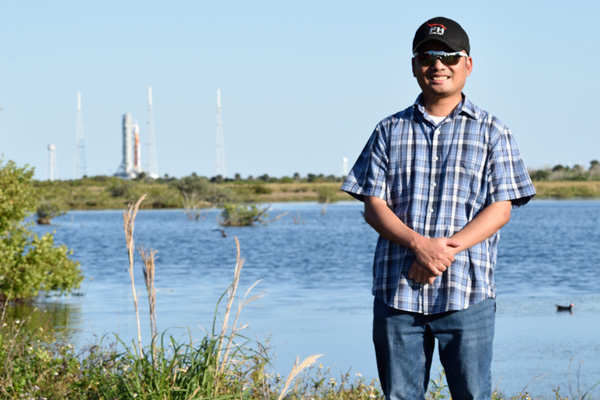
At Canaveral National Seashore with NASA's Space Launch System rocket sitting on Kennedy Space Center's Pad 39B behind me...on March 27, 2022.

Yesterday, I returned to Los Angeles after going to Florida to visit Cape Canaveral for the first time in 13 years!

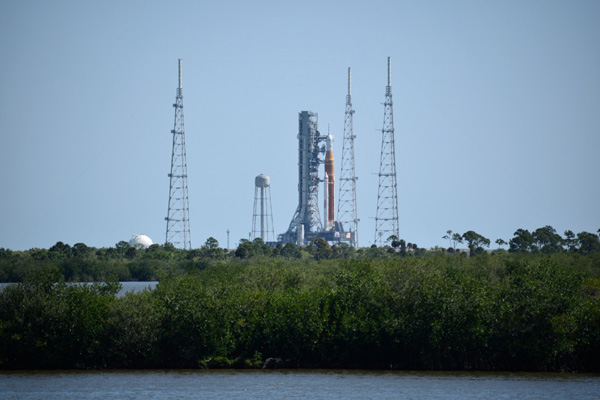
Unsurprisingly, the main goal of my trip to the Space Coast was to see NASA's Space Launch System (SLS) stand tall at Kennedy Space Center's Launch Complex 39B. As of right now, the mega-Moon rocket remains on-track to conduct its Wet Dress Rehearsal for the Artemis 1 mission next weekend...on April 1-3.

Along with SLS, I also finally got to see the retired orbiter Atlantis on display at the Kennedy Space Center Visitor Complex. And while it's not a crewed vehicle, I was ecstatic to see the unflown Delta 2 booster that is now on display at the Rocket Garden.

Here are pictures of SLS, Atlantis, Delta 2 and a few other awesome attractions at Cape Canaveral that I photographed last weekend. Click on the link below to view my webpage that's devoted to this memorable trip.

LINK: Additional photos I took at Cape Canaveral on March 25-27

And in case you're wondering— I'm pondering about returning to the Cape in 2024, to see the SLS rocket that will hurl astronauts to the Moon on NASA's Artemis 2 mission. Happy Tuesday!

At Canaveral National Seashore with NASA's Space Launch System rocket sitting on Kennedy Space Center's Pad 39B behind me...on March 27, 2022.

NASA's Space Launch System rocket sits on Kennedy Space Center's Pad 39B...as seen from the Apollo/Saturn V Center on March 27, 2022.

NASA's Space Launch System rocket sits on Kennedy Space Center's Pad 39B...as seen from the Apollo/Saturn V Center on March 27, 2022.

NASA's Space Launch System rocket as seen in my car's side-view mirror at Canaveral National Seashore...on March 26, 2022.

Posing with Atlantis inside her space shuttle exhibit at the Kennedy Space Center Visitor Complex...on March 26, 2022.

Taking a selfie with Atlantis inside her space shuttle exhibit at the Kennedy Space Center Visitor Complex...on March 26, 2022.

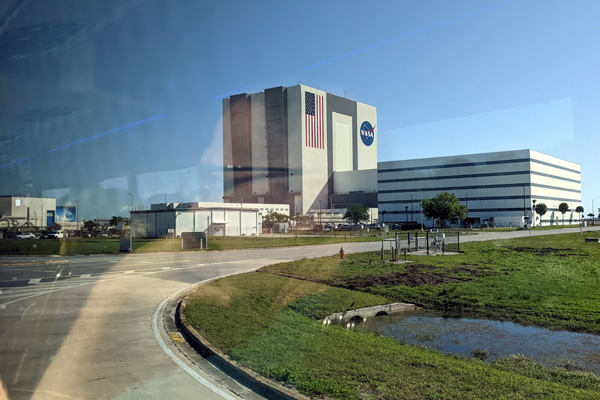
My tour bus is about to drive past the Vehicle Assembly Building on the way to the Apollo/Saturn V Center...on March 27, 2022.

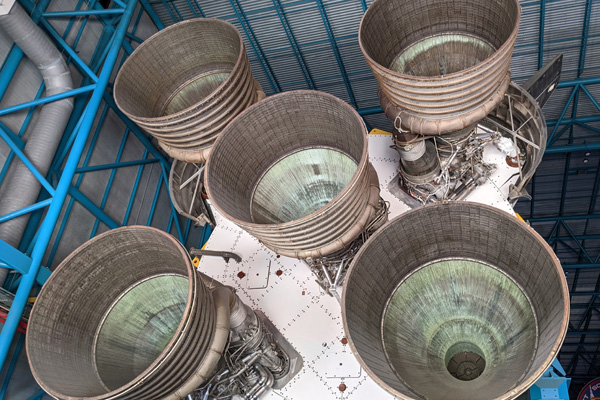
The J-2 engines of the Saturn V rocket on display at the Apollo/Saturn V Center...on March 26, 2022.

Launch Complex 39A and SpaceX's Horizontal Integration Facility as seen from across the lagoon at the Apollo/Saturn V Center...on March 26, 2022.

United Launch Alliance's SLC-41 pad, the launch site for the CST-100 Starliner, as seen from Playalinda Beach...on March 26, 2022.

Blue Origin's facility as seen from inside the Space Shuttle Atlantis Exhibit at Kennedy Space Center Visitor Complex...on March 27, 2022.

Posing with the unflown Delta 2 rocket now on display at the Rocket Garden...on March 26, 2022.

An image I took of NASA's Space Launch System rocket from Playalinda Beach Road Vista 5...on March 26, 2022.

Wednesday, January 5, 2022

On This Day in 1972: The Space Transportation System is Born...

NASA Administrator James C. Fletcher looks on as President Richard M. Nixon studies a model of the Space Transportation System...otherwise known as the space shuttle.
NASA

50 Years Ago: President Nixon Directs NASA to Build the Space Shuttle (News Release)

After the United States achieved President John F. Kennedy’s goal of landing a man on the Moon and returning him safely to the Earth, policymakers asked the question, after Apollo, what next? Shortly after taking office in 1969, President Richard M. Nixon empaneled a group of experts to provide him with recommendations on the nation’s future direction in space.

Faced with tight federal budgets, President Nixon could not support most of the panel’s recommendations due to their high cost. In January 1972, he directed NASA to develop and build a reusable space transportation system, commonly known as the space shuttle. The reusability of the shuttle’s components was expected to provide regular access to space to many customers, while at the same time reducing costs.

The July 1969 Apollo 11 mission fulfilled President Kennedy’s goal of landing a man on the Moon and returning him safely to the Earth before the end of the 1960s. Other than five more Moon landings and a short-lived experimental space station, the United States lacked a clear long-term plan for its human spaceflight program following Apollo.

In February 1969, shortly after taking office, President Nixon appointed a Space Task Group (STG), led by Vice President Spiro T. Agnew who chaired the National Aeronautics and Space Council, to report back to him on options for the American space program in the post-Apollo years. In the report titled, The Post-Apollo Space Program: Directions for the Future and presented to President Nixon in September 1969, the STG advocated for a well-balanced human and robotic space program.

In the human spaceflight area, the group’s recommendations included options to build an Earth-orbiting space station with a space transportation system to support it, a lunar-orbiting space station, a base on the lunar surface, and a human expedition to Mars. Since these options all required slight to significant increases in NASA’s annual budget, the President took no immediate action on the STG recommendations.

Faced with the still-ongoing conflict in southeast Asia and domestic programs competing for scarce federal dollars, the fiscally-conservative Nixon decided these plans were just too grandiose and far too expensive.

More than two years after the STG submitted its report to him, on Jan. 5, 1972, President Nixon directed NASA Administrator James C. Fletcher to develop the Space Transportation System, the formal name for the space shuttle – the only element of the STG’s recommendations to survive the budgetary challenges. “The decision by the President is an historic step in the nation’s space program,” said Administrator Fletcher.

The Manned Spacecraft Center (MSC), now NASA’s Johnson Space Center in Houston, was given responsibility for overall management of the space shuttle program, including systems engineering as well as development of the orbiter vehicle. NASA’s Marshall Space Flight Center in Huntsville, Alabama, received the responsibility of developing the shuttle’s booster stage and the orbiter’s main engines, and NASA’s Kennedy Space Center in Florida was tasked with the development of launch and recovery facilities.

On Feb. 13, 1970, MSC had established the Space Shuttle Program Office and named Robert F. “Bob” Thompson as its manager. Prior to the formal announcement of the program, the initially small office had studied various feasibility concepts for the space shuttle, among them using piloted flyback reusable boosters. In March 1972, NASA decided to use less expensive reusable solid rocket boosters to aid the shuttle in getting off the launch pad. The boosters would parachute into the ocean for recovery, refurbishment, and reuse.

As envisioned, the reusable space shuttle would revolutionize space transportation services. It would launch vertically like a rocket, using two solid rocket boosters and its own main engines, from launch pads refurbished from the Apollo program. Once in orbit, it would carry out its mission, with astronauts deploying, repairing, and even retrieving commercial, scientific, and military satellites, or conducting remote Earth or astronomical observations, or performing science experiments in a shirt-sleeve laboratory-like environment.

The mission accomplished, astronauts would pilot the shuttle orbiter back to Earth and land it on a runway like a large glider to be refurbished and relaunched on its next mission. Once fully operational, it was expected that flights would occur every two weeks, with a fleet of orbiters each capable of making 100 flights into space. The first orbital flight test of the space shuttle was expected to take place in 1978 with the system operational by 1980.

To enable the space shuttle to accomplish these missions, NASA needed to develop several new technologies, including high-performance reusable main engines, advanced avionics, and a reusable thermal protection system to enable the orbiter to make repeated reentries into the Earth’s atmosphere. Development of these technologies proved to be challenging.

Source: NASA.Gov

****

Space shuttle Columbia lifts off on mission STS-1 from Launch Complex 39A at NASA's Kennedy Space Center in Florida...on April 12, 1981.
NASA

The orbiter Atlantis deploys her drogue chute as she touches down on the Shuttle Landing Facility's Runway 15 at NASA's Kennedy Space Center in Florida...completing mission STS-135, and the final flight of the space shuttle program, on July 21, 2011.
NASA / Kenny Allen

Tuesday, November 30, 2021

Photos of the Day #2: The ISS as Seen from Aboard Crew Dragon Endeavour...

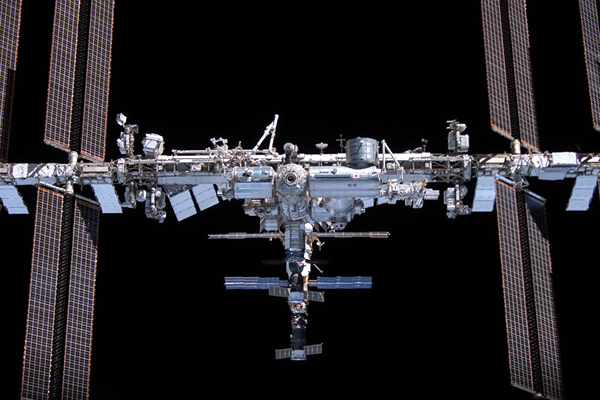
An image of the International Space Station that was taken by European Space Agency astronaut Thomas Pesquet aboard SpaceX's Crew Dragon Endeavour capsule...on November 8, 2021.
NASA / ESA - Thomas Pesquet

Just thought I'd end this month with these amazing images of the International Space Station that were taken by European Space Agency astronaut Thomas Pesquet on November 8...during a flyaround by SpaceX's Crew Dragon Endeavour capsule before she returned back to Earth that night.

This flyaround was the first one conducted by an American spacecraft since the shuttle Atlantis did one final 360-degree manuever around the ISS upon completing flight STS-135 in 2011.

With the Crew Dragon vehicle now capable of doing flyarounds after undocking from the space station, expect more snapshots of the orbital outpost by the astronauts on the current Crew-3 mission and beyond!

Another image of the International Space Station that was taken by European Space Agency astronaut Thomas Pesquet aboard SpaceX's Crew Dragon Endeavour capsule...on November 8, 2021.
NASA / ESA - Thomas Pesquet

Another image of the International Space Station that was taken by European Space Agency astronaut Thomas Pesquet aboard SpaceX's Crew Dragon Endeavour capsule...on November 8, 2021.
NASA / ESA - Thomas Pesquet

Another image of the International Space Station that was taken by European Space Agency astronaut Thomas Pesquet aboard SpaceX's Crew Dragon Endeavour capsule...on November 8, 2021.
NASA / ESA - Thomas Pesquet

Another image of the International Space Station that was taken by European Space Agency astronaut Thomas Pesquet aboard SpaceX's Crew Dragon Endeavour capsule...on November 8, 2021.
NASA / ESA - Thomas Pesquet

Another image of the International Space Station that was taken by European Space Agency astronaut Thomas Pesquet aboard SpaceX's Crew Dragon Endeavour capsule...on November 8, 2021.
NASA / ESA - Thomas Pesquet

Another image of the International Space Station that was taken by European Space Agency astronaut Thomas Pesquet aboard SpaceX's Crew Dragon Endeavour capsule...on November 8, 2021.
NASA / ESA - Thomas Pesquet

Another image of the International Space Station that was taken by European Space Agency astronaut Thomas Pesquet aboard SpaceX's Crew Dragon Endeavour capsule...on November 8, 2021.
NASA / ESA - Thomas Pesquet

Another image of the International Space Station that was taken by European Space Agency astronaut Thomas Pesquet aboard SpaceX's Crew Dragon Endeavour capsule...on November 8, 2021.
NASA / ESA - Thomas Pesquet

A final image of the International Space Station that was taken by European Space Agency astronaut Thomas Pesquet aboard SpaceX's Crew Dragon Endeavour capsule...on November 8, 2021.
NASA / ESA - Thomas Pesquet

Tuesday, November 9, 2021

ISS Update: SpaceX's Endeavour Capsule Has Completed Her Second Trip to the Orbital Outpost...

The Crew-2 astronauts give the 'peace sign' after the hatch is opened on their Endeavour capsule after she was safely placed aboard a SpaceX recovery vessel deployed to the Gulf of Mexico...on November 8, 2021.
NASA / Aubrey Gemignani

Crew-2 Astronauts Safely Splash Down in Gulf of Mexico (Press Release)

NASA’s SpaceX Crew-2 astronauts safely splashed down in the Gulf of Mexico off the coast of Florida Monday aboard the Crew Dragon Endeavour spacecraft, completing the agency’s second long-duration commercial crew mission to the International Space Station. The mission set a record for the longest spaceflight by a U.S. crewed spacecraft. The international crew of four spent 199 days in orbit, surpassing the 168 days set by NASA’s SpaceX Crew-1 mission earlier this year.

NASA astronauts Shane Kimbrough and Megan McArthur, JAXA (Japan Aerospace Exploration Agency) astronaut Akihiko Hoshide, and ESA (European Space Agency) astronaut Thomas Pesquet returned to Earth in a parachute-assisted splashdown at 10:33 p.m. EST off the coast of Pensacola, Florida. Crews aboard SpaceX recovery vessels successfully recovered the spacecraft and astronauts. After returning to shore, the astronauts will fly back to NASA’s Johnson Space Center in Houston.

“We’re happy to have Shane, Megan, Aki, and Thomas safely back on Earth after another successful, record-setting long-duration mission to the International Space Station,” said NASA administrator Bill Nelson. “Congratulations to the teams at NASA and SpaceX who worked so hard to ensure their successful splashdown. NASA’s Commercial Crew Program continues to demonstrate safe, reliable transportation to conduct important science and maintenance on the space station.”

The Crew-2 mission launched April 23 on a Falcon 9 rocket from NASA’s Kennedy Space Center in Florida. Crew Dragon Endeavour docked to the Harmony module’s forward port of the space station April 24, nearly 24-hours after liftoff.

Kimbrough, McArthur, Hoshide, and Pesquet traveled 84,653,119 statute miles during their mission, stayed 198 days aboard the space station, and completed 3,194 orbits around Earth.

Throughout their mission, the Crew-2 astronauts contributed to a host of science and maintenance activities, scientific investigations, and technology demonstrations. In addition, they conducted four spacewalks and multiple public engagement events while aboard the orbiting laboratory. They studied how gaseous flames behave in microgravity, grew hatch green chiles in the station’s Plant Habitat Facility, installed free-flying robotic assistants, and even donned virtual reality goggles to test new methods of exercising in space, among many other scientific activities. The astronauts took hundreds of pictures of Earth as part of the Crew Earth Observation investigation, one of the longest-running investigations aboard the space station, which contributes to tracking of natural disasters and changes to our home planet.

Kimbrough, Hoshide, and Pesquet also completed four spacewalks to install, deploy, or otherwise prepare for installation of ISS Roll-out Solar Arrays. This brought the total number of spacewalks for Kimbrough, Hoshide, and Pesquet to nine, four, and six, respectively. The fourth spacewalk, conducted by Hoshide and Pesquet on Sept. 12, was the first in the history of the space station that did not include an American or Russian.

On July 21, all four Crew-2 astronauts boarded Endeavour for a port relocation maneuver, moving their spacecraft from the forward-facing port to the space-facing port on the station’s Harmony module.

The Crew-2 flight is part of NASA’s Commercial Crew Program, which has worked with the U.S. aerospace industry to launch astronauts on American rockets and spacecraft from American soil to the space station. The splashdown of Crew-2 comes just before the launch of NASA’s SpaceX Crew-3 mission, currently scheduled for no earlier than Wednesday, Nov. 10, on another long-duration mission of approximately six months.

Endeavour will return for inspection and processing to SpaceX’s Dragon Lair in Florida, where teams will examine the spacecraft’s data and performance throughout the flight.

Following Crew-3’s launch, the next NASA and SpaceX crew rotation mission is Crew-4, currently targeted for launch in April 2022. Crew-3 astronauts are scheduled to return to Earth shortly after welcoming their Crew-4 colleagues to the orbiting laboratory.

The goal of NASA’s Commercial Crew Program is safe, reliable, and cost-effective transportation to and from the International Space Station. This already has provided additional research time and has increased the opportunity for discovery aboard humanity’s microgravity testbed for exploration, including helping NASA prepare for human exploration of the Moon and Mars.

****

Taken by a remote camera aboard the International Space Station, this video screenshot shows the Endeavour capsule as she conducted a 360-degree flyaround of the orbital outpost on November 8, 2021...the first ISS flyaround by a NASA crew since shuttle flight STS-135 in 2011.
NASA

The fireball created by the Endeavour capsule as she safely re-entered Earth's atmosphere is visible above SpaceX recovery craft waiting in the Gulf of Mexico...on November 8, 2021.
NASA / Aubrey Gemignani

An infrared image taken by a NASA observation aircraft showing the Endeavour capsule, with her four main chutes fully deployed, about to splash down into the Gulf of Mexico...on November 8, 2021.
NASA

Friday, July 16, 2021

The Storied Career of a Space Pioneer Has Come to an End...

Former U.S. Marine Colonel Doug Hurley is now a retired NASA astronaut.
SpaceX

Trailblazing Astronaut Doug Hurley Retires from NASA (Press Release)

NASA astronaut and former U.S. Marine Col. Doug Hurley is retiring from NASA after 21 years of service. His last day with the agency is July 16.

“Doug Hurley is an exceptional astronaut whose leadership and expertise have been invaluable to NASA’s space program,” said NASA Administrator Bill Nelson. “His impact on the agency transcends his impressive work in spaceflight, inspiring us to take on bold endeavors. I extend my deepest gratitude to Doug and wish him success in his next adventure.”

Hurley’s career highlights include 93 days in space on missions that include the final space shuttle flight and the first crewed flight of the SpaceX Crew Dragon spacecraft.

Hurley was spacecraft commander on the first crewed flight of the SpaceX Crew Dragon, which launched May 30, 2020, and safely returned to Earth Aug. 2, 2020. The flight was the fifth time in history that NASA astronauts have flown on a new U.S. spacecraft and marked a new era of human spaceflight, enabling crewed launches to the International Space Station from American soil on commercially built and owned spacecraft. As a space station crew member for 62 days, he and crewmate Bob Behnken contributed more than 100 hours supporting the orbiting laboratory’s scientific investigations.

“Doug Hurley is a national hero,” said Reid Weisman, chief of the Astronaut Office at NASA’s Johnson Space Center in Houston. “He is a pioneer in human spaceflight who inspires the next generation. Doug made significant impacts everywhere he served at NASA. Our very best wishes for him, his family, and his future pursuits. We thank Doug for his service.”

Hurley joined NASA at Johnson in August 2000 as an astronaut candidate. On his first spaceflight, in 2009, Hurley was pilot for the STS-127 flight of space shuttle Endeavour, helping deliver and install the final two components of the International Space Station’s Japanese Experiment Module, Kibo, and its Exposed Facility and Experiment Logistics Module. He flew again in 2011, as the pilot for STS‐135, which was the 33rd flight of space shuttle Atlantis, the 37th shuttle mission to the space station, and the 135th and final mission of NASA’s Space Shuttle Program.

“Doug brought experience and leadership vital to our continued success in human spaceflight. He shared his critical learning from his missions during many years in human spaceflight to a new team,” said Kathy Lueders, associate administrator for human exploration and operations at NASA Headquarters. “Many of us know and love him as one of the dads on NASA’s SpaceX Demo-2 test flight – it’s personal to fly a member of our NASA family, and important for the team working these missions always to keep in mind he and his family is in our hands.”

Through a variety of roles, Hurley also supported NASA astronauts on Earth. Following the completion of two years of training and evaluation, he was assigned technical duties in the Astronaut Office, which included lead astronaut support personnel at NASA’s Kennedy Space Center in Florida, for space shuttle missions STS‐107 and STS‐121. He was shuttle landing and rollout instructor, served on the Columbia Reconstruction Team at Kennedy, and worked in the Astronaut Office’s Exploration Branch in support of the Orion Program. He also was NASA’s director of operations in Russia, based at the Gagarin Cosmonaut Training Center in Star City, and assistant director for the Commercial Crew Program for the Flight Operations Directorate.

“For 21 years, I’ve had the incredible honor of participating in the American space program and working alongside the extremely dedicated people of NASA. To have had a place in the assembly of the International Space Station, and the Space Shuttle Program including flying on its final mission, STS-135, has been a tremendous privilege,” said Hurley. “To then have had the opportunity to be at the forefront of the Commercial Crew Program, specifically working with SpaceX, on to commanding the first flight of Crew Dragon, and finally, as a perfect end to my flying career, serving onboard the space station as a resident crew member. On personal level, there were many significant life moments, too, at NASA that have had their forever impact on me. The loss of my colleagues on space shuttle Columbia. And meeting my wife here and starting our family. It is truly humbling when reflecting back on it all.”

Hurley was born in Endicott, New York, but considers Apalachin, New York, his hometown. He graduated from Owego Free Academy, in Owego, New York, and received a Bachelor of Science degree in civil engineering from Tulane University in New Orleans.

Source: NASA.Gov

Thursday, July 8, 2021

Remembering STS-135: Marking One Decade Since the Last Space Shuttle Mission Took Flight...

Space shuttle Atlantis lifts off from Launch Complex 39A at NASA's Kennedy Space Center in Florida...beginning mission STS-135 on July 8, 2011.
NASA / Bill Ingalls

It was on this day back in 2011 that Atlantis took off from Launch Complex 39A at NASA's Kennedy Space Center in Florida...beginning mission STS-135 to the International Space Station (ISS) that lasted 8 days, 15 hours and 21 minutes, and successfully concluded the 30-year space shuttle program. 10 years later, this anniversary is marked by privately-made capsules (SpaceX's Crew Dragon and soon, Boeing's Starliner) transporting astronauts to the ISS, two super heavy-lift rockets—NASA's Space Launch System and SpaceX's Starship vehicles—that will return crew to the lunar surface via the Artemis program within the next five years, and other commercial companies such as Blue Origin and Virgin Galactic now on the verge of sending paying passengers into space using their suborbital New Shepard and SpaceShipTwo vehicles, respectively.

The time period between 2011 and 2020 (when SpaceX's Demo-2 flight resumed crewed launches from U.S. soil for the first time since STS-135) was marked by delays and uncertainty in America's human spaceflight program, but this new decade should end with mankind moving ever so closer to maintaining a sustainable presence at the Moon, and finally, sending humanity on a much-awaited voyage to Mars. The future of space exploration has never been more promising than this!

Tuesday, June 1, 2021

On This Day in 2011: Endeavour Returns Home from Space for the Final Time...

The orbiter Endeavour is about to touch down on Runway 15 at Kennedy Space Center's Shuttle Landing Facility in Florida...successfully completing her final space shuttle mission, STS-134, on June 1, 2011.
NASA / Kevin O'Connell

It was a decade ago this morning that the orbiter Endeavour safely touched down on Runway 15 at Kennedy Space Center's Shuttle Landing Facility in Florida. After completing a 15-plus day mission that involved delivering the Alpha Magnetic Spectrometer to the International Space Station, Endeavour began a year's-long decommissioning process before she made her way to her final retirement home in Los Angeles. Most of her propulsion tanks, which carried toxic hypergolic fuel during STS-134, were removed to ensure that the orbiter would be safe for permanent display at the California Science Center the following year. Also, additional components in Endeavour's propulsion system were taken out so that they could eventually be utilized on the space shuttle's successor, the Space Launch System rocket.

With two missions down, only one flight remained before the space shuttle program officially came to an end in 2011. More on STS-135 next month.

Sunday, May 23, 2021

Photo of the Day: Endeavour at the ISS...

An image of orbiter Endeavour docked to the International Space Station...as seen by European Space Agency astronaut Paolo Nespoli aboard the Russian Soyuz TMA-20 capsule on May 23, 2011.
NASA / Paolo Nespoli

It was on this day a decade ago that an astronaut aboard a Russian Soyuz capsule took this image of the orbiter Endeavour docked to the International Space Station (ISS) during STS-134. With only one more flight, STS-135, left to go before the space shuttle program came to an end in 2011, NASA didn't want to pass up the chance to take long-distance photos of an orbiter docked to the ISS before that opportunity was permanently gone. That opportunity arrived on May 23, 2011...when European Space Agency astronaut Paolo Nespoli—who was heading back to Earth along with cosmonaut Dmitry Kondratyev and NASA astronaut Cady Coleman—snapped this picture from aboard their departing Soyuz TMA-20 spacecraft. This photo was taken as the shuttle-station complex was orbiting above our planet at an altitude of 220 miles...with the three Soyuz crew members landing in Kazakhstan a few hours later, ending a 159-day sojourn in space.

Here's hoping that once the Gateway is finally orbiting above the Moon a few years from now, NASA and its international partners will take the moment to photograph the lunar outpost with Orion and other Artemis spacecraft docked to it from afar. That is all.

Monday, April 12, 2021

Photo of the Day: Marking Four Decades Since the Launch of STS-1...

Space shuttle Columbia lifts off from Launch Complex 39A at NASA's Kennedy Space Center in Florida...on April 12, 1981.
NASA

Hail, Columbia! Just thought I'd share this iconic image of NASA's first space-worthy orbiter lifting off from Kennedy Space Center's Launch Complex 39A on April 12, 1981. And two days later, this test flight—known as STS-1—would come to a successful end when astronauts Robert Crippen and John Young piloted Columbia to a landing in the middle of a dry lake bed at Edwards Air Force Base in California. And so began the 30-year space shuttle program that included such highlights as the launch of the Hubble Space Telescope, the deployment of the Magellan robotic probe to Venus, the send-off of the Galileo orbiter to Jupiter, and eventually, the commencement of construction on the International Space Station. But sadly, this program would also include two tragedies that claimed the lives of 14 brave astronauts (in 1986 and 2003), and the in-flight loss of Columbia herself.

Even though Columbia didn't ultimately make her way into a museum like Enterprise, Discovery, Atlantis and Endeavour did, her legacy will live on. The storied space shuttle program gave rise to Artemis...which utilizes shuttle hardware on the Space Launch System and Orion as they are less than a year away from their much-anticipated journey on Artemis 1. Columbia may have spent all of her career in low-Earth orbit, but the amount of knowledge gleamed from flying her and her sister ships (excluding Enterprise, the orbiter prototype) for over three decades will no doubt play a role in guiding astronauts back to the Moon before the end of this decade. Columbia may be gone, but the spirit of human spaceflight (which began 60 years ago today with the launch of Soviet cosmonaut Yuri Gagarin on Vostok 1) remains stronger than ever. Ad astra.

Tuesday, June 2, 2020

Photos of the Day #2: Welcome Back to Florida, Falcon 9!

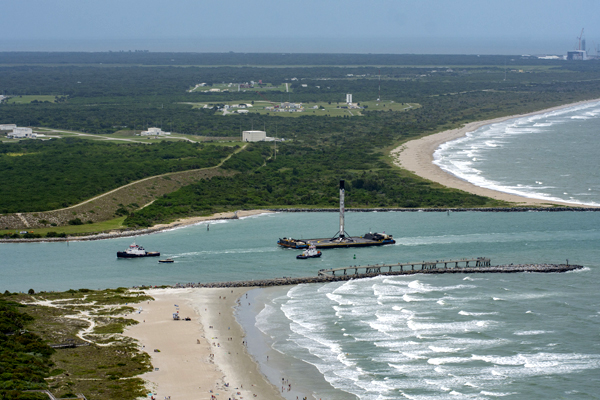
The Falcon 9 rocket that launched the Crew Dragon capsule Endeavour into space is about to touch down on the drone ship 'Of Course I Still Love You' in the Atlantic Ocean...on May 30, 2020.
SpaceX

Just thought I'd share these great photos of the SpaceX drone ship Of Course I Still Love You carrying the Falcon 9 rocket that launched 3 days ago as they arrived at Port Canaveral in Florida earlier today. It remains to be seen what will be the next mission to fly aboard the booster that sent astronauts to low-Earth orbit for the first time in almost 9 years. SpaceX plans to use brand-new Falcon 9 vehicles and Crew Dragon capsules for crewed NASA flights to the International Space Station for the foreseeable future, so it's unlikely that this booster will have astronauts (at least those directly employed by the U.S. space agency) on it once more. Stay tuned.

With the Falcon 9 rocket secured on its deck, the drone ship 'Of Course I Still Love You' enters the waterway at Port Canaveral in Florida...on June 2, 2020.
SpaceX

With the Falcon 9 rocket secured on its deck, the drone ship 'Of Course I Still Love You' enters the waterway at Port Canaveral in Florida...on June 2, 2020.
SpaceX

With the Falcon 9 rocket secured on its deck, the drone ship 'Of Course I Still Love You' arrives at the dock in Port Canaveral, Florida...on June 2, 2020.
SpaceX

Monday, June 1, 2020

Photos of the Day: Welcome Aboard the ISS, Bob and Doug!

A snapshot of SpaceX's Endeavour capsule floating in the darkness of space...as seen from aboard the International Space Station on May 31, 2020.
NASA TV

Yesterday morning, SpaceX's Endeavour capsule safely arrived at the International Space Station (ISS) orbiting 250 miles above the Earth...completing a 19-hour journey for NASA astronauts Doug Hurley and Bob Behnken that began with a historic launch aboard a Falcon 9 rocket from Florida Saturday afternoon. Docking took place at 7:16 AM, Pacific Daylight Time (10:16 AM, Eastern Daylight Time). Here are photos of Endeavour just as she approached the docking port at the front of the station's Harmony module—along with a picture from the welcoming ceremony conducted by Expedition 63 crew members Chris Cassidy, Anatoly Ivanishin and Ivan Vagner aboard the ISS. NASA has not yet determined just how long Hurley and Behnken will remain on the orbital outpost before they return to Earth.

But one thing is certain: Hurley and Behnken will be bringing home with them the American flag that was placed on Harmony's docking hatch by Hurley himself during the final space shuttle mission almost 9 years earlier. SpaceX—which had been in competition with Boeing's Starliner program for over half a decade to achieve this special moment—has succeeded in capturing the flag!

With the Kibo module's robotic arm visible in the foreground, SpaceX's Endeavour capsule approaches the International Space Station from a distance...on May 31, 2020.
NASA TV

SpaceX's Endeavour capsule approaches the International Space Station for docking...on May 31, 2020.
NASA TV

With Canadarm2 visible in the foreground, SpaceX's Endeavour capsule approaches the International Space Station for docking...on May 31, 2020.
NASA TV

Demo-2 astronauts Bob Behnken and Doug Hurley take a group photo with Expedition 63 crew members Anatoly Ivanishin, Chris Cassidy and Ivan Vagner aboard the International Space Station.
NASA

The American flag, which has been aboard the International Space Station since July of 2011, will be brought back to Earth at the end of the Demo-2 mission.
NASA