Showing posts with label STS-133. Show all posts

Sunday, April 12, 2026

Photo of the Day: Marking 45 Years Since the Launch of STS-1...

Space shuttle Columbia lifts off from Launch Complex 39A at NASA's Kennedy Space Center in Florida...on April 12, 1981.
NASA

Hail, Columbia! Just thought I'd share this iconic image of NASA's first space-worthy orbiter lifting off from Kennedy Space Center's Launch Complex 39A on April 12, 1981. And two days later, this test flight—known as STS-1—would come to a successful end when astronauts Robert Crippen and John Young piloted Columbia to a landing in the middle of a dry lake bed at Edwards Air Force Base in California. And so began the 30-year space shuttle program that included such highlights as the launch of the Hubble Space Telescope, the deployment of the Magellan robotic probe to Venus, the send-off of the Galileo orbiter to Jupiter, and eventually, the commencement of construction on the International Space Station.

But sadly, this program would also include two tragedies that claimed the lives of 14 brave astronauts (in 1986 and 2003), and the in-flight loss of Columbia herself.

Even though Columbia didn't ultimately make her way into a museum like Enterprise, Discovery, Atlantis and Endeavour did, her legacy will live on. The storied space shuttle program gave rise to Artemis...which utilizes shuttle hardware on the Space Launch System and Orion, respectively, as they are now looking ahead to their third lunar flight on Artemis 3. Columbia may have spent all of her career in low-Earth orbit, but the amount of knowledge gleamed from flying her and her sister ships (excluding Enterprise, the orbiter prototype) for over three decades have no doubt played a role in guiding astronauts back to the Moon for the first time since Apollo 17 in 1972.

Columbia may be gone, but the spirit of human spaceflight (which began 60 years ago today with the launch of Soviet cosmonaut Yuri Gagarin on Vostok 1) remains stronger than ever. Ad astra.

Saturday, August 5, 2023

Looking Ahead to Crew Dragon's Eighth Government Flight to the ISS...

A group photo of the four-member crew for NASA's SpaceX Crew-8 mission to the International Space Station.
NASA

Space Station Assignments Out for NASA’s SpaceX Crew-8 Mission (Press Release - August 4)

Four crew members are now assigned to launch on NASA’s SpaceX Crew-8 mission for a long-duration stay aboard the International Space Station.

NASA astronauts Commander Matthew Dominick, Pilot Michael Barratt and Mission Specialist Jeanette Epps, along with Roscosmos cosmonaut Mission Specialist Alexander Grebenkin, will join Expedition 70 and 71 crew members aboard the station in early 2024 to conduct a wide-ranging set of operational and research activities.

This will be the first spaceflight for Dominick, who became a NASA astronaut in 2017. He is from Wheat Ridge, Colorado, and earned a bachelor’s degree in electrical engineering from the University of San Diego, California, and a master’s in systems engineering from the Naval Postgraduate School in Monterey, California.

Dominick is an active-duty U.S. Navy astronaut. He graduated from the U.S. Naval Test Pilot School in Patuxent River, Maryland, and then served as a test pilot specializing in testing landing on and catapult launches from U.S. Navy aircraft carriers.

This will be Barratt’s third trip to the space station. In 2009, Barratt served as a flight engineer for Expeditions 19 and 20 as the station transitioned its standard crew complement from three to six, and performed two spacewalks.

Barratt flew aboard the space shuttle Discovery in 2011 on STS-133, which delivered the Permanent Multipurpose Module and fourth Express Logistics Carrier. He has spent a total of 212 days in space.

Born in Vancouver, Washington, Barratt considers Camas, Washington, to be his hometown. He earned a bachelor’s in zoology from the University of Washington, Seattle, and a doctor of medicine from Northwestern University in Chicago, Illinois.

Barratt completed residencies in internal medicine at Northwestern and aerospace medicine along with a master’s degree at Wright State University in Dayton, Ohio. After nine years as a NASA flight surgeon and project physician, Barratt joined the astronaut corps in 2000.

This will also be Epps’ first trip to the space station. She is from Syracuse, New York, and earned a bachelor’s in physics from LeMoyne College in Syracuse, New York, and a master’s in science and a doctorate in aerospace engineering from the University of Maryland, College Park.

Prior to joining NASA, Epps worked at Ford Motor Company and the Central Intelligence Agency. She was selected as an astronaut in July 2009, and has served on the Generic Joint Operation Panel working on space station crew efficiency, as a crew support astronaut for two expeditions, and as lead capsule communicator in the Mission Control Center at NASA’s Johnson Space Center in Houston.

Epps was previously assigned to NASA’s Boeing Starliner-1 mission. NASA reassigned Epps to allow Boeing time to complete development of Starliner while also continuing plans for astronauts to gain spaceflight experience for future mission needs.

Grebenkin, who graduated from Irkutsk High Military Aviation School, Irkutsk, Russia, majoring in engineering, maintenance and repair of aircraft radio navigation systems, is also flying on his first mission. He graduated from Moscow Technical University of Communications and Informatics with a degree in radio communications, broadcasting and television.

This is the eighth rotational mission to the space station under NASA’s Commercial Crew Program, which works with the American aerospace industry to provide safe, reliable and cost-effective transportation to and from the orbital outpost on American-made rockets and spacecraft launching from American soil.

For more than 22 years, humans have lived and worked continuously aboard the International Space Station, advancing scientific knowledge and demonstrating new technologies, making research breakthroughs not possible on Earth. As a global endeavor, 244 people from 19 countries have visited the unique microgravity laboratory that has hosted more than 3,000 research and educational investigations from researchers in 108 countries and areas.

The station is a critical testbed for NASA to understand and overcome the challenges of long-duration spaceflight and to expand commercial opportunities in low-Earth orbit. As commercial companies focus on providing human space transportation services and destinations as part of a robust low-Earth orbit economy, NASA is able to more fully focus its resources on deep space missions to the Moon and Mars.

****

Tuesday, February 21, 2023

Endeavour Is Now Scheduled to Launch to the ISS Next Monday...

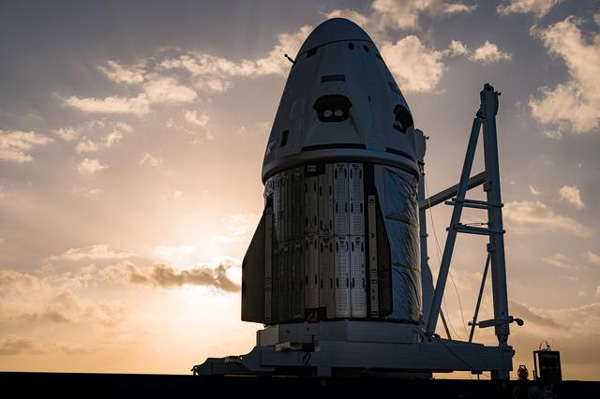
Crew Dragon Endeavour is transported to SpaceX's Horizontal Integration Facility at Kennedy Space Center's Launch Complex 39A in Florida...on February 19, 2023.
SpaceX

NASA, SpaceX Announce Update to Crew-6 Mission (News Release)

During a media teleconference on Tuesday, February 21, at Kennedy Space Center in Florida, NASA provided an update to NASA’s SpaceX Crew-6 mission to the International Space Station. Liftoff from Kennedy’s Launch Complex 39A is slated for Monday, February 27, at 1:45 a.m. EST.

Live launch-day coverage on NASA TV and the agency’s website begins at 10 p.m. EST on Sunday, February 26.

Managers from NASA and SpaceX, along with international partners, met throughout the day on Tuesday as part of the mission’s Flight Readiness Review (FRR) in preparation for the sixth crew rotation mission with SpaceX to the microgravity laboratory. The FRR focused on the preparedness of SpaceX’s crew transportation system, the space station and its international partners to support the flight, as well as the certification of flight readiness.

The Crew-6 launch will carry two NASA astronauts, Mission Commander Stephen Bowen and Pilot Warren Hoburg, along with UAE (United Arab Emirates) astronaut Sultan Alneyadi, and Roscosmos cosmonaut Andrey Fedyaev, who will serve as mission specialists, to the space station for a science expedition mission. They will fly aboard the SpaceX Crew Dragon spacecraft Endeavour, carried by the company’s Falcon 9 rocket.

Crew-6 will spend up to six months at the space station before returning to Earth. The mission marks the fourth spaceflight for Bowen, who flew space shuttle missions STS-126 in 2008, STS-132 in 2010 and STS-133 in 2011.

Crew-6 will be the first spaceflight for Hoburg, Alneyadi and Fedyaev.

Source: NASA.Gov

****

After arriving at Kennedy Space Center in Florida for their February 27 flight to the International Space Station, the Crew-6 astronauts pose for a group photo at the Launch and Landing Facility...on February 21, 2023.
NASA / Kim Shiflett

Wednesday, February 1, 2023

On This Day in 2003: The Columbia is Lost...

A video screenshot showing debris falling out of the sky after the orbiter Columbia disintegrated above Texas during re-entry into Earth's atmosphere...on February 1, 2003.

It was 20 years ago this morning, at 8:59 AM, EST (5:59 AM, PST), that tragedy took place in the skies above Texas and Louisiana.

15 minutes away from touching down at Kennedy Space Center's Shuttle Landing Facility in Florida to complete mission STS-107, Columbia fell short of its destination when the searing heat of re-entry penetrated the orbiter thanks to a hole in its left wing caused by a piece of foam that broke off of Columbia's external tank during its January 16 launch...and struck the wing's reinforced carbon–carbon panel less than a second later. The seven astronauts onboard didn't know what was about to befall them until it was too late.

Rest In Peace, Rick D. Husband, William C. McCool, David M. Brown, Kalpana Chawla, Michael P. Anderson, Laurel B. Clark and Ilan Ramon. As former President George W. Bush said in a nationally-televised speech to stunned Americans a few hours after the disaster:

"The cause in which they died will continue. Mankind is led into the darkness beyond our world by the inspiration of discovery and the longing to understand. Our journey into space will go on."

A group photo of the STS-107 astronauts that was recovered after the Columbia disaster.
NASA / Rick D. Husband

And indeed, our journey into space did go on. While President Bush announced in 2004 the eventual retirement of the space shuttle fleet, Columbia's sister ships Discovery, Atlantis and Endeavour flew long enough to see that the core assembly of the International Space Station was completed in 2011, the Hubble Space Telescope enjoyed a visit by servicing astronauts one last time in 2009, and the baton would be passed to commercial companies like SpaceX, as well as NASA's next spaceship and super heavy-lift booster: the Orion Multi-Purpose Crew Vehicle and the Space Launch System rocket.

The Columbia's loss led to the end of the Space Shuttle Program, but it also resulted in something grander: Our return to the Moon and beyond.

From the Vision for Space Exploration in 2004 to Constellation in 2006, and to the now-fledgling Artemis Program, humanity's journey back to deep space is only just beginning...

And that is the true legacy of the STS-107 astronauts. Ad astra.

A snapshot of NASA's Orion spacecraft with the Moon visible in the distance...on November 20, 2022.
NASA

Monday, April 12, 2021

Photo of the Day: Marking Four Decades Since the Launch of STS-1...

Space shuttle Columbia lifts off from Launch Complex 39A at NASA's Kennedy Space Center in Florida...on April 12, 1981.
NASA

Hail, Columbia! Just thought I'd share this iconic image of NASA's first space-worthy orbiter lifting off from Kennedy Space Center's Launch Complex 39A on April 12, 1981. And two days later, this test flight—known as STS-1—would come to a successful end when astronauts Robert Crippen and John Young piloted Columbia to a landing in the middle of a dry lake bed at Edwards Air Force Base in California. And so began the 30-year space shuttle program that included such highlights as the launch of the Hubble Space Telescope, the deployment of the Magellan robotic probe to Venus, the send-off of the Galileo orbiter to Jupiter, and eventually, the commencement of construction on the International Space Station. But sadly, this program would also include two tragedies that claimed the lives of 14 brave astronauts (in 1986 and 2003), and the in-flight loss of Columbia herself.

Even though Columbia didn't ultimately make her way into a museum like Enterprise, Discovery, Atlantis and Endeavour did, her legacy will live on. The storied space shuttle program gave rise to Artemis...which utilizes shuttle hardware on the Space Launch System and Orion as they are less than a year away from their much-anticipated journey on Artemis 1. Columbia may have spent all of her career in low-Earth orbit, but the amount of knowledge gleamed from flying her and her sister ships (excluding Enterprise, the orbiter prototype) for over three decades will no doubt play a role in guiding astronauts back to the Moon before the end of this decade. Columbia may be gone, but the spirit of human spaceflight (which began 60 years ago today with the launch of Soviet cosmonaut Yuri Gagarin on Vostok 1) remains stronger than ever. Ad astra.

Wednesday, February 24, 2021

Photos of the Day: What a Difference a Decade Makes for Space Exploration...

Space shuttle Discovery launches on flight STS-133 from NASA's Kennedy Space Center in Florida...on February 24, 2011.
NASA

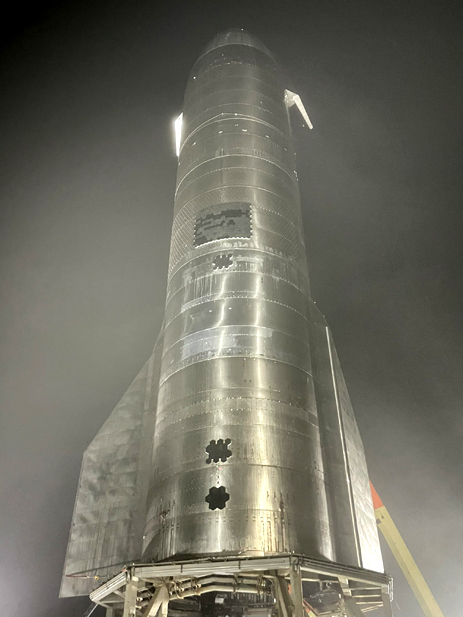
On this day in 2011, the orbiter Discovery launched on her final flight, STS-133, from NASA's Kennedy Space Center in Florida as this was the first of the last three missions before the space shuttle program came to an end that year. And tonight, one of three Raptor engines on SpaceX's Starship SN10 vehicle is being replaced at the company's launch facility in Boca Chica Beach, Texas...in preparation for a 10-kilometer (6.2-mile) hop that can happen by the end of this week. From a venerable spacecraft that flew in low-Earth orbit for 30 years, to the prototype of a rocket that can legitimately send people to Mars by the end of this decade, a lot has obviously changed for human spaceflight over the past 10 years.

Starship SN10 stands tall at SpaceX's launch facility in Boca Chica Beach, Texas...on February 24, 2021.
Elon Musk

Friday, August 3, 2018

NASA Has Selected 9 Astronauts to Fly on the First Flights of Boeing's Starliner and SpaceX's Crew Dragon Capsules!

A group photo of the 9 astronauts who will fly aboard the first flights of SpaceX's Crew Dragon and Boeing's Starliner capsules to the International Space Station as early as next year.
NASA

NASA Assigns Crews to First Test Flights, Missions on Commercial Spacecraft (Press Release)

NASA introduced to the world on Friday the first U.S. astronauts who will fly on American-made, commercial spacecraft to and from the International Space Station – an endeavor that will return astronaut launches to U.S. soil for the first time since the space shuttle’s retirement in 2011.

“Today, our country’s dreams of greater achievements in space are within our grasp,” said NASA Administrator Jim Bridenstine. “This accomplished group of American astronauts, flying on new spacecraft developed by our commercial partners Boeing and SpaceX, will launch a new era of human spaceflight. Today’s announcement advances our great American vision and strengthens the nation’s leadership in space.”

The agency assigned nine astronauts to crew the first test flight and mission of both Boeing’s CST-100 Starliner and SpaceX’s Crew Dragon. NASA has worked closely with the companies throughout design, development and testing to ensure the systems meet NASA’s safety and performance requirements.

“The men and women we assign to these first flights are at the forefront of this exciting new time for human spaceflight,” said Mark Geyer, director of NASA’s Johnson Space Center in Houston. “It will be thrilling to see our astronauts lift off from American soil, and we can’t wait to see them aboard the International Space Station.”

Starliner Test Flight Astronauts

Eric Boe was born in Miami and grew up in Atlanta. He came to NASA from the Air Force, where he was a fighter pilot and test pilot and rose to the rank of colonel. He was selected as an astronaut in 2000 and piloted space shuttle Endeavour for the STS-126 mission and Discovery on its final flight, STS-133.

Christopher Ferguson is a native of Philadelphia. He is a retired Navy captain, who piloted space shuttle Atlantis for STS-115, and commanded shuttle Endeavour on STS-126 and Atlantis for the final flight of the Space Shuttle Program, STS-135. He retired from NASA in 2011 and has been an integral part of Boeing's CST-100 Starliner program.

Nicole Aunapu Mann is a California native and a lieutenant colonel in the Marine Corps. She is an F/A-18 test pilot with more than 2,500 flight hours in more than 25 aircraft. Mann was selected as an astronaut in 2013. This will be her first trip to space.

Boeing’s Starliner will launch aboard a United Launch Alliance (ULA) Atlas V rocket from Space Launch Complex 41 at Cape Canaveral Air Force Station in Florida.

Crew Dragon Test Flight Astronauts

Robert Behnken is from St. Ann, Missouri. He has a doctorate in engineering and is a flight test engineer and colonel in the Air Force. He joined the astronaut corps in 2000 and flew aboard space shuttle Endeavour twice, for the STS-123 and STS-130 missions, during which he performed six spacewalks totaling more than 37 hours.

Douglas Hurley calls Apalachin, New York, his hometown. He was a test pilot and colonel in the Marine Corps before coming to NASA in 2000 to become an astronaut. He piloted space shuttle Endeavor for STS-127 and Atlantis for STS-135, the final space shuttle mission.

SpaceX’s Crew Dragon will launch aboard a SpaceX Falcon 9 rocket from Launch Complex 39A at Kennedy Space Center in Florida.

After each company successfully completes its crewed test flight, NASA will begin the final process of certifying that spacecraft and systems for regular crew missions to the space station. The agency has contracted six missions, with as many as four astronauts per mission, for each company.

Starliner First Mission Astronauts

Josh Cassada grew up in White Bear Lake, Minnesota. He is a Navy commander and test pilot with more than 3,500 flight hours in more than 40 aircraft. He was selected as an astronaut in 2013. This will be his first spaceflight.

Sunita Williams was born in Euclid, Ohio, but considers Needham, Massachusetts, her hometown. Williams came to NASA from the Navy, where she was a test pilot and rose to the rank of captain before retiring. Since her selection as an astronaut in 1998, she has spent 322 days aboard the International Space Station for Expeditions 14/15 and Expeditions 32/33, commanded the space station and performed seven spacewalks.

Crew Dragon First Mission Astronauts

Victor Glover is from Pomona, California. He is a Navy commander, aviator and test pilot with almost 3,000 hours flying more than 40 different aircraft. He made 400 carrier landings and flew 24 combat missions. He was selected as part of the 2013 astronaut candidate class, and this will be his first spaceflight.

Michael Hopkins was born in Lebanon, Missouri, and grew up on a farm near Richland, Missouri. He is a colonel in the Air Force, where he was a flight test engineer before being selected as a NASA astronaut in 2009. He has spent 166 days on the International Space Station for Expeditions 37/38, and conducted two spacewalks.

Additional crew members will be assigned by NASA’s international partners at a later date.

NASA’s continuous presence on the space station for almost 18 years has enabled technology demonstrations and research in biology and biotechnology, Earth and space science, human health, physical sciences. This research has led to dramatic improvements in technology, infrastructure and medicine, and thousands of spinoff technologies that have improved quality of life here on Earth.

The new spaceflight capability provided by Boeing and SpaceX will allow NASA to maintain a crew of seven astronauts on the space station, thereby maximizing scientific research that leads to breakthroughs and also aids in understanding and mitigating the challenges of long-duration spaceflight.

NASA’s Commercial Crew Program is facilitating the development of a U.S. commercial crew space transportation capability with the goal of achieving safe, reliable and cost-effective access to and from the International Space Station and low-Earth orbit. The public-private partnerships fostered by the program will stimulate growth in a robust commercial space industry and spark life-changing innovations for future generations.

Source: NASA.Gov

****

Boeing astronaut Chris Ferguson gets suited up prior to taking part in an emergency egress system demonstration at the Atlas V launch site at Cape Canaveral Air Force Station in Florida...on June 19, 2018.
NASA / Kim Shiflett

NASA astronauts Bob Behnken, Suni Williams and Nicole Mann get suited up prior to taking part in an emergency egress system demonstration at the Atlas V launch site at Cape Canaveral Air Force Station in Florida...on June 19, 2018.
NASA / Kim Shiflett

Commercial crew astronauts take part in an emergency egress system demonstration at the Atlas V launch site at Cape Canaveral Air Force Station in Florida...on June 19, 2018.
NASA / Kim Shiflett

Commercial crew astronauts take part in an emergency egress system demonstration at the Atlas V launch site at Cape Canaveral Air Force Station in Florida...on June 19, 2018.
NASA / Frank Michaux

Astronauts Chris Ferguson and Suni Williams take part in an emergency egress system demonstration at the Atlas V launch site at Cape Canaveral Air Force Station in Florida...on June 19, 2018.
NASA / Kim Shiflett

Sunday, February 19, 2017

SpaceX's Falcon 9 Rocket Finally Lifts Off from Historic Apollo and Space Shuttle Launch Pad in Florida...

SpaceX's Falcon 9 rocket lifts off from Launch Complex 39A at NASA's Kennedy Space Center in Florida...on February 19, 2017.
SpaceX

NASA Cargo Headed to Space Station Includes Important Experiments, Equipment (Press Release)

Major experiments that will look into a range of scientific disciplines from human health to atmospheric conditions on Earth are on their way to the International Space Station following liftoff at 9:39 a.m. EST aboard a SpaceX Falcon 9 rocket. About 5,500 pounds of research equipment, cargo and supplies are packed into the SpaceX Dragon spacecraft that is now in Earth orbit and headed to the station on the CRS-10 mission.

SpaceX’s Dragon cargo craft launched from Launch Complex 39A at NASA's Kennedy Space Center in Florida. This was the first commercial launch from Kennedy’s historic pad.

Astronauts Thomas Pesquet of ESA (European Space Agency) and Shane Kimbrough of NASA will use the space station’s robotic arm to capture Dragon when it arrives at the station. Live coverage of the rendezvous and capture will begin at 4:30 a.m. Wednesday, Feb. 22 on NASA TV and the agency’s website, with installation coverage set to begin at 8:30 a.m.

Research materials flying inside the Dragon's pressurized area include a crystal growth experiment that will crystallize a monoclonal antibody that is undergoing clinical trials for the treatment of immunological diseases. Growing the crystal in space will allow it develop more than it could on Earth where gravity causes crystals to collapse on themselves. Preserving these antibodies in crystals allows researchers a glimpse into how the biological molecules are arranged, which can provide new information about how they work in the body. So far, Earth-grown crystalline suspensions of monoclonal antibodies have proven to be too low-quality to fully model.

Better defining how some bacteria become drug-resistant is the focus of another experiment that aims to develop medicines that counter the resistance. Stem cells like those used to treat strokes and other occurrences also will be studied using experiment supplies brought up on this flight.

The equipment aboard the Dragon includes a major instrument that will survey Earth's upper atmosphere in a continuation of one of NASA's longest-running Earth-observing programs. Called SAGE III for Stratospheric Aerosol and Gas Experiment, the instrument examines the levels of ozone, aerosols, nitrogen dioxide and water vapor in the stratosphere and troposphere high above Earth. It is the latest version of an experiment that began in 1979 and has created a multi-decade record of measurements. The 2,200-pound instrument will be connected to the outside of the station to make daily observations for several years.

The mission is the company's tenth cargo flight to the station under NASA’s Commercial Resupply Services contract. Dragon's cargo will support dozens of the more than 250 science and research investigations during the station’s Expeditions 50 and 51.

Dragon is scheduled to depart the space station in late March, returning nearly 5,000 pounds of science, hardware and crew supplies.

For more than 16 years, humans have lived and worked continuously aboard the International Space Station, advancing scientific knowledge and demonstrating new technologies, making research breakthroughs not possible on Earth that will enable long-duration human and robotic exploration into deep space. A global endeavor, more than 200 people from 18 countries have visited the unique microgravity laboratory that has hosted more than 1,900 research investigations from researchers in more than 95 countries.

****

SpaceX's Falcon 9 rocket lifts off from Launch Complex 39A at NASA's Kennedy Space Center in Florida...on February 19, 2017.
SpaceX

The Falcon 9 first stage booster is about to touch down at a Cape Canaveral landing site following a successful launch from NASA's Kennedy Space Center a few miles away...on February 19, 2017.
SpaceX

SpaceX's Dragon capsule separates from its second stage motor following a successful launch from NASA's Kennedy Space Center in Florida...on February 19, 2017.
SpaceX

Friday, January 1, 2016

Happy New Year, Everyone!

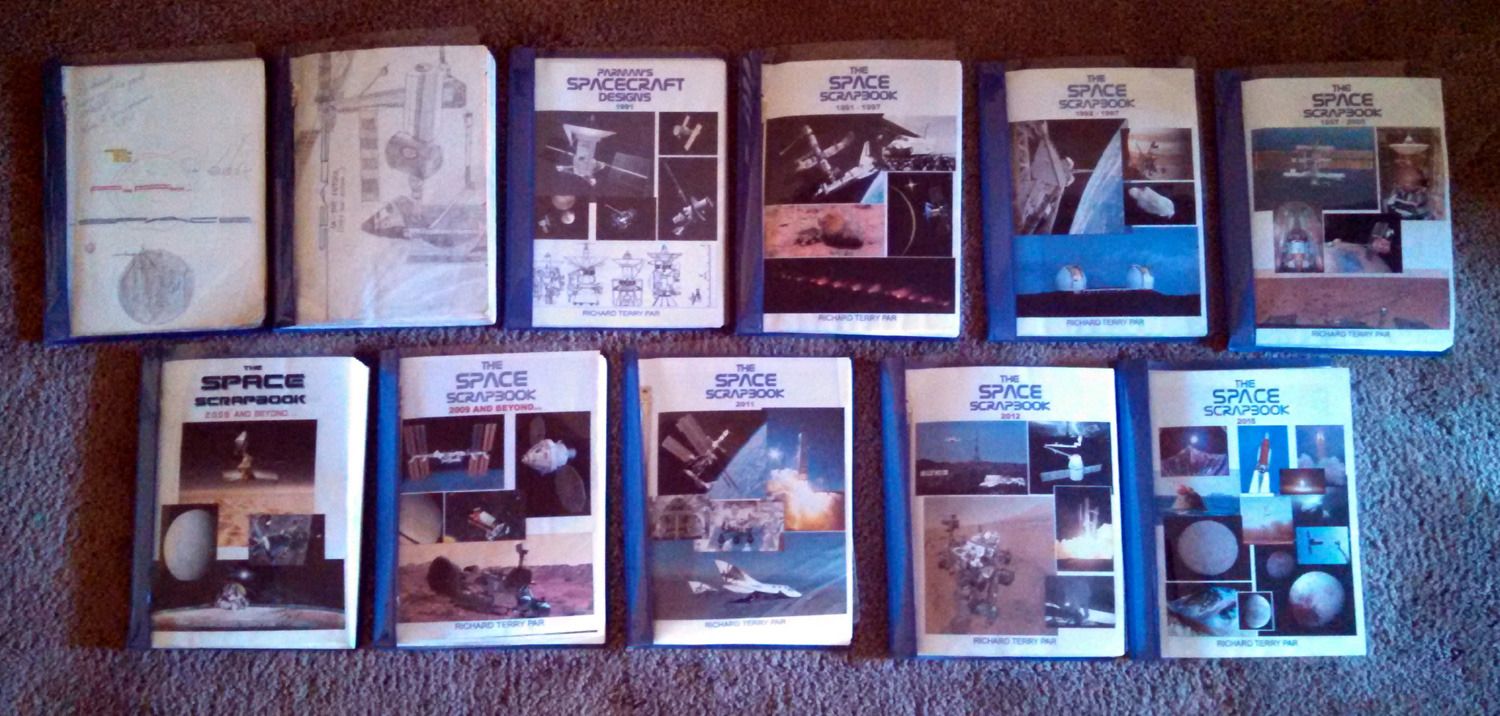
All of my space albums...for the rest of the world to see.

Just thought I'd share these new photos that I took of several albums that I created over 25 years (from 1990 to 2015). 2015 marked the final year that I collected space-related articles from various newspapers (mostly the Los Angeles Times) and compiled them in Acco plastic binders. If you click on the photo above to enlarge it, you'd see that there's a 2-year gap between the 2012 album and the one for last year. That's because 1.) I only had one more binder left and didn't feel like buying more, and 2.) I wanted to save the final binder for a year in which very significant space events took place. Those events originally were Dawn's arrival at dwarf planet Ceres last March and New Horizons' flyby of fellow dwarf planet Pluto last July...but I didn't know that 2015 would also mark the Planetary Society's successful test flight of its LightSail solar sail prototype last May, Blue Origin and SpaceX's triumph in safely landing rocket boosters back on the ground after launch last November and December, respectively, Japan finally inserting its Akatsuki spacecraft into orbit around Venus on December 6 (Pacific Time) following a 5-year delay due to a propulsion problem, and the historic discovery that water still flows on Mars last September.

My final album, THE SPACE SCRAPBOOK: 2015.

The coming years will also mark historic moments for spaceflight (especially in 2018...when the Space Launch System hopefully lifts off for the first time, Europe's second ExoMars mission heads to the Red Planet, and the James Webb Space Telescope is finally sent into the heavens)—but constantly browsing through every single page of a newspaper (except the sports section, obviously) to find a space article is time-consuming. It is time to move on... But don't worry; this blog will always be here for me to post press releases and personal news and pics in regards to the awesome events that take place in space exploration almost every day. Other than that, carry on— And have a great year!

Pages from my final album, THE SPACE SCRAPBOOK: 2015.

Friday, May 22, 2015

ISS Update: Making Way for Boeing's CST-100 and Other Privately-Made Space Vehicles...

A graphic showing the current location (blue) of the 'Leonardo' Permanent Multipurpose Module (PMM) on the International Space Station, and the location to which it will be repositioned (green) during the move on May 27, 2015.
NASA

Space Station Module Relocation Makes Way for Commercial Crew Spacecraft (Press Release)

The International Space Station Program will take the next step in expanding a robust commercial market in low-Earth orbit when work continues Wednesday, May 27, to prepare the orbiting laboratory for the future arrival of U.S. commercial crew and cargo vehicles. NASA Television will provide live coverage of the activity beginning at 8 a.m. EDT.

NASA is in the process of reconfiguring the station to create primary and back up docking ports for U.S. commercial crew spacecraft currently in development by Boeing and SpaceX to once again transport astronauts from U.S. soil to the space station and back beginning in 2017. The primary and backup docking ports also will be reconfigured for U.S. commercial spacecraft delivering research, supplies and cargo for the crew.

On Wednesday, robotics flight controllers at the Mission Control Center at NASA’s Johnson Space Center in Houston will detach the large Permanent Multipurpose Module (PMM), used as a supply depot on the orbital laboratory, from the Earth-facing port of the Unity module and robotically relocate it to the forward port of the Tranquility module. This move will clear the Unity port for its conversion into the spare berthing location for U.S. cargo spacecraft; the Earth-facing port on Harmony is the primary docking location. Harmony’s space-facing port currently is the spare berthing location for cargo vehicles, so this move frees that location to be used in conjunction with Harmony’s forward port as the arrival locations for commercial crew spacecraft.

Before broadcasting the final movements and installation, NASA TV will replay the operations conducted earlier in the day to detach the PMM from Unity and move it toward Tranquility.

Expedition 43 Commander Terry Virts and Flight Engineer Scott Kelly of NASA will supervise the unbolting of the module from Unity and its final attachment to Tranquility. Virts and Kelly will close the hatch to the module on Tuesday, May 26, and reopen it at its new location on Thursday, May 28.

The transformation of Harmony’s space-facing and forward ports for crew arrivals will continue later this year, when a pair of International Docking Adapters (IDAs) will be delivered on the seventh and ninth NASA-contracted SpaceX cargo resupply missions. The IDAs will be attached to Pressurized Mating Adapters 2 and 3, which enable the spacecraft to equalize internal pressure with the ISS.

The PMM, originally named Leonardo by the Italian Space Agency that supervised its manufacture, was one of three cargo modules used to haul supplies back and forth from the station during space shuttle assembly missions. The PMM was launched for the last time to the station on the final flight of the shuttle Discovery on Feb. 24, 2011, and was installed on Unity five days later. The PMM is 22 feet long, 14 feet in diameter and weighs almost 11 tons. It has an internal volume of more than 2,400 cubic feet.

Source: NASA.Gov

****

Thursday, January 23, 2014

Future Plans for the Dream Chaser...

An artist's concept of Sierra Nevada's Dream Chaser spacecraft atop an Atlas V launch vehicle.
Sierra Nevada Corp.

Sierra Nevada Corporation Announces New Space Plans for NASA's Kennedy Space Center (Press Release)

In the latest example of NASA Kennedy Space Center's transformation into a multi-user spaceport, Sierra Nevada Corporation (SNC) of Louisville, Colo., announced Thursday steps it will take to prepare for a November 2016 orbital flight of its Dream Chaser spacecraft from Florida's Space Coast.

The announcement included the purchase of an Atlas V rocket from United Launch Alliance (ULA) for the launch, sharing the Operations and Checkout (O&C) development and testing facility with Lockheed Martin Space Systems, establishing an operation center at Kennedy Space Center and using the former Shuttle Landing Facility (SLF) runway at Kennedy. The steps are considered substantial for SNC and important to plans by NASA and Space Florida for Kennedy's new availability to both commercial and government customers.

"Today's announcement is the latest major milestone in the transformation of the Kennedy Space Center into a 21st century launch complex, serving both private sector and government users," said NASA Administrator Charles Bolden. "I salute Kennedy Space Center Director Bob Cabana for his leadership in transitioning the space coast for the future, and applaud Sierra Nevada Corporation on their decision to carry out their ground-breaking work at Kennedy."

SNC said it plans to work with ULA to launch the company's winged Dream Chaser spacecraft into orbit from Space Launch Complex 41 at Cape Canaveral Air Force Station.

"SNC is thrilled to confirm a launch date for our country’s return to orbital human spaceflight and the restart of human spaceflight operations from Florida’s Space Coast," said Mark Sirangelo, corporate vice president and head of SNC’s Space Systems. "We could not have done this without the spirit and engagement from our national and state governments, the best aerospace companies in the industry, and several major universities, which all hail from over 30 states. Together these passionate people will return our astronauts to space on American spacecraft and rockets launched from America’s space coast right here in Florida."

The Dream Chaser spacecraft is designed to carry crew and critical cargo to destinations, as well as perform servicing and science in low-Earth orbit. SNC said intends to complete Dream Chaser missions with a landing on the 3.5-mile runway at the SLF. Space Florida, which will operate the SLF in the future, will negotiate the terms and conditions for the runway's use with SNC.

"We are pleased to see continued growth of the State's investment into KSC facilities like the O&C," said Space Florida President Frank DiBello. "It is clear that the future of commercial space growth is happening right now in Florida and we couldn't be happier to work with companies like Sierra Nevada to realize their Florida-based expansion goals."

The company said it plans to prepare the Dream Chaser spacecraft in the high bay of the O&C building at Kennedy, with Lockheed Martin performing the work. The facility also is used for the development, assembly and testing of NASA's deep space Orion spacecraft. Dream Chaser testing will take place without disrupting Orion, NASA's flagship human exploration vehicle.

"The O&C is a state-of-the-art facility that will greatly enhance Dream Chaser’s future operations through an innovative co-use plan with Orion," said Vice President and General Manager, Civil Space, Lockheed Martin Space Systems, James H. Crocker. "The result will maximize efficiency for both the Dream Chaser spacecraft and Orion and will provide continuity for our highly trained, motivated and certified workforce."

SNC also plans to lease office space at Exploration Park, located just outside Kennedy’s gates.

"We have been diligent in our efforts, and I consider this a strong vote of confidence from a company that expects to be a major force in the future of human spaceflight," said Bob Cabana, Kennedy center director. "Sierra Nevada Corporation will find in our workforce and facilities the same dynamic and professional people who have made successful missions from here for more than 50 years."

Cabana said SNC's involvement with the Florida spaceport shows the conversion to a 21st Century spaceport is succeeding, although work remains to keep the transformation on pace.

"We are honored that Sierra Nevada Corporation has reserved a proven Atlas V to launch its first flight test in 2016,” said Michael Gass, United Launch Alliance president and CEO. “With 42 successful missions spanning a decade of operational service, the commercially-developed Atlas V is uniquely qualified to provide launch services for the Crew Transportation System. Because Atlas is already certified by NASA to fly the nation’s most complex exploration missions, ULA is able to provide a wealth of flight data, design implementation, detailed system and sub-system analysis, qualification and certification documentation to support the Atlas V for human spaceflight."

The Dream Chaser spacecraft is deep into development of flight hardware and specific plans ranging from ground support equipment to what to include in a mission operations center.

"I had the privilege of piloting and commanding five space shuttle flights as a NASA astronaut," said Steve Lindsey, former NASA astronaut and SNC’s senior director and Dream Chaser program manager. "This included the last flight of Discovery which was processed, launched, and on March 9, 2011, made its final landing at the SLF after 39 flights and 148 million space miles. Mark, the entire SNC Dream Chaser team, and I look forward to seeing Dream Chaser continue this legacy from Discovery when it flies in 2016."

Source: NASA.Gov

****

An artist's concept of Sierra Nevada's Dream Chaser spacecraft docked to the International Space Station.
NASA / Sierra Nevada Corporation

Friday, December 13, 2013

SpaceX To Make A Bigger Mark on America's Spaceport?

Space shuttle Endeavour stands poised for liftoff at Kennedy Space Center's Launch Complex 39A in Florida, on February 6, 2010.
NASA / Bill Ingalls

NASA Selects SpaceX to Begin Negotiations for Use of Historic Launch Pad (Press Release)

NASA has selected Space Exploration Technologies Corporation (SpaceX) of Hawthorne, Calif., to begin negotiations on a lease to use and operate historic Launch Complex (LC) 39A at the agency's Kennedy Space Center in Florida.

Permitting use and operation of this valuable national asset by a private-sector, commercial space partner will ensure its continued viability and allow for its continued use in support of U.S. space activities.

The reuse of LC-39A is part of NASA’s work to transform the Kennedy Space Center into a 21st century launch complex capable of supporting both government and commercial users. Kennedy is having success attracting significant private sector interest in its unique facilities. The center is hard at work assembling NASA’s Orion spacecraft and preparing its infrastructure for the Space Launch System rocket, which will launch from LC-39B and take American astronauts into deep space, including to an asteroid and Mars.

NASA made the selection decision Thursday after the U.S. Government Accountability Office (GAO) denied a protest filed against the Agency by Blue Origin LLC on Sept. 13. In its protest, Blue Origin raised concerns about the competitive process NASA was using to try to secure a potential commercial partner or partners to lease and use LC-39A. Blue Origin had argued the language in the Announcement for Proposals (AFP) favored one proposed use of LC-39A over others. The GAO disagreed.

While the GAO protest was underway, NASA was prohibited from selecting a commercial partner for LC-39A from among the proposals submitted in response to the agency's AFP that had been issued on May 23. However, while the GAO considered the protest, NASA continued evaluating the proposals in order to be prepared to make a selection when permitted to do so. After the GAO rendered its decision Thursday in NASA’s favor, the agency completed its evaluation and selection process.

NASA notified all proposers on Friday of its selection decision concerning LC-39A. Further details about NASA’s decision will be provided to each proposer when NASA furnishes the source selection statement to the proposers. In addition, NASA will offer each the opportunity to meet to discuss NASA’s findings related to the proposer’s individual proposal. NASA will release the source selection statement to the public once each proposer has been consulted to ensure that any proprietary information has been appropriately redacted.

NASA will begin working with SpaceX to negotiate the terms of its lease for LC-39A. During those ongoing negotiations, NASA will not be able to discuss details of the pending lease agreement. Since the late 1960s, Kennedy's launch pads 39 A and B have served as the starting point for America's most significant human spaceflight endeavors -- Apollo, Skylab, Apollo-Soyuz and all 135 space shuttle missions. LC-39A is the pad where Apollo 11 lifted off from on the first manned moon landing in 1969, as well as launching the first space shuttle mission in 1981 and the last in 2011.

Source: NASA.Gov

****

The Dragon CRS-2 spacecraft is berthed to the International Space Station, on March 3, 2013.
NASA

Thursday, January 31, 2013

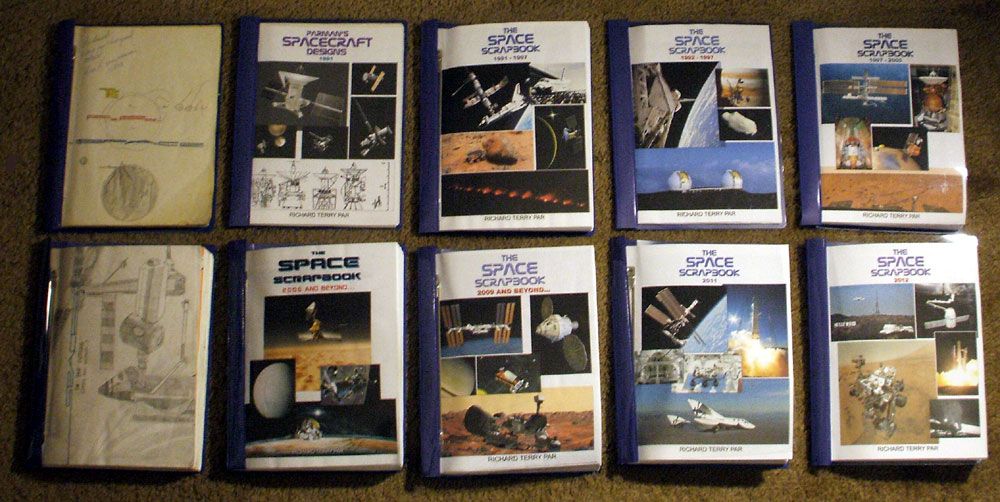
All of my space albums...for the rest of the world to see.

Photos of the Day... Almost two years ago, I posted an entry about several albums I created featuring space articles that I found in the Los Angeles Times and other newspapers since I was in grade school. Just thought I'd post new pics showing the album (which is actually more of a scrapbook...but let's just refer to it as an album here) I created for 2012. Considering the fact that last year was a very action-packed one for manned and unmanned spaceflight [the retired space shuttle orbiters finally being sent to their museum homes, SpaceX's Dragon making its debut flight to the International Space Station (ISS) in the spring, several astronomical events such as last June's Venus transit taking place, and of course, the Curiosity rover's triumphant landing on Mars last August], I almost ran out of space (no pun intended) in the binder because of how thick the album grew. On the plus side though, I don't need to worry about this again till 2015...which is when I'll work on the next (and presumably final) Space Scrapbook. What's happening that year, you ask? The Dawn spacecraft arrives at dwarf planet Ceres, New Horizons makes its long-awaited flyby of dwarf planet Pluto and the first two-man crew is scheduled to launch to the ISS and spend a full year aboard the orbital outpost. Fun times, indeed.

My latest album, THE SPACE SCRAPBOOK: 2012.

Saturday, July 21, 2012

Technicians do fit checks prior to installing windows into the Orion capsule inside the Operations and Checkout Facility at Kennedy Space Center (KSC) in Florida.
NASA

Photos of the Day... While work continues on prepping the Orion Multi-Purpose Crew Vehicle for its first voyage into space on 2014's Exploration Flight Test-1 mission, today marks the one-year anniversary since Atlantis brought STS-135 and the space shuttle program to a successful end with Atlantis' safe landing at the Kennedy Space Center (KSC) in Florida. The image above shows fit checks being done on Orion prior to its windows being attached inside the Operations and Checkout Facility at KSC. The last two pics of this entry show the engraved marker (which was installed on June 28) that commemorates where Atlantis came to a stop at KSC's Shuttle Landing Facility last summer. Similar markers for the final missions of Discovery (on STS-133) and Endeavour (on STS-134) are also placed on the 3-mile-long runway.

Space shuttle Atlantis lands at KSC for the final time, on July 21, 2011.
NASA / Frank Michaux

A marker commemorating where Atlantis came to a stop on KSC's Shuttle Landing Facility (SLF) on July 21, 2011 is installed within the concrete of the 3-mile-long runway (on June 28, 2012).
NASA / Charisse Nahser

A marker commemorating where Atlantis came to a stop on KSC's SLF on July 21, 2011 is installed within the concrete of the 3-mile-long runway (on June 28, 2012).
NASA

Friday, April 27, 2012

A webcam image showing Discovery as work continues to be done on putting her in her final museum display configuration, on April 26, 2012.
Steven F. Udvar-Hazy Center / Axis Communications

Discovery Update... Even though the orbiter Discovery is officially available for the public to marvel at her beauty inside the Steven F. Udvar-Hazy Center in Virginia, work continues to be done on putting her in her final museum display configuration. A few days ago, the tail cone that shielded Discovery's Replica Shuttle Main Engines (RSMEs) during the ferry flight from Florida last week was removed by NASA workers flown in from Kennedy Space Center (KSC). And yesterday, the twin Orbital Maneuvering System thruster nozzles (both duplicates as well) were installed onto the vehicle. All that needs to be done now is close out various vent doors that were open on Discovery since her time at KSC, and lowering her back onto the ground so she can resume her role as a historic 'space artifact' inside the James S. McDonnell Space Hangar at the Udvar-Hazy Center.

Click here to view the shuttle Discovery and other historic spacecraft on Udvar-Hazy Center web cameras.

A webcam image showing Discovery's replica engines after the tail cone was removed on April 24, 2012.
Steven F. Udvar-Hazy Center / Axis Communications

Thursday, April 19, 2012

As of April 19, 2012, the orbiter Discovery is now a permanent museum exhibit at the Steven F. Udvar-Hazy Center in Virginia.
James Dean / Florida Today

Discovery now belongs to the Smithsonian... Earlier today, NASA officially transferred ownership of the orbiter Discovery to the Smithsonian Institution. A few hours later, Discovery was towed into the Steven F. Udvar-Hazy Center, the shuttle's permanent home...and finally began her new career as a museum exhibit meant to inspire and educate young folks into becoming the next generation of engineers and scientists. Inside the Udvar-Hazy Center, Discovery took the spot of her prototype sister ship Enterprise—which had been on display at this museum since 2003. Enterprise herself will be mated to the Shuttle Carrier Aircraft (NASA 905) that brought Discovery to Virginia from Kennedy Space Center in Florida last Tuesday, and be ferried to New York City next Monday (April 23). Enterprise will then be delivered via barge to her new home at the Intrepid Sea, Air and Space Museum a few weeks later.

At Dulles International Airport, Discovery is about to be demated from NASA 905 during the early morning hours of April 19, 2012.
NASA

Prior to landing gear deployment, Discovery is lowered towards the ground after demating from NASA 905 at Dulles International Airport on April 19, 2012.
NASA

Enterprise is towed out of the Udvar-Hazy Center to make room for her sister ship Discovery on April 19, 2012.
NASA

A U.S. Marine Corps  marching band walks past Enterprise during Discovery's transfer ceremony at the Udvar-Hazy Center on April 19, 2012.
NASA

Crowds gather and take pictures as Discovery is finally delivered to the Udvar-Hazy Center on April 19, 2012.
NASA

Discovery and Enterprise come nose-to-nose during Discovery's transfer ceremony at the Udvar-Hazy Center on April 19, 2012.
NASA

As of April 19, 2012, the orbiter Discovery is now a permanent museum exhibit at the Steven F. Udvar-Hazy Center in Virginia.
Smithsonian National Air and Space Museum

As of April 19, 2012, the orbiter Discovery is now a permanent museum exhibit at the Steven F. Udvar-Hazy Center in Virginia.
Smithsonian National Air and Space Museum

Tuesday, April 17, 2012

The orbiter Discovery, mated atop NASA 905, departs from Kennedy Space Center for the final time on April 17, 2012.
NASA / Jim Grossmann

Discovery Bids Florida 'Adieu'... And says 'hello' to our nation's capital. Welcome to the Smithsonian, Discovery.

The orbiter Discovery, mated atop NASA 905, is towed away from the Mate-Demate Device on April 16, 2012...in preparation for the next day's flight to Virginia.
NASA / Dimitri Gerondidaki

The orbiter Discovery, mated atop NASA 905, departs from Kennedy Space Center for the final time on April 17, 2012.
NASA / Glenn Benson

Spectators gather along a Florida beach to watch the orbiter Discovery and NASA 905 conduct flyovers of areas surrounding Kennedy Space Center, on April 17, 2012.
NASA / R. D. Lee

The orbiter Discovery and NASA 905 fly over the U.S. Capitol in Washington, D.C. on April 17, 2012.
NASA

With the U.S. Capitol and Washington Monument in the foreground, the orbiter Discovery and NASA 905 fly over Washington, D.C. on April 17, 2012.
NASA

With the Washington Monument down below, the orbiter Discovery and NASA 905 fly over Washington, D.C. on April 17, 2012.
NASA

The orbiter Discovery and NASA 905 fly over the National Mall in Washington, D.C. on April 17, 2012.
NASA

The orbiter Discovery and NASA 905 fly over the White House in Washington, D.C. on April 17, 2012.
Jim Bourg / Reuters