Showing posts with label Sierra Nevada Corp. Show all posts

Tuesday, April 14, 2026

The Latest Update on America's Next-Generation Spaceplane...

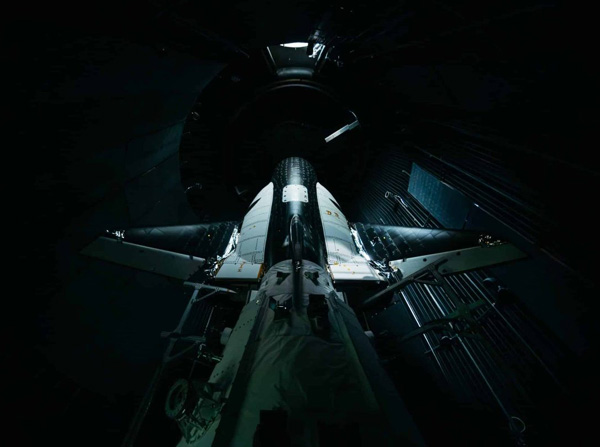
Sierra Space's Dream Chaser spaceplane undergoes launch acoustic testing at NASA's Kennedy Space Center in Florida.
Sierra Space

Sierra Space’s Dream Chaser® Spaceplane Successfully Completed Milestone at NASA’s Kennedy Space Center (Press Release)

LOUISVILLE, Colo. – Sierra Space Corp. (“Sierra Space”), a defense-tech space company delivering solutions for the nation’s most critical missions and advancing the future of security in space, announced today the completion of launch acoustic testing for its Dream Chaser® spaceplane, Tenacity, at NASA’s Kennedy Space Center’s Space Systems Processing Facility (SSPF). This milestone validates the spaceplane’s ability to withstand the intense vibrations produced from sound waves during a rocket launch as it prepares for its first flight to Low-Earth Orbit (LEO).

Rigorous Testing for Launch Readiness

Acoustic testing at NASA’s SSPF utilized an array of 90 stacked speakers to simulate sound and airborne vibrations experienced during a rocket launch. The Dream Chaser spaceplane was positioned at the center of the test setup with its wings stowed, mirroring its configuration inside the 5-meter payload fairing during actual launch. The successful test validated the durability of Dream Chaser’s critical electronic systems and confirmed the structural integrity of the spacecraft.

“We believe Dream Chaser represents a transformative capability for space-based civilian and national security operations,” said Dr. Dan Polis, Dream Chaser program manager and vice president of Engineering at Sierra Space. “It is designed to carry both pressurized and unpressurized payloads, combined with reusability and gentle runway landings, making it ideal for missions critical and time-sensitive missions.”

Preparing for First Flight

Dream Chaser has achieved several key milestones, including EMI/EMC testing, high-speed tow testing, and a post-landing recovery rehearsal. It also demonstrated command and telemetry capabilities with Mission Control in Louisville, Colo, using NASA’s Tracking and Data Relay Satellite System.

With acoustic testing complete, Dream Chaser has been transported to Colorado for final modifications and mission-specific upgrades. On its first mission, the spaceplane will operate as a free-flying platform in support of NASA’s Commercial Resupply Services-2 (CRS-2) contract.

Source: Sierra Space

Thursday, November 13, 2025

The Latest Update on America's Next-Generation Spaceplane...

A tow test is conducted on Sierra Space's Dream Chaser spaceplane at Kennedy Space Center's Launch and Landing Facility in Florida.
Sierra Space

Sierra Space’s Dream Chaser® Spaceplane Successfully Completes Critical Pre-flight Milestones (Press Release)

LOUISVILLE, Colo. – Sierra Space, a proven Defense Tech company delivering solutions for the nation’s most critical missions and advancing the future of security in space, announced today that its Dream Chaser® spaceplane has successfully completed a series of critical pre-flight tests at NASA’s Kennedy Space Center (KSC), marking continued progress toward Dream Chaser’s first free-flyer mission.

As part of its comprehensive testing campaign, Dream Chaser underwent Electromagnetic Interference and Electromagnetic Compatibility (EMI/EMC) testing at NASA’s Space Systems Processing Facility (SSPF). These tests verified the spacecraft’s ability to operate within expected electromagnetic environments throughout various missions.

The spacecraft also completed rigorous tow testing at KSC and Space Florida’s Launch and Landing Facility. For this phase, a Freightliner Cascadia truck, provided by Daimler Truck North America, towed the spaceplane at high speeds to simulate critical dynamics and validating autonomous navigational parameters during runway-landing operations.

Additionally, Dream Chaser successfully demonstrated the ability to receive telemetry and distribute commands between the spacecraft and Mission Control in Louisville, Colorado over NASA’s Tracking and Data Relay Satellite System network. This key milestone tested the spacecraft’s readiness for real-time command and control during flight operations.

The testing campaign concluded with a post-landing recovery rehearsal, which demonstrated the safing of vehicle systems and timely access to sensitive payloads.

With these critical milestones achieved, we expect Dream Chaser to move to its final round of acoustic testing in December 2025. Following this, modifications for national security applications will be explored and performed in Colorado. These enhancements will aim to expand Dream Chaser’s versatility and demonstrate its ability to fulfill a wide array of mission requirements, including those essential to national defense.

Dream Chaser is on track for its first launch to Low-Earth Orbit, targeted in Q4 of 2026, through a demonstration mission under the CRS-2 contract with a runway landing at Vandenberg Space Force Base.

“Each milestone we achieve is a testament to the resilience, innovation and dedication of the Sierra Space team, and represents another significant step forward in ensuring Dream Chaser’s success as a versatile, reusable spacecraft,” said Fatih Ozmen, Executive Chair at Sierra Space. “We are excited to see Dream Chaser progressing steadily toward its inaugural flight to support the nation’s most pressing space priorities.”

Sierra Space is committed to advancing the future of space transportation, exploration and defense, delivering innovative solutions that safeguard national security and ensure freedom of operations beyond Earth.

Source: Sierra Space

Thursday, September 25, 2025

America's Next-Generation Spaceplane Won't Head to the ISS on its First Mission as Originally Planned...

Sierra Space's Dream Chaser spaceplane and Shooting Star cargo module...which were originally supposed to visit the International Space Station on their maiden flight.
Sierra Space

Dream Chaser® Advances Toward First Flight, Eyes Multi-Use Applications (Press Release)

LOUISVILLE, Colo. – Sierra Space, a proven Defense Tech company delivering solutions for the nation’s most critical missions and advancing the future of security in space, announced today a strategic transition for its Dream Chaser® spaceplane. Dream Chaser’s first flight will be a free-flyer, demonstration mission, which is expected to prove the technology and deliver critical data to NASA. This approach aims to provide Sierra Space with flexibility to address the nation’s most pressing National Security Space challenges, while continuing to advance Dream Chaser’s capabilities for NASA and commercial customers.

Sierra Space is prioritizing first-flight readiness with Dream Chaser, targeting a launch in late 2026 to align with expected launch vehicle availability. Sierra Space and NASA worked together to reach this mutually-beneficial agreement that provides greater mission flexibility for Dream Chaser’s first flight. This flight aims to demonstrate critical capabilities for NASA’s ISS resupply and future Commercial LEO Destinations (CLD) missions and position Dream Chaser as a national asset available for future national security and defense demonstrations.

As America’s Spaceplane®, we believe that its adaptability as an orbital, hypersonic spacecraft and rapid deployment, commercial testbed is critical to addressing the nation’s evolving priorities and emerging threats. Additionally, Dream Chaser has unique features and capabilities as a commercial, autonomous spaceplane with the ability to land on any conventional runway, enabling reusability, rapid turnaround and cost-efficient operations for space missions.

“Dream Chaser represents the future of versatile space transportation and mission flexibility,” said Fatih Ozmen, Executive Chair at Sierra Space. “This transition provides unique capabilities to meet the needs of diverse mission profiles, including emerging and existential threats and national security priorities that align with our acceleration into the Defense Tech market. Together with NASA, we are seeking to preserve the exceptional potential of Dream Chaser as a national asset, ensuring its readiness for the next era of space innovation.”

Source: Sierra Space

Thursday, April 24, 2025

The Latest Update on the Future LIFE™ Habitat...

Sierra Space's LIFE shield after it was shot by a .50 caliber two-stage light gas gun at NASA's White Sands Test Facility in Las Cruces, New Mexico.
Sierra Space

Sierra Space Advances Space Station Technology With Hypervelocity Impact Testing at NASA White Sands (Press Release)

High-Speed Ballistic Tests Replicated Micrometeoroid and Orbital Debris Impacts to Help Refine the Shielding of the Company’s Expandable LIFE® Habitat

LOUISVILLE, Colo. – Sierra Space, a leading commercial space company and defense tech prime that is building a platform in space to benefit and protect life on Earth, announced today that it recently conducted successful hypervelocity impact trials at NASA’s White Sands Test Facility in Las Cruces, New Mexico, to optimize the structural integrity of Sierra Space’s Large Integrated Flexible Environment (LIFE®) Habitat. The goal of this NASA-supported testing was to refine a shield for the company’s expandable, flexible space station structure to make it capable of withstanding impacts from hazards on orbit.

The LIFE Habitat’s shield, constructed from innovative, high-strength, flexible “softgoods” – a chemically-woven fabric material called Vectran® – provides a lightweight yet durable alternative to traditional rigid structures. The Sierra Space and NASA test teams used a two-stage light gas gun to simulate micrometeoroid and orbital debris (MMOD) impacts to LIFE’s outer shield. The testing aimed to select materials and configurations that enhance the habitat’s shielding performance while achieving significant mass savings – critical for space missions.

“Our innovative space station technology drives scientific discovery and fuels a low-Earth orbit economy,” said Shawn Buckley, Vice President, Space Destinations Systems at Sierra Space. “This collaboration with NASA advances our efforts to develop a shield that protects against micrometeoroids and space debris, bringing us closer to launching the LIFE Habitat into orbit and readying our technology for repeat and long-duration space missions.”

The impact testing, conducted under an unfunded Space Act Agreement called Collaborations for Commercial Space Capabilities (CCSC-2), used NASA’s .50 caliber two-stage light gas gun to replicate MMOD traveling at speeds around seven kilometers per second. Housed in the Remote Hypervelocity Test Laboratory, the gun uses gunpowder (the first stage) and highly-compressed hydrogen (the second stage) to accelerate projectiles at high velocities to simulate orbital debris impacts on spacecraft and satellite materials and components. Testing is conducted in a near vacuum chamber to simulate space conditions.

Material Selection and Testing Process

The impact trials were conducted in two phases. The first grouping of shots varied the softgoods materials while keeping gun parameters constant, simulating MMOD impacts to directly compare how each material performed. After identifying the most promising materials, the team adjusted gun parameters to develop an equation characterizing the efficacy and performance of the selected shield stack.

During the tests, 40 experimental shots were fired toward the materials to confirm the configuration selection. Once the team had established a strong but mass-efficient shield configuration, 19 additional shots were discharged at the material. These efforts were critical to mitigate future risks posed by MMOD—tiny, high-speed particles that can cause significant damage to spacecraft and habitats in orbit.

Sierra Space team members traveled to White Sands to observe the shots firsthand and collaborate on real-time adjustments to the follow-on tests based on immediate results. This hands-on approach allowed for rapid, data-driven decisions to refine the shield design.

Collaboration with NASA Drives Innovation

Throughout the process, Sierra Space collaborated closely with NASA, leveraging its expertise to analyze the data and determine the best path forward. This collaboration underscores the shared commitment to advancing space habitat technology capable of withstanding the harsh conditions of space, including MMOD threats.

Sierra Space remains dedicated to pioneering space technology and exploration. The successful testing marks a key milestone in developing the LIFE Habitat as a reliable, MMOD-resistant solution for long-duration space missions. Additional testing will further refine the LIFE Habitat for first launch to low-Earth orbit.

Source: Sierra Space

****

The .50 caliber two-stage light gas gun that was used to test the strength of Sierra Space's LIFE shield at NASA's White Sands Test Facility in Las Cruces, New Mexico.
Sierra Space


Saturday, November 23, 2024

The Latest Milestone Towards Putting Inflatable Habitats in Space...

This video screenshot shows the moment the LIFE 10 article burst during the Ultimate Burst Pressure test at NASA's Marshall Space Flight Center in Huntsville, Alabama...on October 29, 2024.
Sierra Space

Sierra Space’s Commercial Space Station Technology Nears Certification (Press Release - November 20)

LOUISVILLE, Colo. – Sierra Space, a leading commercial space company and defense-tech prime that is Building a Platform in Space to Benefit Life on Earth® announced today the recent completion of a sixth successful stress test, and the fourth Ultimate Burst Pressure (UBP) test, for its LIFE® 10 commercial space station technology. This test of the revolutionary expandable LIFE platform, or Large Integrated Flexible Environment, was the final UBP test that Sierra Space needed to perform on LIFE 10 to fulfill Factor of Safety (FOS) recommendations ahead of certifying the structure for human habitation.

The LIFE 10 article in this most recent test, conducted on October 29th at NASA’s Marshall Space Flight Center, ruptured at the highest pressure yet, 255 psi, and was the highest loading to date of any test article in the three-year restraint layer certification test campaign. The 255 psi failure point exceeds any guideline for restraint layer capability recommended by NASA in all applications and environments. As a standalone product line, this test proved that the LIFE 10 restraint layer surpassed NASA’s 4x factor of safety recommendation in both LEO and lunar environments.

LIFE 10 has an internal volume similar to that of a 10-ft-long moving truck, making it an ideal module for the surface of the Moon.

In a LEO environment where the maximum internal pressure of the module will resemble that of Earth at 15.2 psi, the LIFE 10’s factor of safety is greater than 16x. In a lunar environment where – due to different operational needs – the internal pressure is lower (around 10.8 psi), LIFE 10’s restraint layer has an impressive 23x factor of safety. With such high margins, Sierra Space is concluding the UBP portion of the LIFE 10 test campaign, solidifying Sierra Space’s position as the industry leader in commercial space station development.

LIFE 10 is a one-third scale version of the company’s LIFE® 285 habitat, which inflates to the size of a three-story apartment building on orbit. Sierra Space has conducted two UBP tests on LIFE 285-scale modules in the past year; the first one will be featured in the NOVA documentary series “Building Stuff,” in an episode premiering November 20th on PBS (see preview here).

“Our company is fully committed to developing the necessary technology to ensure there is no gap in LEO when the International Space Station is decommissioned,” said Sierra Space CEO, Tom Vice. “We are leading the industry in the development of revolutionary expandable structures that will bring to life the world’s first end-to-end business and technology platform in Low-Earth Orbit, enabling humanity to find the answers to some of the toughest problems faced on Earth.”

“Sierra Space’s LIFE habitat scalable architecture is designed for a broad spectrum of space applications. The LIFE 10 design which started out as a scaled version of the LIFE 285, is now directly applicable for lunar surface infrastructure development, said Shawn Buckley, VP, Destinations & In-Space infrastructure at Sierra Space. “Whether it’s supporting missions in Low-Earth Orbit, deep space, or even on the Moon and on Mars, LIFE has so many practical applications. At Sierra Space, we’re proud to lead the way in inflatable habitat technology and continue pushing the boundaries of what’s possible in space innovation.”

Source: Sierra Space

****

Tuesday, September 17, 2024

A Device That Will Be Crucial to Artemis Astronauts Living on the Lunar Surface is Unveiled...

Sierra Space's Carbothermal Oxygen Production Reactor undergoes thermal vacuum testing at NASA's Johnson Space Center in Houston, Texas.
Sierra Space

Sierra Space Unveils Breakthrough Technology Designed to Extract Oxygen from Lunar Soil, Enabling Sustainable Human Presence on the Moon (Press Release)

LOUISVILLE, Colo. – Sierra Space, a leading commercial space company and defense tech prime that is Building a Platform in Space to Benefit Life on Earth®, announced today the company’s proprietary Carbothermal Oxygen Production Reactor has successfully completed thermal vacuum testing at NASA’s Johnson Space Center, heralding the first time in history that oxygen has been extracted from simulated lunar soil, or regolith, using an automated, standalone system in a lunar environment. The technology, when scaled up, is designed to produce oxygen in bulk to support one of the primary objectives of NASA’s Artemis program: establishing the first long-term presence on the Moon.

“The Apollo program took us to the Moon to study and learn. Artemis is taking us back to the Moon, this time to stay,” said Tom Vice, CEO of Sierra Space. “Our company is focused on building the infrastructure necessary to enable continuous human presence on the lunar surface. This sustainable future begins with developing the core technology and systems that create oxygen in that environment, using local natural resources.”

Sierra Space test engineers spent two weeks in August operating the company’s oxygen extraction system inside a thermal vacuum chamber at Johnson, working with lunar regolith simulant in an environment that the hardware would recognize as similar to the water-ice-laden south pole region of the Moon. Under lunar temperatures and pressures, the Sierra Space system executed all of the regolith handling steps and performed the carbothermal reduction reaction that extracts oxygen from minerals in the regolith simulant.

This disruptive innovation, a system developed at Sierra Space’s facilities in Madison, Wisconsin, represents a major leap forward in enabling long-term human habitation on the Moon and future space exploration endeavors. The company’s Destinations and In-Space Infrastructure team, known for their work in building the world’s first commercial LEO space station, is leveraging the company’s pioneering technologies in large expandable space modules, environmental control systems and in-space food growth systems, to build core infrastructure on the Moon.

“This latest testing validates that the technologies and techniques developed and employed in the Sierra Space oxygen extraction system would work on the lunar surface,” said Shawn Buckley, Vice President of Space Destinations Systems at Sierra Space. “These efforts confirmed that the hardware has advanced to Technology Readiness Level Six, or TRL-6, meaning it has the maturation to be incorporated into a flight mission to the Moon as a technology demonstrator.”

Temperatures in which the Sierra Space Carbothermal Oxygen Production Reactor were tested ranged from -45° Celsius to 1,800° Celsius. In addition to the challenges of functioning from sub-zero to hotter-than-lava temperatures, the hardware was required to move the simulated lunar regolith – a very abrasive and jagged material because it does not have the weathering processes found on Earth – through its system. The potentially damaging particles were handled effectively by the hardware and gasses were successfully sealed inside the reactor, thanks to Sierra Space’s use of a patent-pending valve design that previously demonstrated functionality to greater than 10,000 cycles.

The tests confirmed that Sierra Space’s system can successfully handle regolith that would be delivered from a lunar rover or robotic arm and automatically bring it into the reaction chamber, perform the carbothermal reduction reaction process to extract the oxygen from the minerals in the regolith, and remove the processed regolith from the system so the operation can be repeated.

“By harnessing the natural resources found on the Moon, we reduce our reliance on Earth-based supplies and open up new frontiers for space exploration and commercialization, Vice added. “With our breakthrough technology that can provide a reliable source of oxygen in-situ, Sierra Space is poised to play a potential role in NASA’s Artemis program and other initiatives aimed at establishing a permanent human presence on the lunar surface.”

Resources like oxygen are crucial building blocks; in addition to using oxygen for breathing, it can also be used as a propellant; a game changer for enabling economical space exploration for both a sustained lunar presence and lowering the cost of future Mars missions.

On a related note, Sierra Space is also participating in a groundbreaking research and development initiative for the Defense Advanced Research Projects Agency (DARPA), the 10-Year Lunar Architecture (LunA-10) capability study. The company is focused on integrating oxygen extraction, electrical storage, chemical recycling and hydrogen-oxygen engine technology into a framework for a commercial lunar infrastructure.

Source: Sierra Space

Wednesday, September 4, 2024

Dream Chaser's Detachable Storage Platform Achieves a Big Milestone on the Path to Launch...

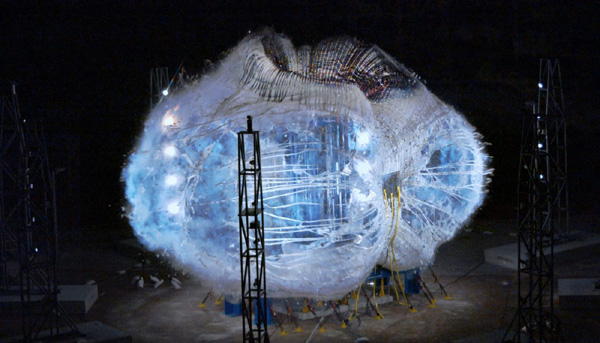
Sierra Space's Shooting Star cargo module undergoes acoustic testing inside the Space Systems Processing Facility at NASA's Kennedy Space Center in Florida.
Sierra Space

Sierra Space Shooting Star® Cargo Module Completes Acoustic Testing at NASA’s Kennedy Space Center (Press Release)

LOUISVILLE, Colo. – Sierra Space, a leading commercial space company and defense tech prime that is Building a Platform in Space to Benefit Life on Earth®, announced today the successful completion of acoustic testing on its Shooting Star® cargo module at NASA’s Kennedy Space Center, moving the spacecraft a significant step closer to launch readiness. The test, the first of its kind to be conducted inside the Space Systems Processing Facility (SSPF), replicated the intense acoustic stresses that Shooting Star will need to withstand during a Vulcan Centaur rocket launch to the International Space Station (ISS).

During the Direct Field Acoustic Test (DFAN), the test team placed stacks of purpose-built loudspeakers – each one a highly-engineered acoustic device – in 21-ft-tall columns surrounding the spacecraft. Their goal was to test whether the structural elements of Shooting Star could withstand the acoustic environment of a launch on a Vulcan Centaur rocket. Over a four-day period, test engineers blasted the spacecraft with a controlled sound field that was 10,000x higher in intensity than the volume of a typical rock concert, recreating the sonic intensity of a launch.

Shooting Star withstood acoustic levels greater than 140 dB for several minutes at a time, proving its flight worthiness.

“Our innovative Shooting Star cargo module offers the capability to deliver additional capacity, flexibility and power to a wide range of missions,” said Sierra Space CEO, Tom Vice. “In our first mission, Shooting Star will carry critical science, food and cargo to the International Space Station for NASA, and our cargo modules will continue to play an integral role in bringing supplies to space as we build a Low-Earth Orbit economy through commercial spaceflight.”

Shooting Star attaches to the aft of Sierra Space’s Dream Chaser®, adding 7,000 lbs. of supplemental cargo capacity to the spaceplane, while its solar arrays and thrusters provide power and additional propulsion to both spacecraft. The acoustic testing at Kennedy Space Center was performed with a mobile setup provided by West Virginia-based Acoustic Research Systems, Inc.; it was the first time onsite acoustic testing has ever been conducted inside the SSPF, NASA’s historic staging location for space station-bound components.

“Our goal is to accurately simulate real world launch conditions to make sure Sierra Space’s Shooting Star cargo module is ready for its first mission to the International Space Station,” said ARS CEO, Jeremiah Leiter. “The ARS team rose to the challenge, setting up a mobile configuration onsite at Kennedy Space Center – for the first time ever inside the Space Systems Processing Facility – providing Sierra Space with critical acoustic qualification testing. We look forward to supporting Sierra Space with the upcoming Dream Chaser acoustic test.”

ARS used a total of 48 acoustic devices during the cargo module testing. The company’s Neutron™ System is an industry first, consisting of proprietary, purpose-built acoustic devices made for high-output aerospace acoustic testing. ARS will be using an even larger setup for Sierra Space’s Dream Chaser spaceplane; the impending test will be the largest payload ever tested with DFAN.

Source: Sierra Space
****

Sierra Space's Shooting Star cargo module undergoes acoustic testing inside the Space Systems Processing Facility at NASA's Kennedy Space Center in Florida.
Sierra Space

Sierra Space's Shooting Star cargo module undergoes acoustic testing inside the Space Systems Processing Facility at NASA's Kennedy Space Center in Florida.
Sierra Space

Friday, July 12, 2024

America's Next-Generation Spaceplane May Land in Other Parts of the World...

An artist's concept of the Dream Chaser spaceplane about to touch down on a runway.
Sierra Space

New Sierra Space Partners Accelerate Effort to Bring Dream Chaser® Spaceplane to Japan (Press Release)

LOUISVILLE, Colo. – Sierra Space, a leading commercial space-tech company that is Building a Platform in Space to Benefit Life on Earth®, announced today that two additional partners will help accelerate the investigation into Spaceport Oita in Kunisaki, Oita, Japan, as a potential landing site in Asia for Sierra Space’s Dream Chaser®, reaffirming its plans to expand a global network of return locations for the revolutionary new commercial spaceplane.

MUFG Bank, Ltd., and Tokio Marine & Nichido Fire Insurance Co., Ltd., anchor investors in Sierra Space’s Series B funding round, are joining forces with Sierra Space, Oita Prefecture, Kanematsu Corporation and Japan Airlines to conduct a comprehensive utilization and landing site study at Spaceport Oita. The consortium will work together to identify and develop new business opportunities for Sierra Space’s Dream Chaser in Japan and across the Asian continent.

“Our dual-use and fully-reusable Dream Chaser spaceplane will transform space travel,” said Sierra Space CEO Tom Vice. “Dream Chaser’s unique ability to land on compatible commercial runways worldwide – transporting precious cargo efficiently in a low-g landing – opens myriad, new global economic opportunities.”

“Two major Sierra Space investors, MUFG Bank, Ltd., and Tokio Marine and Nichido Fire Insurance Co., Ltd., will help extend the robust commercial economy we’re building in low-Earth Orbit to businesses and academic institutions in Japan and across the Asia-Pacific region. We are honored to share this vision with them, along with our partners in Oita Prefecture, Kanematsu and Japan Airlines.”

Dream Chaser – the world’s first winged commercial spacecraft – recently arrived at NASA’s Kennedy Space Center and entered into operations ahead of its first International Space Station (ISS) servicing mission. The Dream Chaser fleet is growing rapidly, with a second spaceplane under construction, and the company is eyeing multiple global partnerships to establish the following runway landing sites in addition to Oita, Japan:

Kennedy Space Center, Florida

Space Florida holds a Launch and Reentry Site Operator License, issued by the FAA in January 2021, allowing Dream Chaser to land at Space Florida’s Launch & Landing Facility (LLF). The spaceplane, dubbed Tenacity®, will be the first spacecraft to travel from the ISS to the historic runway since space shuttle Atlantis touched down on the iconic landing strip in 2011.

Spaceport Cornwall, U.K.

Sierra Space’s Memorandum of Understanding with Spaceport Cornwall in June 2021 followed the successful completion of a Concept of Operations (CONOPS) funded by the UK Space Agency that examined U.S.-U.K. regulatory framework, return mission trajectory analysis, risk analysis, environmental and infrastructure review, as well as a consideration of present and future supply chain capability. The resulting agreement specifically identifies Spaceport Cornwall as a suitable and viable landing site.

Huntsville, Alabama

In May 2022, the FAA issued a license allowing the Huntsville International Airport in Alabama to accept landings from Sierra Space’s Dream Chaser spaceplane. The FAA license evaluation process involved environmental and safety reviews; the agency will work with the Huntsville Airport to develop the necessary notifications and other procedures for safely and efficiently integrating commercial space reentries into its operations.

Spaceport America, New Mexico

Spaceport America, located in southern New Mexico, is the most recent addition to a growing list of compatible runways worldwide where the Dream Chaser could land. The agreement was signed in June 2022.

This latest addition to the portfolio solidifies Spaceport America as a versatile location, encapsulating Sierra Space’s vision of accessible space for all.

Sierra Space products and programs are working towards a more accessible space economy. As the next generation of space transportation, the first Dream Chaser is in pre-launch preparations for its inaugural cargo supply and return mission for NASA, and will deliver up to 12,000 pounds of cargo to the ISS per flight.

Dream Chaser is a reusable spaceplane, uniquely capable of a smooth 1.5 low-g re-entry for crew and cargo transportation with the ability to land on existing commercial runways worldwide.

Source: Sierra Space

Monday, May 20, 2024

America's Next-Generation Spaceplane Arrives at Cape Canaveral to Undergo Final Preps for Its Flight to the ISS...

Sierra Space's Dream Chaser Tenacity vehicle will soon undergo final launch preparations for its first mission to the International Space Station...after arriving at Kennedy Space Center's Space Systems Processing Facility in Florida on May 20, 2024.
NASA / Kim Shiflett

NASA, Sierra Space Deliver Dream Chaser to Florida for Launch Preparation (News Release)

As part of NASA’s efforts to expand commercial resupply in low-Earth orbit, Sierra Space’s uncrewed spaceplane arrived at NASA’s Kennedy Space Center in Florida ahead of its first flight to the International Space Station.

The Dream Chaser spaceplane, named Tenacity, arrived at Kennedy on May 18 inside a climate-controlled transportation container from NASA’s Neil Armstrong Test Facility in Sandusky, Ohio, and joined its companion Shooting Star cargo module, which arrived on May 11.

Before arriving at Kennedy, the spaceplane and its cargo module underwent vibration testing atop the world’s highest capacity and most powerful spacecraft shaker system inside the agency’s Space Environments Complex, exposing the stack to vibrations like those that it will experience during launch and re-entry into Earth’s atmosphere. Following vibration testing, the duo moved to NASA’s In-Space Propulsion Facility and was exposed to low-ambient pressures and temperatures ranging from -150 to 300° Fahrenheit.

Upon arrival at Kennedy, teams moved Dream Chaser Tenacity to the high bay inside the Space Systems Processing Facility, where it will undergo final testing and prelaunch processing ahead of its launch scheduled for later this year.

The spaceplane will lift off aboard a ULA (United Launch Alliance) Vulcan rocket from Space Launch Complex-41 at Cape Canaveral Space Force Station and is set to deliver 7,800 pounds of cargo to the orbiting laboratory.

The remaining pre-flight activities at Kennedy include acoustic and electromagnetic interference and compatibility testing, completion of work on the spaceplane’s thermal protection system, and final payload integration.

Dream Chaser is a lifting body-design spaceplane that measures 30 feet-long by 15 feet-wide. The unique winged design allows it to transport cargo to and from low-Earth orbit and maintain the ability to land on a runway in the style of NASA’s space shuttle.

The 15-foot Shooting Star module can carry up to 7,000 pounds of cargo internally and features three unpressurized external payload mounts.

The partially-reusable transportation system will perform at least seven cargo missions to the space station as part of the agency’s efforts to expand commercial resupply services in low-Earth orbit. Future missions may last as long as 75 days and deliver as much as 11,500 pounds of cargo.

While the Dream Chaser spacecraft is reusable and can return up to 3,500 pounds of cargo to Earth, the Shooting Star module is designed to be jettisoned and burn up during reentry, creating the opportunity to dispose of up to 8,500 pounds of trash with each mission.

Dream Chaser Tenacity is the first in a planned fleet of Sierra Space spaceplanes to help carry out these missions.

As part of the process to certify the vehicle system for future agency resupply missions, NASA and Sierra Space will put the spaceplane through its paces once in-orbit. As Dream Chaser Tenacity approaches the space station, it will conduct a series of demonstrations to prove attitude control, translational maneuvers and abort capabilities.

After completing the maneuverability demonstration, space station astronauts will use the Canadarm2 robotic arm to grapple the spacecraft and dock it to an Earth-facing port.

After remaining at the orbiting laboratory for about 45 days, the spaceplane will be released from the station and return for a landing at Kennedy’s Launch and Landing Facility. After landing, Dream Chaser is powered down, and the Sierra Space team will transfer it back to the processing facility to perform necessary inspections, offload remaining NASA cargo, and begin the process of preparing it for its next mission.

Source: NASA.Gov

****

Sierra Space's Dream Chaser Tenacity vehicle will soon undergo final launch preparations for its first mission to the International Space Station...after arriving at Kennedy Space Center's Space Systems Processing Facility in Florida on May 20, 2024.
NASA / Kim Shiflett

Sierra Space's Dream Chaser Tenacity vehicle will soon undergo final launch preparations for its first mission to the International Space Station...after arriving at Kennedy Space Center's Space Systems Processing Facility in Florida on May 20, 2024.
NASA / Kim Shiflett

Thursday, May 9, 2024

America's Newest ISS-Bound Freighter Will Soon Head to Florida for Launch...

A snapshot of Dream Chaser and its Shooting Star cargo module inside the thermal vacuum chamber at NASA’s Neil Armstrong Test Facility in Sandusky, Ohio...on April 26, 2024.
Joshua Teplitz / Sierra Space

Sierra Space Reinvents Space Transportation with Dream Chaser® (Press Release)

LOUISVILLE, Colo. – Sierra Space, a leading commercial space company and emerging defense tech prime building a platform in space to benefit and protect life on Earth, announced today the successful completion of a rigorous environmental test suite on the revolutionary Dream Chaser® spaceplane, Tenacity®, at NASA’s Neil Armstrong Test Facility in Sandusky, Ohio.

As the first Dream Chaser moves toward orbital operations, Sierra Space and NASA test team members are preparing the vehicle, along with its Shooting Star® cargo companion, for shipment to NASA’s Kennedy Space Center in Florida for final testing and integration ahead of its inaugural launch later this year.

Over the past several months, Dream Chaser and Shooting Star have undergone intense shock, vibration and thermal vacuum testing at the sprawling Armstrong Test Facility. In December, the test teams conducted shock tests with Sierra Space’s launch partner United Launch Alliance (ULA), using the flight separation system that will deploy the spacecraft from the upper stage of ULA’s second Vulcan Centaur rocket.

The two vehicles were then stacked in launch configuration on the world’s most powerful spacecraft shaker table inside the test center’s Mechanical Vibration Facility. Sine vibration testing – conducted over a five-week period – simulated the intense conditions and environment of a launch on a Vulcan Centaur rocket. See video here.

After vibe testing concluded, the teams conducted another shock test – this time with the flight separation system between Dream Chaser and Shooting Star – to simulate the dynamic environment during separation of the two vehicles prior to de-orbit and re-entry.

Next, the Sierra Space and NASA test teams transported the vehicles to the In-Space Propulsion Facility at Armstrong for thermal vacuum or “TVAC” testing. Temperatures in space can range from the extremely cold – hundreds of degrees below freezing – to several hundred degrees Fahrenheit due to radiation from the sun.

TVAC testing is a realistic thermal simulation of the flight environment and critical to ensuring mission success. For more than five weeks, Dream Chaser and Shooting Star were subjected to multiple cold-hot cycles in a vacuum environment, between -150°F to +250°F, with teams conducting functional tests at temperature plateaus to verify system performance.

Sierra Space is releasing some stunning new imagery with this announcement, and you can download it here.

Dream Chaser and Shooting Star will soon be transported to NASA’s Kennedy Space Center and staged inside the storied Space Systems Processing Facility (SSPF) – originally built to be the last stop for components of the International Space Station – for final integration and testing.

The final environmental tests – acoustic testing and electromagnetic interference and compatibility testing – will be performed onsite inside the SSPF. Remaining work on the thermal protection system will also be completed there.

Dream Chaser Tenacity, the first in a fleet of spaceplanes, remains on track for a 2024 launch on the first of seven missions to resupply the International Space Station for NASA under a Commercial Resupply Services-2 (CRS-2) contract. A second spaceplane, named Reverence™, is in production in Sierra Space’s Louisville, Colo., factory.

Armstrong Test Facility is part of NASA’s Glenn Research Center in Cleveland. Located on 6,400 acres in Sandusky, Ohio, it is home to some of the world’s largest and most capable space simulation test facilities, where ground tests are conducted for the U.S. and international space and aeronautics communities.

Source: Sierra Space

Friday, March 8, 2024

America's Newest ISS-Bound Freighter Moves One Step Closer to Its First Launch...

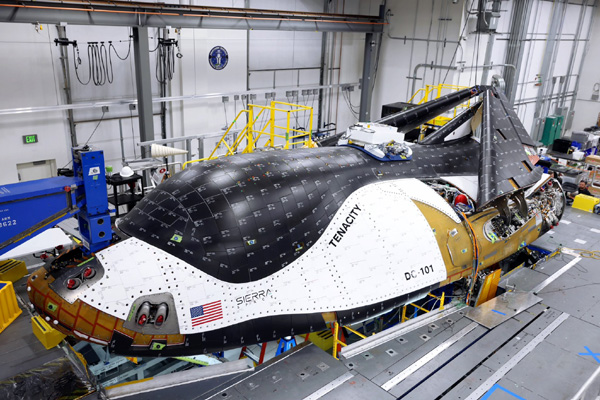
Sierra Space's Dream Chaser freighter and Shooting Star cargo module undergo vibration testing at NASA's Neil Armstrong Test Facility in Sandusky, Ohio.
Sierra Space

Sierra Space Dream Chaser® Spaceplane Successfully Completes First Phase of Pre-Flight Testing (Press Release - March 7)

LOUISVILLE, Colo. – Sierra Space, a leading commercial space company and emerging defense tech prime building a platform in space to benefit and protect life on Earth, announced today the successful completion of the initial phase of environmental testing on the revolutionary Dream Chaser® spaceplane, Tenacity®, at NASA’s Neil Armstrong Test Facility in Sandusky, Ohio.

Over the past month, the Sierra Space Dream Chaser and its cargo companion, Shooting Star™, underwent rigorous vibration testing while stacked in launch configuration inside the Mechanical Vibration Facility at the NASA complex. In readiness for launch from Kennedy Space Center, the tests exposed the vehicles to the intense conditions of launch vibrations using the world’s most powerful spacecraft shaker table.

See video about the vibration testing here.

“We are coming out of years of development, years of hard work and years of resolving tough engineering challenges that come from revolutionary new ways of doing things,” said Sierra Space CEO Tom Vice. “This phase of development illustrates how Dream Chaser and the Shooting Star cargo module will handle the mechanical rigors of launch. This is the year that we transition from development and enter orbital operations – it is the year that changes how we connect space and Earth.”

“Completion of vibration testing of the vehicles in the launch configuration is a huge milestone for Sierra Space and the Dream Chaser program,” said Jake Ingram, Director of Programs for Dream Chaser DC-100. “We successfully applied the environment specified by the launch provider, validated primary-structure modal responses and verified vehicle functionality before and after the vibration test sequence.”

Key accomplishments in this first critical phase of pre-flight testing included: the completion of Sine Vibration Testing (in all three axes or directions), a Separation Shock Test that simulates the separation of the Dream Chaser from Shooting Star and a test that involved deploying the spaceplane’s wings. These tests evaluated Dream Chaser’s performance under the stresses of launch, operation in orbit and ability to communicate with the International Space Station (ISS).

Joint Test #3, a critical phase in the testing process, represented an integrated assessment of the completed system in a flight-like configuration. After its ride to space atop United Launch Alliance’s Vulcan Centaur rocket, Dream Chaser separates from the rocket fairing, deploys its wings from a folded position and flies semi-autonomously to the International Space Station.

Joint Test #3 was a comprehensive evaluation focused on the software interface between the vehicle and the ISS to ensure the seamless functionality of the command and data handling.

Following these critical test phases, the Shooting Star cargo module was de-mated from Dream Chaser and transported from the Armstrong Test Facility’s Space Environments Complex (SEC) to the nearby In-Space Propulsion (ISP) facility. Soon, Dream Chaser will be transported to the ISP facility to join the cargo module, where the two spacecraft will begin thermal vacuum testing, a crucial step in the journey towards the launch pad and another milestone in Sierra Space’s mission to redefine the future of space commercialization.

Source: Sierra Space
****

Sierra Space's Dream Chaser freighter and Shooting Star cargo module undergo vibration testing at NASA's Neil Armstrong Test Facility in Sandusky, Ohio.
Sierra Space

Monday, January 22, 2024

A Full-Scale Version of the LIFE™ Habitat Structure Is Successfully Tested in Alabama...

A full-scale version of Sierra Space's LIFE™ habitat structure underwent an Ultimate Burst Pressure test at Huntsville, Alabama, in 2023.
Sierra Space

Sierra Space Advances its Revolutionary Commercial Space Station Technology (Press Release)

Company is Accelerating the Introduction of Commercial Microgravity Research and Production Facilities in Space to Benefit Life on Earth

LOUISVILLE, Colo. – Sierra Space, a leading commercial space company building the first end-to-end business and technology platform in space, has achieved a groundbreaking milestone by successfully designing, manufacturing, assembling and testing its first full-scale, expandable space station structure, alongside exclusive softgoods technology partner ILC Dover.

By the Numbers:

-- Company’s first stress test of a full-size, inflatable space station structure
-- Test unit stood over 20’ tall and was comparable in size to an average family home
-- The article was 300 m³ in volume, or 1/3rd the volume of the International Space Station
-- Test results exceeded NASA’s recommended x4 safety levels by 27%

The pressure shell for Sierra Space’s LIFE™ (Large Integrated Flexible Environment) habitat is made of expandable “softgoods,” or woven fabrics that perform like a rigid structure once inflated. During an Ultimate Burst Pressure (UBP) test, the teams inflate the test article until it fails, which helps determine how strong its softgoods materials would be under extreme stresses in the harsh environment of space.

The full-scale unit in this test reached 77 psi before it burst, which well exceeds (+27%) NASA’s recommended level of 60.8 psi (maximum operating pressure of 15.2 psi multiplied by a safety factor of four).

The achievement underscores Sierra Space’s commitment to advancing the cutting-edge design and development of commercial space stations and positions the company well ahead of its global competitors. The company’s expandable technology provides for on-orbit infrastructure volume greater than 5x the fairing volume used to transport the system to orbit.

Sierra Space’s LIFE is packed inside a standard five-meter rocket fairing and inflates to the size of a three-story apartment building on orbit. In just three launches, the modular LIFE units can create a living and working environment in space that is larger, volume-wise than the entire International Space Station (ISS).

In coming years, the company will iterate on larger designs. A 1400-cubic-meter version, packaged inside a seven-meter rocket fairing, for example, would surpass the size of the ISS in a single launch.

Building upon this successful test, Sierra Space will embark on an aggressive 2024 testing campaign at both sub- and full-scale, including a series of UBP tests in tandem with early-stage development of the primary Atmospheric Barrier and Micrometeoroid Orbital Debris (MMOD) layers.

The test specifically focused on the LIFE habitat pressure shell – otherwise known as the restraint layer – which is comprised of Vectran straps along with a series of other high-strength fabric materials. Sierra Space, working with its exclusive softgoods technology partner ILC Dover, has specifically designed and tested Vectran straps at the component and sub-scale levels prior to this full-scale test.

Vectran is stronger than steel when inflated on-orbit and provides high margins of safety under pressure.

This recent full-scale UBP test was performed with support from NASA via a Reimbursable Space Act Agreement in which NASA’s Marshall Space Flight Center provides services to Sierra Space in support of its exploration and commercial Low-Earth Orbit technology development and risk reduction activities.

This test occurred in Huntsville, Ala., on Redstone Arsenal adjacent to the historic Saturn 1/1B test stand.

Source: Sierra Space
****

Friday, December 15, 2023

Sierra Space's Next-Generation Spaceplane Continues to be Prepped for Its Maiden Flight Next Year...

Sierra Space's Dream Chaser vehicle prepares to undergo testing at NASA's Neil Armstrong Test Facility in Sandusky, Ohio.
Sierra Space / Shay Saldana

Dream Chaser Undergoes Testing at NASA Test Facility in Ohio (News Release)

NASA and Sierra Space are preparing for the first flight of the company’s Dream Chaser spacecraft to the International Space Station. Dream Chaser and its companion cargo module, called Shooting Star, arrived at NASA’s Neil Armstrong Test Facility in Sandusky, Ohio, for environmental testing, scheduled to start in mid-December, ahead of its first flight, scheduled for the first half of 2024.

The Neil Armstrong Test Facility, part of NASA’s Glenn Research Center in Cleveland, is home to multiple test facilities, including the Space Environments Complex and In-Space Propulsion Facility, both stops for Dream Chaser. The complex is home to the Mechanical Vibration Facility, which subjects test articles to the rigorous conditions of launch.

While at Armstrong, the Dream Chaser winged spacecraft will be stacked atop its Shooting Star cargo module on the vibration table to experience vibrations like those during launch and re-entry into Earth’s atmosphere.

Following vibration testing, Dream Chaser will be moved to the propulsion facility for thermal vacuum testing. Dream Chaser will be placed in a vacuum and exposed to low-ambient pressures, low-background temperatures and replicated dynamic solar heating, which simulates the environment that the spacecraft will encounter during its mission.

This facility is the only one capable of testing full-scale, upper stage rockets and rocket engines under simulated space conditions and conducting altitude hot fire.

After completion of testing at Armstrong, Dream Chaser will be shipped to NASA’s Kennedy Space Center in Florida for further launch preparations, currently scheduled for liftoff in the first half of 2024.

Source: NASA.Gov

Friday, December 1, 2023

Dream Chaser and Its Detachable Storage Platform Will Soon Begin Environmental Testing in Ohio...

Sierra Space's Shooting Star cargo module is ready to undergo pre-launch testing after arriving at NASA's Neil Armstrong Test Facility in Sandusky, Ohio.
Sierra Space

Sierra Space Shooting Star™ Cargo Module Initiates Rigorous Testing at NASA’s Neil Armstrong Test Facility (Press Release - November 30)

Testing at the NASA facility in Ohio will ensure that the spacecraft can withstand the rigor of launch and the harsh environment of space

LOUISVILLE, Colo. – Sierra Space, a leading pureplay commercial space company building the first end-to-end business and technology platform in space, announced today the commencement of a comprehensive testing campaign for the Shooting Star™ cargo module at NASA’s Neil Armstrong Test Facility in Sandusky, Ohio. This pivotal phase of testing aims to validate the spacecraft’s resilience to the demands of launch and the challenging conditions of space as Shooting Star is readied for its inaugural mission to the International Space Station.

Sierra Space remains committed to ensuring the utmost reliability of its cutting-edge technologies. The Sierra Space Shooting Star cargo module, designed in tandem with the revolutionary Dream Chaser® spaceplane, is set to redefine cargo capabilities, power and propulsion systems in space.

“This transformative Sierra Space technology will define the next era of space commercialization,” said Sierra Space CEO Tom Vice. “As we embark on this journey to build a platform in space to benefit life on Earth, our commitment to innovation, reliability and sustainability remains unwavering and is exemplified in our Shooting Star cargo module.”

Key Features of the Shooting Star Cargo Module:

-- Operates seamlessly with the Dream Chaser® spaceplane
-- Internal cargo capacity of 7,000 pounds, complemented by three external mounting points
-- Scheduled NASA resupply missions for the International Space Station beginning in 2024
-- Compatibility with a diverse range of current and future launch vehicles

Commercial Resupply Services-2 (CRS-2) Cargo Services for NASA:

The Shooting Star cargo module is slated to transport critical science, food and cargo to the International Space Station under a NASA Commercial Resupply Services-2 (CRS-2) contract. Accessible via the aft hatch, crews can seamlessly navigate through the module to the Dream Chaser, creating an efficient process for cargo placement and astronaut operations.

Disposal Services:

In an environmentally conscious approach, the Shooting Star offers cargo disposal services, ensuring the safe incineration of the module in Earth’s atmosphere post-separation from the Dream Chaser. This sustainable practice aligns with Sierra Space Corporation’s commitment to responsible space commercialization.

NASA’s Neil Armstrong Test Facility:

NASA’s Neil Armstrong Test Facility is part of NASA’s Glenn Research Center in Cleveland. Located on 6,400 acres in Sandusky, Ohio, it is home to some of the world’s largest and most capable space simulation test facilities, where ground tests are conducted for the U.S. and international space and aeronautics communities.

Following the Shooting Star, the first Sierra Space Dream Chaser spaceplane has also arrived at the Neil Armstrong Test Facility. The two vehicles will be stacked in launch configuration and undergo rigorous environmental testing starting in the Mechanical Vibration Facility, subjecting them to the extreme conditions of launch vibrations on the world’s most-powerful spacecraft shaker table.

Source: Sierra Space

****

Tuesday, October 31, 2023

Photo of the Day: A Dream Chaser Called Tenacity...

The Dream Chaser Tenacity vehicle is nearly complete at Sierra Space's manufacturing facility in Colorado...as of October 31, 2023.
Sierra Space

Happy Halloween, everyone! Just thought I'd share this great photo that was posted by Sierra Space on X (formerly known as Twitter) today.

Dream Chaser Tenacity, an unmanned spaceplane that will hopefully fly aboard United Launch Alliance's Vulcan Centaur rocket to the International Space Station next year, is close to completion at Sierra Space's manufacturing facility in Colorado. Tenacity will soon head to the Neil Armstrong Test Facility at NASA's Glenn Research Center in Ohio to undergo environmental testing...before the winged cargo freighter is transported to Cape Canaveral Space Force Station in Florida for launch preparation.

As shown below, Sierra Space is also making significant progress on the construction of the second Dream Chaser vehicle. Very exciting!

Sunday, June 4, 2023

The Next Privately-Built Cargo Vehicle for the ISS Has Been Powered On for the First Time...

Various teams at Sierra Space worked together to power up the company's Dream Chaser spacecraft for the very first time.
Sierra Space

Sierra Space’s Dream Chaser® Spaceplane Comes to Life (Press Release - May 31)

Dream Chaser, the World’s First Commercial Spaceplane, Powers Up Achieving a Major Step Forward in Realizing the Vision of Sustainable Commercial Space Travel

LOUISVILLE, Colo. – Sierra Space, a leading, pureplay commercial space company building the first end-to-end business and technology platform in space, is thrilled to announce the successful power up of its revolutionary Dream Chaser® spaceplane.

Dream Chaser represents a groundbreaking leap in space transportation technology, designed to provide reliable and cost-effective access to space for a wide range of applications. With its unique lifting body design, the spaceplane combines the flexibility of an aircraft with the capabilities of a spacecraft, revolutionizing space travel.

The power-up of Dream Chaser signifies the activation of its integrated systems, showcasing the culmination of years of rigorous engineering, design and testing. Sierra Space simulated the power that will be generated from Dream Chaser’s solar arrays once on orbit.

Test engineers plugged that power into Dream Chaser and began turning on systems. Sierra Space exercised flight computers, base processors and low-voltage distribution units.

“This is a milestone that points to the future and is a key moment in a long journey for Dream Chaser,” said Tom Vice, CEO of Sierra Space. “With this significant achievement, our Dream Chaser spaceplane is poised to redefine commercial space travel, opening up new possibilities for scientific research, technological advancements and economic opportunities in space.”

The successful test was a key moment for the progress of space technology after years of design and development across Sierra Space, enabled by the accomplishments of many teams from system-level design to final assembly and test.

Dream Chaser is a reusable, fully autonomous, orbital spaceplane designed to transport cargo to low-Earth orbit (LEO) destinations such as the International Space Station (ISS) and land at conventional runways. Measuring about one-quarter the size of the Space Shuttle, it features autonomous launch, flight and landing capabilities with a smooth 1.5 low-G re-entry on compatible commercial runways worldwide.

Source: Sierra Space

****

Friday, December 16, 2022

A Prototype Module for the LIFE™ Habitat Aced a Crucial Test Last Month...

Before and after images of a LIFE Habitat prototype module after it underwent an Ultimate Burst Pressure Test in Huntsville, Alabama...on November 15, 2022.
Sierra Space

Sierra Space Successfully Completes Series of Major Development Milestones for First Commercial Space Station (Press Release - December 13)

Second Sub-Scale LIFE Habitat Test Article Exceeds NASA Certification Requirements After Ultimate Burst Pressure (UBP) Test

LOUISVILLE, Colo. – Sierra Space, a leading commercial space company building the first end-to-end business and technology platform in space, announced today that the company’s LIFE™ Habitat (Large Integrated Flexible Environment) has successfully completed its second sub-scale Ultimate Burst Pressure (UBP) test. Following the success of its first UBP test in July of this year, this second test further establishes Sierra Space as the leader in commercial space station development and the only active commercial space company to meet multiple successful UBP trials.

This latest test was performed on November 15 under NASA’s NextSTEP project for space habitation systems, which is managed by the agency’s Marshall Space Flight Center. NASA subject matter experts and ILC Dover collaborated with Sierra Space on the test, which occurred in a historic setting on Redstone Arsenal in Huntsville, Alabama.

Due to the explosive nature of the test, the team placed the sub-scale space habitat in the flame trench of the Saturn 1/1B test stand, where NASA tested rockets for the Apollo program.

Sierra Space’s LIFE forms part of the company’s in-space destinations technology portfolio. The inflatable module is a three-story commercial habitation and science platform designed for low-Earth orbit (LEO) that will allow humans to live and work comfortably in space.

LIFE is constructed of high-strength “softgoods” materials, which are sewn and woven fabrics – primarily Vectran – that become rigid structures when pressurized. Sierra Space is working towards NASA softgoods certification and is already exceeding programmatic requirements that demonstrate LIFE has followed a successful systematic and comprehensive design, fabrication and test program.

The two sub-scale UBP tests in July and November achieved maximum burst pressure rates of 192 and 204 psi, respectively. Exceeding the safety requirement of 182.4 psi demonstrates that Sierra Space can meet the 4x safety factor required for softgoods inflatables within its current architecture at one-third scale.

This series of sub-scale tests is designed to support LIFE’s overall, full-scale development and future inflatable habitats, as Sierra Space builds the next generation of inflatable habitat architectures. These early “fleet” leader tests provide the design and analysis data to determine the safety and reliability of the inflatable architecture systems.

“Sierra Space is making incredible strides in the inflatable habitat technology development roadmap. In working with our partners ILC Dover and NASA, Sierra Space is quickly moving closer to softgoods certification,” added Shawn Buckley, LIFE Chief Engineer and Senior Director of Engineering at Sierra Space. “This second successful UBP test proves we can demonstrate design, manufacturing and assembly repeatability, all of which are keys areas for certification.”

Full-scale LIFE UBP tests will begin in 2023, in order to complete NASA’s certification of the habitat’s primary structure for human use in space. NASA’s NextSTEP program falls under the HQ Explorations Systems Development Mission Directorate (ESDMD) Technical Integration’s (TI) Pre-Formulation (PF) Habitation Team.

For NextSTEP-2, Sierra Space is focused on performing critical risk reduction tests and assessing LIFE’s extensibility to multiple space destinations including the Moon and Mars.

Among other missions in coming years, LIFE will serve as both a habitation and payload element for the Orbital Reef commercial space station, a collaboration between Sierra Space and Blue Origin.

To view the Ultimate Burst Pressure Test on YouTube, visit:
Sierra Space’s LIFE Habitat Successfully Completes Second Ultimate Burst Pressure Test

Source: Sierra Space
****

An artist's concept of the Orbital Reef space station.
Amazon Supply Chain / Amazon Web Services / ASU / Boeing / Genesis Engineering Solutions / Redwire Space

Tuesday, August 23, 2022

A Privately-Made 'Microgravity Factory' Moves One Step Closer to Reality...

An artist's concept of the Orbital Reef space station.
Amazon Supply Chain / Amazon Web Services / ASU / Boeing / Genesis Engineering Solutions / Redwire Space

Sierra Space and Blue Origin Successfully Complete Orbital Reef System Definition Review (Press Release - August 22)

Orbital Reef Space Station Advances to Design Phase After NASA Review

LOUISVILLE, Colo. and KENT, Wash. – The Orbital Reef team, led by partners Sierra Space and Blue Origin, has successfully completed its System Definition Review (SDR) with NASA.

The SDR is an important program milestone to establish the functional baseline for Orbital Reef, a commercially developed, owned and operated space station to be built in low-Earth orbit (LEO). It demonstrates to NASA that the space station design is feasible and achievable while validating that the Orbital Reef system is on-track to proceed into the design phase.

The Orbital Reef team, including Amazon Supply Chain, Amazon Web Services, Arizona State University, Boeing, Genesis Engineering Solutions and Redwire Space, is maturing the design of its space station in partnership with NASA under the agency’s Commercial Low-Earth Orbit Development (CLDP) program. NASA awarded the agreement in December 2021 to shift NASA’s research and exploration activities in LEO to commercial space stations and help stimulate a growing space economy.

The SDR included an extensive review to ensure that the proposed Orbital Reef architecture is responsive to the functional and performance requirements; it examined the proposed system architecture and the flow-down to all functional elements of the Orbital Reef system. The successful SDR supported NASA’s decision to further develop the system architecture and design. Representatives from Blue Origin, Sierra Space, team members, and NASA participated in the review, conducted between mid-June and mid-July to allow in-depth review of documentation and feedback to the team.

“We are on the doorstep of the most profound industrial revolution in human history. An industrial revolution marked by the transition from the last 60 years of space exploration to a future where humanity extends our factories and cities into space. It isn’t solely about tourism – it is about unlocking the next great discoveries using the microgravity factories that we will build just 250 miles above the Earth’s surface,” said Tom Vice, CEO of Sierra Space. “The microgravity factories and services provided by Orbital Reef have the potential to revolutionize every industry and become a major growth contributor to the U.S. and world economies.”

“This SDR moves Orbital Reef forward,” said Brent Sherwood, Senior Vice President of Advanced Development Programs at Blue Origin. “We are meeting the needs of both the commercial marketplace and NASA’s requirements. Orbital Reef will change the game for human spaceflight in Earth orbit.”

Orbital Reef will open the next chapter of human space exploration and development by facilitating the growth of a vibrant ecosystem and business model for the future. Designed to open multiple new markets in space, Orbital Reef will provide anyone with the opportunity to establish their own address in orbit. This unique destination will offer research, industrial, international, and commercial customers the cost-competitive end-to-end services that they need including space transportation and logistics, space habitation, equipment accommodation and operations including onboard crew. The station is expected to be operational by 2027.

Source: Sierra Space

Monday, January 31, 2022

ISS Update: Looking Ahead to the Next American-made Outpost in Low-Earth Orbit...

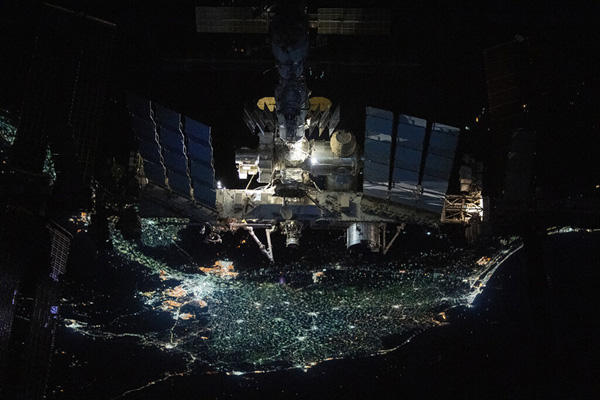
An image of the International Space Station soaring high above Egypt's Nile Delta...as seen by European Space Agency astronaut Thomas Pesquet aboard SpaceX's Crew Dragon Endeavour capsule on November 8, 2021.
NASA / ESA - Thomas Pesquet

NASA Provides Updated International Space Station Transition Plan (News Release)

The International Space Station is a unique laboratory that is returning enormous scientific, educational, and technological developments to benefit people on Earth and is enabling our ability to travel into deep space. The Biden-Harris Administration’s commitment to extend space station operations until 2030 will enable the United States to continue to reap these benefits for the next decade while U.S. industry develops commercial destinations and markets for a thriving space economy.

As NASA looks forward to a decade of results from research and technology development aboard the International Space Station, the agency is taking steps to ensure a successful transition of operations to commercial services. In response to Congressional direction, NASA has now provided an updated International Space Station Transition Report that details the goals for the next decade of station operations leading to a smooth transition to commercial services, the steps being taken to develop both the supply and demand side of the low-Earth orbit commercial economy, and the technical steps and budget required for transition.

“The International Space Station is entering its third and most productive decade as a groundbreaking scientific platform in microgravity,” said Robyn Gatens, director of the International Space Station at NASA Headquarters. “This third decade is one of results, building on our successful global partnership to verify exploration and human research technologies to support deep space exploration, continue to return medical and environmental benefits to humanity, and lay the groundwork for a commercial future in low-Earth orbit. We look forward to maximizing these returns from the space station through 2030 while planning for transition to commercial space destinations that will follow.”

Today, with U.S. commercial crew and cargo transportation systems online, the station is busier than ever. The ISS National Laboratory, responsible for utilizing 50 percent of NASA’s resources aboard the space station, hosts hundreds of experiments from other government agencies, academia, and commercial users to return benefits to people and industry on the ground. Meanwhile, NASA’s research and development activities aboard are advancing the technologies and procedures that will be necessary to send the first woman and first person of color to the Moon and the first humans to Mars.

The extension of operations to 2030 will continue to return these benefits to the United States and to humanity as a whole while preparing for a successful transition of capabilities to one or more commercially-owned and -operated LEO destinations (CLDs). NASA has entered into a contract for commercial modules to be attached to a space station docking port and awarded space act agreements for design of three free-flying commercial space stations. U.S. industry is developing these commercial destinations to begin operations in the late 2020s for both government and private-sector customers, concurrent with space station operations, to ensure these new capabilities can meet the needs of the United States and its partners.

“The private sector is technically and financially capable of developing and operating commercial low-Earth orbit destinations, with NASA’s assistance. We look forward to sharing our lessons learned and operations experience with the private sector to help them develop safe, reliable, and cost-effective destinations in space,” said Phil McAlister, director of commercial space at NASA Headquarters. “The report we have delivered to Congress describes, in detail, our comprehensive plan for ensuring a smooth transition to commercial destinations after retirement of the International Space Station in 2030.”

It is NASA’s goal to be one of many customers of these commercial destination providers, purchasing only the goods and services the agency needs. Commercial destinations, along with commercial crew and cargo transportation, will provide the backbone of the low-Earth orbit economy after the International Space Station retires.

The decision to extend operations and NASA’s recent awards to develop commercial space stations together ensure uninterrupted, continuous human presence and capabilities; both are critical facets of NASA’s International Space Station transition plan.

Source: NASA.Gov

****

Friday, December 31, 2021

ISS Update #2: America Will Continue Sending Crew and Cargo to the Orbital Outpost through 2030...

An image of the International Space Station that was taken by European Space Agency astronaut Thomas Pesquet aboard SpaceX's Crew Dragon Endeavour capsule...on November 8, 2021.
NASA / ESA - Thomas Pesquet

Just thought I'd end 2021 with this quick update about NASA being a member of the International Space Station (ISS) program for at least nine more years!

By the time the ISS is finally retired, we will hopefully have the Gateway orbiting the Moon, SpaceX will have launched additional crew and cargo Dragon capsules to the microgravity laboratory, Boeing will have finally sent astronauts to the ISS via the Starliner vehicle, Sierra Nevada's Dream Chaser space plane will have also conducted several cargo missions to the station as well, and Axiom will be on the verge of separating its modules from the venerable national laboratory to begin operating its own space station.

What a wonderful way to end this year for human spaceflight... 2022 will be even more exciting with the launch of Artemis 1 and Starship Super Heavy's orbital test flight!

Stay tuned...and have a Happy New Year!