Thursday, April 30, 2020

NASA Takes a Giant Leap Towards Landing a Crew on the Moon in 2024...

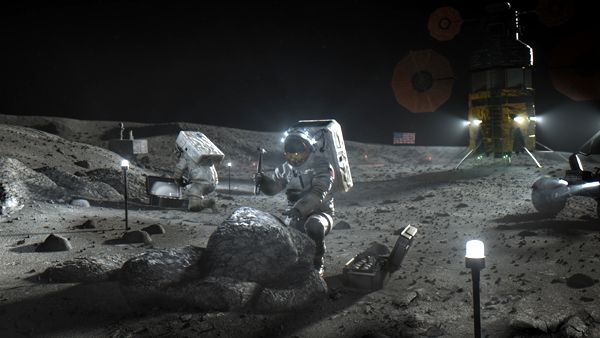
An artist's concept of two astronauts working on the surface of the Moon.
NASA

NASA Names Companies to Develop Human Landers for Artemis Moon Missions (Press Release)

NASA has selected three U.S. companies to design and develop human landing systems (HLS) for the agency’s Artemis program, one of which will land the first woman and next man on the surface of the Moon by 2024. NASA is on track for sustainable human exploration of the Moon for the first time in history.

The human landing system awards under the Next Space Technologies for Exploration Partnerships (NextSTEP-2) Appendix H Broad Agency Announcement (BAA) are firm-fixed price, milestone-based contracts. The total combined value for all awarded contracts is $967 million for the 10-month base period.

The following companies were selected to design and build human landing systems:

- Blue Origin of Kent, Washington, is developing the Integrated Lander Vehicle (ILV) – a three-stage lander to be launched on its own New Glenn Rocket System and ULA Vulcan launch system.

- Dynetics (a Leidos company) of Huntsville, Alabama, is developing the Dynetics Human Landing System (DHLS) – a single structure providing the ascent and descent capabilities that will launch on the ULA Vulcan launch system.

- SpaceX of Hawthorne, California, is developing the Starship – a fully integrated lander that will use the SpaceX Super Heavy rocket.

“With these contract awards, America is moving forward with the final step needed to land astronauts on the Moon by 2024, including the incredible moment when we will see the first woman set foot on the lunar surface,” said NASA Administrator Jim Bridenstine. “This is the first time since the Apollo era that NASA has direct funding for a human landing system, and now we have companies on contract to do the work for the Artemis program.”

Fifty years ago, NASA’s Apollo Program proved it is possible to land humans on the Moon and return them safely to Earth. When NASA returns to the Moon in four years with the Artemis program, it will go in a way that reflects the world today – with government, industry, and international partners in a global effort to build and test the systems needed for challenging missions to Mars and beyond.

“We are on our way.” said Douglas Loverro, NASA’s associate administrator for Human Explorations and Operations Mission Directorate in Washington. “With these awards we begin an exciting partnership with the best of industry to accomplish the nation’s goals. We have much work ahead, especially over these next critical 10 months. I have high confidence that working with these teammates, we will succeed.”

NASA’s commercial partners will refine their lander concepts through the contract base period ending in February 2021. During that time, the agency will evaluate which of the contractors will perform initial demonstration missions. NASA will later select firms for development and maturation of sustainable lander systems followed by sustainable demonstration missions. NASA intends to procure transportation to the lunar surface as commercial space transportation services after these demonstrations are complete. During each phase of development, NASA and its partners will use critical lessons from earlier phases to hone the final concepts that will be used for future lunar commercial services.

"I am confident in NASA’s partnership with these companies to help achieve the Artemis mission and develop the human landing system returning us to the Moon" said Lisa Watson-Morgan, HLS program manager at NASA’s Marshall Space Flight Center in Huntsville, Alabama. "We have a history of proven lunar technical expertise and capabilities at Marshall and across NASA that will pave the way for our efforts to quickly and safely land humans on the Moon in 2024.”

NASA experts will work closely with the commercial partners building the next human landing systems, leveraging decades of human spaceflight experience and the speed of the commercial sector to achieve a Moon landing in 2024.

The HLS program manager will assign NASA personnel to support the work of each contractor, providing direct, in-line expertise to the companies as requested in their proposals (e.g., design support, analysis, testing). The HLS program will also perform advanced development and risk reduction activities, working in parallel to better inform the approach for the 2024 mission and the necessary maturation of systems for the future sustaining architecture.

Charged with returning to the Moon in the next four years, NASA’s Artemis program will reveal new knowledge about the Moon, Earth, and our origins in the solar system. The human landing system is a vital part of NASA’s deep space exploration plans, along with the Space Launch System (SLS) rocket, Orion spacecraft, and Gateway.

NASA is returning to the Moon for scientific discovery, economic benefits, and inspiration for a new generation. Working with its partners throughout the Artemis program, the agency will fine-tune precision landing technologies and develop new mobility capabilities that allow robots and crew to travel greater distances and explore new regions of the Moon. On the surface, the agency has proposed building a new habitat and rovers, testing new power systems and much more to get ready for human exploration of Mars.

****
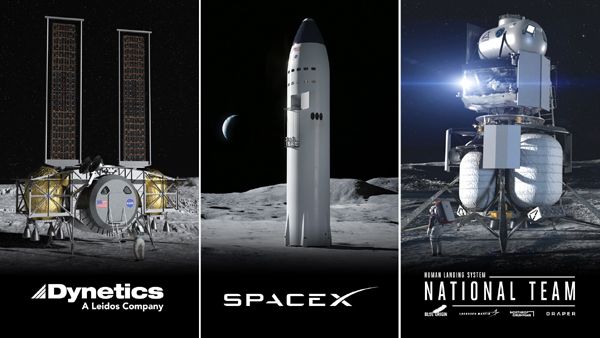
Artist concepts of the human landing systems that will be built by Dynetics, SpaceX and Blue Origin, respectively.
Dynetics / SpaceX / Blue Origin

Tuesday, April 21, 2020

"America's Spaceplane" Gets Its Wings...

An artist's concept of Sierra Nevada's Dream Chaser cargo ship docked to the International Space Station.
Sierra Nevada Corporation

SNC’s Dream Chaser® Spaceplane Wings Arrive in Colorado (Press Release)

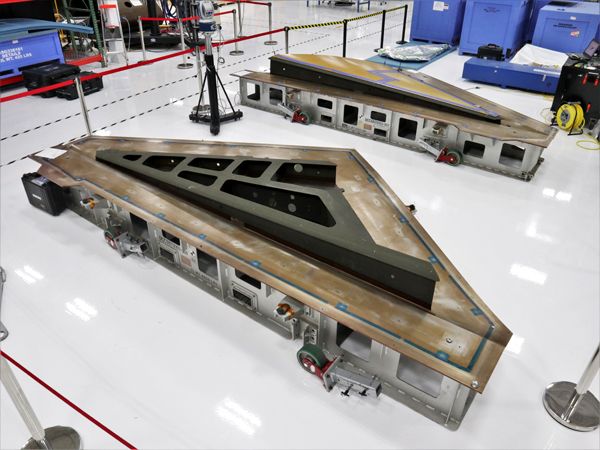
SPARKS, Nev., April 21, 2020 – Sierra Nevada Corporation (SNC), the global aerospace and national security leader owned by Eren and Fatih Ozmen, uncrated both wings for its Dream Chaser spaceplane this month at the company’s Louisville, Colorado production facility. The wings’ arrival kicks off the much-anticipated integration phase of a beautiful and critical differentiator for Dream Chaser, the world’s only spaceplane owned by a private company and under contract with NASA.

“The wings are here and now we truly have butterflies in anticipation of this integration phase for Dream Chaser,” said SNC President Eren Ozmen. “Our spaceplane looks and functions unlike anything else in space – more technologically advanced but with all the heritage of the space shuttle program in its design. Dream Chaser’s first flight will be a soaring moment for all of us.”

The arrival kicks off the integration of the complex Wing Deployment System (WDS) as part of the continued assembly and integration of the vehicle. With their innovative folding design, the wings are stowed in the fairing ahead of launch. After the launch vehicle separates, the WDS deploys the wings and locks them into place. Dream Chaser’s steeply angled wings function as stabilizers for the lift generated by the body of the vehicle.

“The wings for Dream Chaser presented an interesting design challenge,” said Dream Chaser program director John Curry. “Not only must they survive in low-Earth orbit like a satellite, but they need to be operational in Earth’s atmosphere, like an aircraft.” Just like the structural body for Dream Chaser, the wings were manufactured by Lockheed Martin in Texas, a subcontractor to SNC, and are single bonded composite structures. This state-of-the-art technology saves weight without compromising strength and stiffness.

Dream Chaser is under contract with NASA for at least six cargo resupply and return service missions to the International Space Station under the Commercial Resupply Services 2 (CRS-2) contract. The Dream Chaser and attached Shooting Star transport vehicle can carry up to 12,000 pounds of supplies and other cargo, and returns delicate science to Earth with a gentle runway landing.

About Dream Chaser Spacecraft

Owned and operated by SNC, the Dream Chaser spacecraft is a reusable, multi-mission space utility vehicle. It is capable of transportation services to and from low-Earth orbit and is the only commercial, lifting-body vehicle capable of a runway landing. The Dream Chaser Cargo System was selected by NASA to provide cargo delivery and disposal services to the International Space Station under the Commercial Resupply Services 2 (CRS-2) contract. All Dream Chaser CRS-2 cargo missions are planned to land at Kennedy Space Center’s Shuttle Landing Facility.

Source: Sierra Nevada Corporation

****

The two wings for the Dream Chaser are unveiled at Sierra Nevada's production facility in Louisville, Colorado.
Sierra Nevada Corporation

Friday, April 17, 2020

Counting Down to May 27: A Launch Date Is Set for the Crew Dragon's First Manned Flight to the ISS!

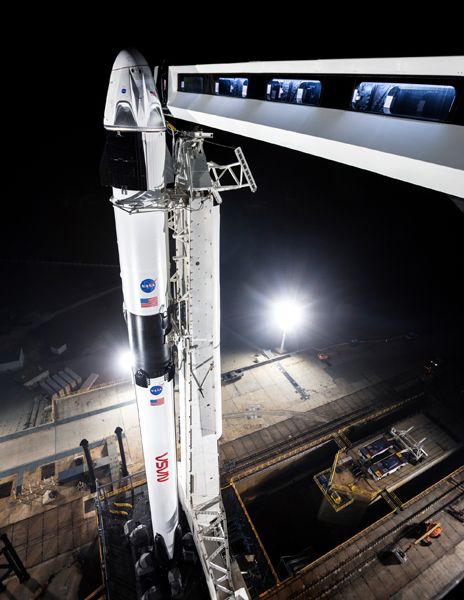
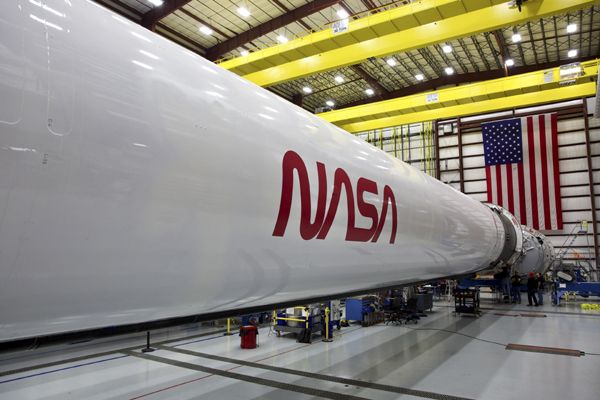
A composite image showing SpaceX's Falcon 9 rocket (that launched the Crew Dragon capsule on Demo-1 last year) adorned with NASA's iconic 'worm' and 'meatball' logos that will fly on the side of the Falcon 9 launch vehicle on May 27.
NASA / SpaceX

NASA, SpaceX to Launch First Astronauts to Space Station from U.S. Since 2011 (News Release)

A new era of human spaceflight is set to begin as American astronauts once again launch on an American rocket from American soil to the International Space Station as part of NASA’s Commercial Crew Program. NASA astronauts Robert Behnken and Douglas Hurley will fly on SpaceX’s Crew Dragon spacecraft, lifting off on a Falcon 9 rocket at 4:32 p.m. EDT May 27, from Launch Complex 39A in Florida, for an extended stay at the space station for the Demo-2 mission. The specific duration of the mission is to be determined.

As the final flight test for SpaceX, this mission will validate the company’s crew transportation system, including the launch pad, rocket, spacecraft, and operational capabilities. This also will be the first time NASA astronauts will test the spacecraft systems in orbit.

Behnken will be the joint operations commander for the mission, responsible for activities such as rendezvous, docking and undocking, as well as Demo-2 activities while the spacecraft is docked to the space station. He was selected as a NASA astronaut in 2000 and has completed two space shuttle flights. Behnken flew STS-123 in March 2008 and STS-130 in February 2010, and he performed three spacewalks during each mission. Born in St. Anne, Missouri, he has bachelor’s degrees in physics and mechanical engineering from Washington University and earned a master’s and doctorate in mechanical engineering from California Institute of Technology. Before joining NASA, Behnken was a flight test engineer with the U.S. Air Force.

Hurley will be the spacecraft commander for Demo-2, responsible for activities such as launch, landing and recovery. He was selected as an astronaut in 2000 and has completed two spaceflights. Hurley served as pilot and lead robotics operator for both STS‐127 in July 2009 and STS‐135, the final space shuttle mission, in July 2011. The New York native was born in Endicott but considers Apalachin his hometown. He holds a Bachelor of Science degree in Civil Engineering from Tulane University in Louisiana and graduated from the U.S. Naval Test Pilot School in Maryland. Before joining NASA, he was a fighter pilot and test pilot in the U.S. Marine Corps.

Lifting off from Launch Pad 39A atop a specially instrumented Falcon 9 rocket, Crew Dragon will accelerate its two passengers to approximately 17,000 mph and put it on an intercept course with the International Space Station. Once in orbit, the crew and SpaceX mission control will verify the spacecraft is performing as intended by testing the environmental control system, the displays and control system and the maneuvering thrusters, among other things. In about 24 hours, Crew Dragon will be in position to rendezvous and dock with the space station. The spacecraft is designed to do this autonomously but astronauts aboard the spacecraft and the station will be diligently monitoring approach and docking and can take control of the spacecraft if necessary.

After successfully docking, Behnken and Hurley will be welcomed aboard station and will become members of the Expedition 63 crew. They will perform tests on Crew Dragon in addition to conducting research and other tasks with the space station crew.

Although the Crew Dragon being used for this flight test can stay in orbit about 110 days, the specific mission duration will be determined once on station based on the readiness of the next commercial crew launch. The operational Crew Dragon spacecraft will be capable of staying in orbit for at least 210 days as a NASA requirement.

Upon conclusion of the mission, Crew Dragon will autonomously undock with the two astronauts on board, depart the space station and re-enter the Earth’s atmosphere. Upon splashdown just off Florida’s Atlantic Coast, the crew will be picked up at sea by SpaceX’s Go Navigator recovery vessel and return to Cape Canaveral.

The Demo-2 mission will be the final major step before NASA’s Commercial Crew Program certifies Crew Dragon for operational, long-duration missions to the space station. This certification and regular operation of Crew Dragon will enable NASA to continue the important research and technology investigations taking place onboard the station, which benefits people on Earth and lays the groundwork for future exploration of the Moon and Mars starting with the agency’s Artemis program, which will land the first woman and the next man on the lunar surface in 2024.

Source: NASA.Gov

****

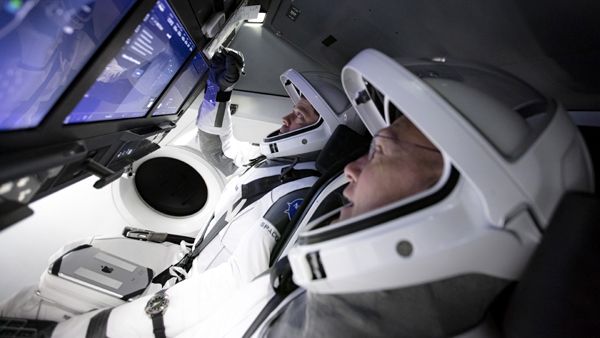
NASA astronauts Bob Behnken and Doug Hurley (foreground) train for the upcoming Demo-2 mission inside SpaceX's flight simulator.
SpaceX

Wednesday, April 8, 2020

Image of the Day: Visualizing SpaceX's Demo-2 Launch Vehicle...

A composite image showing SpaceX's Falcon 9 rocket (that launched the Crew Dragon capsule on Demo-1 last year) adorned with NASA's iconic 'worm' and 'meatball' logos that will fly on the side of the Falcon 9 launch vehicle sometime next month.
NASA / SpaceX

NASA recently released this composite picture of SpaceX's Falcon 9 rocket—with a Crew Dragon capsule sitting atop it—adorned with the NASA 'worm' and 'meatball' logos on its side. This is actually a photo of the Demo-1 launch vehicle that embarked on an unmanned mission to the International Space Station (ISS) over a year ago...but the U.S. space agency wanted the public to see how SpaceX's workhorse rocket will appear when it sends a Crew Dragon spacecraft (with astronauts Bob Behnken and Doug Hurley riding aboard it) to the ISS sometime next month. Pretty cool!

Saturday, April 4, 2020

NASA Receives a New Batch of Applications by Aspiring Astronauts...

Expedition 45 Commander Scott Kelly prepares for a spacewalk that he and Flight Engineer Kjell Lindgren conducted outside the International Space Station on October 28, 2015.
NASA

Thousands Apply to Join NASA’s Artemis Generation, #BeAnAstronaut (Press Release - April 1)

More than 12,000 people have applied to join NASA’s next class of astronauts, demonstrating strong national interest to take part in America’s plans to explore the Moon and take humanity’s next giant leap – human missions to Mars.

Applications were received from every U.S. state, the District of Columbia, and four U.S. territories. However, the process is just beginning for NASA’s Astronaut Selection Board, which will assess the applicants’ qualifications and invite the most qualified candidates to the agency’s Johnson Space Center in Houston for interviews and medical tests before making a final selection. NASA expects to introduce the new astronaut candidates in the summer of 2021.

“We’ve entered a bold new era of space exploration with the Artemis program, and we are thrilled to see so many incredible Americans apply to join us,” said NASA Administrator Jim Bridenstine. “The next class of Artemis Generation astronauts will help us explore more of the Moon than ever before and lead us to the Red Planet.”

The application for the newest class of astronauts opened March 2 and closed March 31. The number of people who applied to be an astronaut represents the second-highest number of applications NASA has ever received, surpassed only by the record of 18,300 set by the most recent class of astronauts who graduated in January.

For this round of applications, NASA increased the education requirement for applicants from a bachelor’s degree to a master’s degree in a science, technology, math, or engineering field. In addition, the application period was shortened from two months to one.

“We’re able to build such a strong astronaut corps at NASA because we have such a strong pool of applicants to choose from,” said Anne Roemer, manager of the Astronaut Selection Board and director of human resources at Johnson. “It’s always amazing to see the diversity of education, experience and skills that are represented in our applicants. We are excited to start reviewing astronaut applications to identify the next class of astronaut candidates.”

Since the 1960s, NASA has selected 350 people to train as astronaut candidates for its increasingly challenging missions to explore space. With 48 astronauts in the active astronaut corps, more will be needed to serve as crew aboard spacecraft bound for multiple destinations and propel exploration forward as part of Artemis missions and beyond.

Once selected, the astronaut candidates will go through approximately two years of initial skills training, such as spacewalking, robotics, and spacecraft systems, as well as expeditionary behavior skills, such as leadership, followership, and teamwork. After completing training, the new astronauts could launch on American rockets and spacecraft -- developed for NASA’s Commercial Crew Program -- to live and work aboard the International Space Station, 250 miles above Earth. There they will take part in experiments that benefit life at home and prepare us for the Moon and Mars.

This new class also may launch aboard NASA’s powerful new Space Launch System rocket and Orion spacecraft for Artemis missions to the Moon. Beginning in 2024, NASA will send the first woman and next man to the lunar surface and will establish sustainable lunar exploration by 2028. Gaining insights from new experiences on and around the Moon will prepare NASA to send the first humans to Mars in the 2030s.

****

Friday, April 3, 2020

Artemis Update: A Blueprint for a Crewed Return to the Moon and an Eventual Manned Journey to Mars...

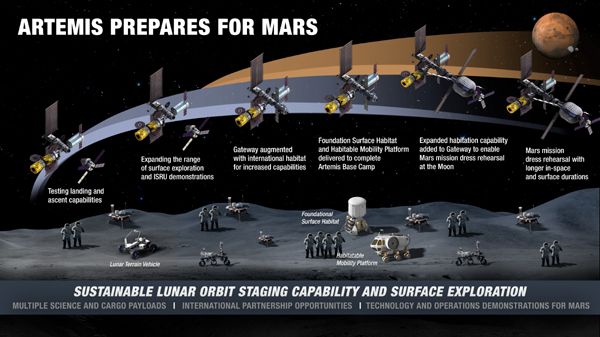
An infographic showing how NASA intends to return astronauts to the lunar surface and how this paves the way for an eventual manned trip to Mars.
NASA

NASA Outlines Lunar Surface Sustainability Concept (News Release - April 2)

When NASA sends astronauts to the surface of the Moon in 2024, it will be the first time outside of watching historical footage most people witness humans walking on another planetary body. Building on these footsteps, future robotic and human explorers will put in place infrastructure for a long-term sustainable presence on the Moon.

NASA recently proposed a plan to go from limited, short-term Apollo-era exploration of the 1960s, to a 21st Century plan in a report to the National Space Council. With the Artemis program, we will explore more of the Moon than ever before to make the next giant leap – sending astronauts to Mars.

“After 20 years of continuously living in low-Earth orbit, we’re now ready for the next great challenge of space exploration – the development of a sustained presence on and around the Moon,” said NASA Administrator Jim Bridenstine. “For years to come, Artemis will serve as our North Star as we continue to work toward even greater exploration of the Moon, where we will demonstrate key elements needed for the first human mission to Mars.”

On the surface, the core elements for a sustained presence would include an emphasis on mobility to allow astronauts to explore more of the Moon and conduct more science:

- A lunar terrain vehicle or LTV, would transport crew around the landing zone
- The habitable mobility platform would enable crews to take trips across the Moon lasting up to 45 days
-A lunar foundation surface habitat would house as many as four crew members on shorter surface stays

Astronauts working on the lunar surface also could test advanced robotics, as well as a wide set of new technologies identified in the Lunar Surface Innovation Initiative, focusing on tech development in the areas such as of in-situ resource utilization (ISRU) and power systems. Rovers will carry a variety of instruments including ISRU experiments that will generate information on the availability and extraction of usable resources (e.g., oxygen and water). Advancing these technologies could enable the production of fuel, water, and/or oxygen from local materials, enabling sustainable surface operations with decreasing supply needs from Earth.

Another key difference from Apollo and Artemis will be use of the Gateway in lunar orbit, built with commercial and international partners. The lunar outpost will serve as a command and control module for surface expeditions and an office and home for astronauts away from Earth. Operating autonomously when crew is not present, it also will be a platform for new science and technology demonstrations around the Moon.

Over time, NASA and its partners will enhance the lunar Gateway’s habitation capabilities and related life support systems. Adding a large-volume deep space habitation element would allow astronauts to test capabilities around the Moon for long-duration deep space missions.

While the goal of Apollo was to land the first humans on the Moon, the Artemis program will use the Moon as a testbed for crewed exploration farther into the solar system, beginning with Mars. This is America’s Moon to Mars space exploration approach. A proposed multi-month split-crew operation at the Gateway and on the lunar surface would test the agency’s concept for a human mission to the Red Planet.

For such a mission, NASA envisions a four-person crew traveling to the Gateway and living aboard the outpost for a multi-month stay to simulate the outbound trip to Mars. Later, two crew members would travel to the lunar surface and explore with the habitable mobility platform, while the remaining two astronauts stay aboard Gateway. The four crew members are later reunited aboard the lunar outpost for another multi-month stay, simulating the return trip to Earth. This mission would be the longest duration human deep space mission in history and would be the first operational test of the readiness of our deep-space systems.

The report also highlights a robotic return to the surface beginning next year for scientific discovery. The Moon is a natural laboratory to study planetary processes and evolution, and a platform from which to observe the universe. NASA will send dozens of new science instruments and technology demonstrations to the Moon with its Commercial Lunar Payload Services initiative. Some of these robotic precursors, including the Volatiles Investigating Polar Exploration Rover or VIPER, will study the terrain, and metal and ice resources at the lunar South Pole.

The Space Launch System rocket, Orion spacecraft, human landing systems and modern spacesuits will round out the agency’s deep space systems. As part of the Artemis III mission, the first human expedition back on the Moon will last approximately seven days. NASA plans to send Artemis Generation astronauts on increasingly longer missions about once per year thereafter.

With strong support in NASA, America and its partners will test new technologies and reduce exploration costs over time. Supporting infrastructure including power, radiation shielding, a landing pad, as well as waste disposal and storage could be built up in the coming decades, too.

“The U.S. is still the only nation to have successfully landed humans on the Moon and spacecraft on the surface of Mars,” the report states. “As other nations increasingly move out into space, American leadership is now called for to lead the next phase of humanity’s quest to open up the future to endless discovery and growth.”

Read the full report:

NASA's Plan for Sustained Lunar Exploration and Development

Source: NASA.Gov

Thursday, April 2, 2020

Photos of the Day: A Classic NASA Logo Will Fly on SpaceX's First Crewed Flight to the International Space Station!

The NASA 'worm' is painted on the side of the SpaceX Falcon 9 rocket that will launch the crewed Demo-2 mission to the International Space Station next month.
SpaceX

The Worm is Back! (News Release)

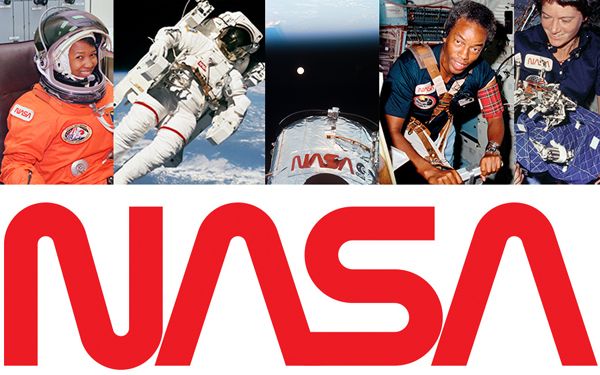
The original NASA insignia is one of the most powerful symbols in the world. A bold, patriotic red chevron wing piercing a blue sphere, representing a planet, with white stars, and an orbiting spacecraft. Today, we know it as “the meatball.” However, with 1970’s technology, it was a difficult icon to reproduce, print, and many people considered it a complicated metaphor in what was considered, then, a modern aerospace era.

Enter a cleaner, sleeker design born of the Federal Design Improvement Program and officially introduced in 1975. It featured a simple, red unique type style of the word NASA. The world knew it as “the worm.” Created by the firm of Danne & Blackburn, the logo was honored in 1984 by President Reagan for its simplistic, yet innovative design.

NASA was able to thrive with multiple graphic designs. There was a place for both the meatball and the worm. However, in 1992, the 1970s brand was retired - except on clothing and other souvenir items - in favor of the original late 1950s graphic.

Until today.

The worm is back. And just in time to mark the return of human spaceflight on American rockets from American soil.

The retro, modern design of the agency’s logo will help capture the excitement of a new, modern era of human spaceflight on the side of the Falcon 9 launch vehicle that will ferry astronauts to the International Space Station as part of the Demo-2 flight, now scheduled for mid-to-late May.

And there’s a good chance you’ll see the logo featured in other official ways on this mission and in the future. The agency is still assessing how and where it will be used, exactly.

It seems the worm logo wasn’t really retired. It was just resting up for the next chapter of space exploration.

And don’t worry, the meatball will remain NASA’s primary symbol.

Source: NASA.Gov

****

A collage showing the NASA worm as it was used throughout the history of the U.S. space program.
NASA

Wednesday, April 1, 2020

Preparations Continue for Next Month's Launch of SpaceX's Demo-2 Mission to the International Space Station...

NASA astronauts Bob Behnken and Doug Hurley (foreground) train for the upcoming Demo-2 mission inside SpaceX's flight simulator.
SpaceX

NASA, SpaceX Simulate Upcoming Crew Mission with Astronauts (News Release - March 31)

Joint teams from NASA and SpaceX continue making progress on the first flight test with astronauts to the International Space Station by completing a series of mission simulations from launch to landing. The mission, known as Demo-2, is a close mirror of the company’s uncrewed flight test to station in March 2019, but this time with NASA astronauts Bob Behnken and Doug Hurley aboard the Crew Dragon spacecraft launching atop a Falcon 9 rocket as part of NASA’s Commercial Crew Program (CCP).

Over the last several months, key members of flight control teams working from NASA’s Johnson and Kennedy Space Centers and SpaceX headquarters in Hawthorne, California, simulated different phases of the upcoming mission while the Demo-2 astronaut crew practiced procedures from inside a realistic simulator of Crew Dragon.

“The simulations were a great opportunity to practice procedures and to coordinate decision-making for the mission management team, especially with respect to weather,” said Michael Hess, manager of Operations Integration for CCP. “Simulation supervisors do a great job at picking cases that really make the team think and discuss.”

Recent simulations saw teams execute timelines from hatch closure to undocking with the space station — as well as a free flight in preparation for re-entry and splashdown. In March, the control teams and crew ran through a simulated mission starting at prelaunch and continuing through ascent and eventual rendezvous with the station.

This recent sim makes the excitement all the more tangible, especially for the greater NASA team.

“What’s happening in commercial crew is a big deal,” Hess said. “It will be the first time to launch astronauts from U.S. soil since the end of the Space Shuttle Program in 2011, and it will be the first time since STS-1 that we will launch astronauts in a new spacecraft. This new spacecraft, Crew Dragon, was designed and built by SpaceX, not by NASA and traditional contractor partnerships — another first. Bob (Behnken) and Doug (Hurley) will definitely be earning their spacecraft test pilot wings with this mission. Also, the Space Station Program is really looking forward to another way to rotate crews to station to perform science and experiments to benefit all.”

As the countdown clock winds down, Crew Dragon is undergoing final testing and prelaunch processing in a SpaceX facility on nearby Cape Canaveral Air Force Station. All the activity is also kicking off “more simulations, final crew training and flight readiness reviews to ensure all of the mission systems and subsystems are ready for a crewed test flight,” Hess noted.

When Crew Dragon launches atop a Falcon 9 rocket with Behnken and Hurley strapped inside as early as mid-to-late May, it will herald a new era for human spaceflight, enabling greater access to low-Earth orbit and destinations beyond with the help of commercial partners.

The Demo-2 crew is proceeding with its scheduled training activities. Astronaut trainers, along with all NASA employees, are closely adhering to CDC recommendations on infection control for the coronavirus. As all NASA centers are currently operating in a mode that requires any non-mission-essential work to be done remotely, the number of employees in contact with the crew is limited.

Source: NASA.Gov

Tuesday, March 31, 2020

A Fourth Crew Member Has Been Added to SpaceX's Crew-1 Mission...

NASA astronaut Shannon Walker gazes out of the International Space Station's Cupola at a Caribbean island over 200 miles beneath her...on November 25, 2010.
NASA

NASA Adds Shannon Walker to First Operational Crewed SpaceX Mission (Press Release)

NASA has assigned astronaut Shannon Walker to the first operational crewed flight of the SpaceX Crew Dragon spacecraft on a mission to the International Space Station.

Walker will join NASA astronauts Michael Hopkins and Victor Glover Jr., as well as Soichi Noguchi of the Japan Aerospace Exploration Agency (JAXA), for a six-month expedition aboard the unique space laboratory.

This mission will be the first in a series of regular, rotational flights to the station following NASA’s certification of the new crewed system following completion and validation of SpaceX’s test flight with astronauts, known as Demo-2. This test is expected to take place in mid-to-late May as part of NASA’s Commercial Crew Program.

Pending the successful Demo-2 test, Walker, Glover, Hopkins, and Noguchi will launch aboard Crew Dragon on SpaceX’s Falcon 9 rocket from Launch Pad 39A at NASA’s Kennedy Space Center in Florida. That launch is targeted for later this year.

Walker was born in Houston and began her career at NASA’s Johnson Space Center in Houston in 1987 as a robotics flight controller for the space shuttle with Rockwell Space Operations Co. She became a NASA employee in 1995, working on robotics and avionics hardware for the station with the program’s international partners. She also coordinated on-orbit problem resolution in the Mission Evaluation Room at Johnson and in Moscow and served as acting manager of the On-Orbit Engineering Office before NASA selected her for the 2004 astronaut class. As an astronaut, she spent 163 days as a flight engineer aboard the space station for Expeditions 24 and 25 in 2010. Walker earned a bachelor’s degree in physics and a master’s and doctorate in space physics, all from Rice University in Houston.

NASA already assigned Glover and Hopkins to the first operation SpaceX crewed mission in August 2018. This will be the first spaceflight for Glover and the second for Hopkins, who lived aboard the space station from September 2013 to March 2014 as part of Expeditions 37 and 38.

It will be the third spaceflight for Noguchi, who was a space shuttle crew member on the STS-114 mission in 2005 and a space station crew member from December 2009 to June 2010 as part of Expeditions 22 and 23.

NASA’s Commercial Crew Program is working with the American aerospace industry as companies develop and operate a new generation of spacecraft and launch systems capable of carrying crews to low-Earth orbit and to the space station. Commercial transportation to and from the station will provide expanded utility, additional research time and broader opportunities for discovery on the orbital outpost.

The station is a critical testbed for NASA to understand and overcome the challenges of long-duration spaceflight. As commercial companies focus on providing human transportation services to and from low-Earth orbit, NASA is free to focus on building spacecraft and rockets for deep space missions.

Source: NASA.Gov

Saturday, March 28, 2020

SpaceX's Dragon XL Freighter Will Send Cargo to NASA's Lunar Space Station...

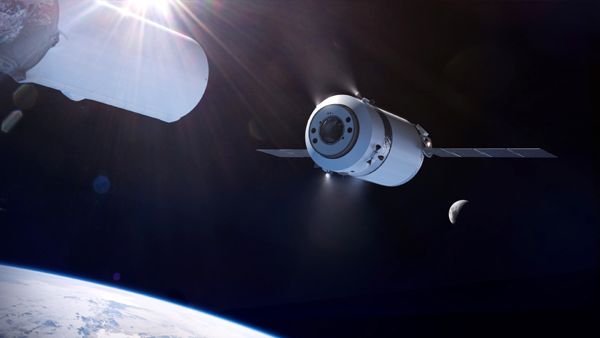
An artist's concept of SpaceX's Dragon XL freighter separating from its Falcon Heavy second stage booster to head to NASA's Gateway at the Moon.
SpaceX

NASA Awards Artemis Contract for Gateway Logistics Services (Press Release - March 27)

NASA has selected SpaceX of Hawthorne, California, as the first U.S. commercial provider under the Gateway Logistics Services contract to deliver cargo, experiments and other supplies to the agency’s Gateway in lunar orbit. The award is a significant step forward for NASA’s Artemis program that will land the first woman and next man on the Moon by 2024 and build a sustainable human lunar presence.

At the Moon, NASA and its partners will gain the experience necessary to mount a historic human mission to Mars.

SpaceX will deliver critical pressurized and unpressurized cargo, science experiments and supplies to the Gateway, such as sample collection materials and other items the crew may need on the Gateway and during their expeditions on the lunar surface.

“This contract award is another critical piece of our plan to return to the Moon sustainably,” said NASA Administrator Jim Bridenstine. “The Gateway is the cornerstone of the long-term Artemis architecture and this deep space commercial cargo capability integrates yet another American industry partner into our plans for human exploration at the Moon in preparation for a future mission to Mars.”

NASA is planning multiple supply missions in which the cargo spacecraft will stay at the Gateway for six to 12 months at a time. These firm-fixed price, indefinite delivery/indefinite quantity contracts for logistics services guarantee two missions per logistics services provider with a maximum total value of $7 billion across all contracts as additional missions are needed.

“Returning to the Moon and supporting future space exploration requires affordable delivery of significant amounts of cargo,” said SpaceX President and Chief Operating Officer Gwynne Shotwell. “Through our partnership with NASA, SpaceX has been delivering scientific research and critical supplies to the International Space Station since 2012, and we are honored to continue the work beyond Earth’s orbit and carry Artemis cargo to Gateway.”

The Gateway Logistics Services contract enables NASA to order missions for as long as 12 years with a 15-year performance period and provides the ability to add new competitive providers. These missions will support NASA’s plans for sustainable exploration with both international and commercial partners, while developing the experience and capabilities necessary to send humans to Mars.

“This is an exciting new chapter for human exploration,” said Mark Wiese, Deep Space Logistics manager at NASA’s Kennedy Space Center in Florida. “We are bringing the innovative thinking of commercial industry into our supply chain and helping ensure we’re able to support crews preparing for lunar surface expeditions by delivering the supplies they need ahead of time.”

Charged with returning to the Moon in the next four years, NASA’s Artemis program will reveal new knowledge about the Moon, Earth and our origins in the solar system. The Gateway is a vital part of NASA’s deep space exploration plans, along with the Space Launch System (SLS) rocket, Orion spacecraft, and Human Landing System that will send astronauts to the Moon. One standard logistics service mission is anticipated for each Artemis SLS/Orion crewed mission to the Gateway. Gaining new experiences on and around the Moon will prepare NASA to send the first humans to Mars in the coming years, and the Gateway will play a vital role in this process.

“We’re making significant progress moving from our concept of the Gateway to reality,” said Dan Hartman, Gateway program manager at NASA’s Johnson Space Center in Houston. “Bringing a logistics provider onboard ensures we can transport all the critical supplies we need for the Gateway and on the lunar surface to do research and technology demonstrations in space that we can’t do anywhere else. We also anticipate performing a variety of research on and within the logistics module.”

Source: NASA.Gov