Thursday, February 29, 2024

The Maker of My Favorite DSLR Is Sending Photography Gear to the Moon...

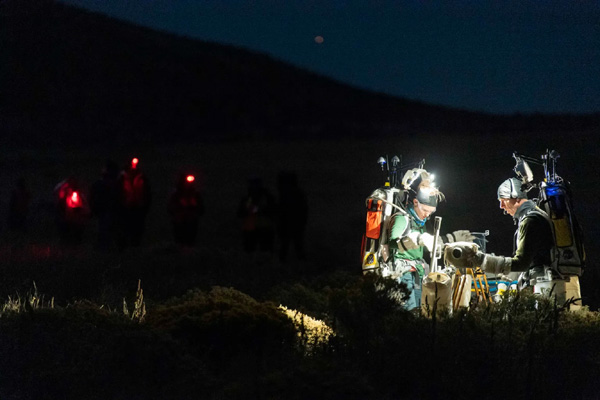
NASA astronauts Zena Cardman and Drew Feustel practice using an early version of the Handheld Universal Lunar Camera during the Joint Extravehicular Activity and Human Surface Mobility Test Team Field Test #3 in Arizona.
NASA / Bill Stafford

NASA Signs Agreement with Nikon to Develop Lunar Artemis Camera (News Release)

When NASA sends astronauts to the South Pole region of the Moon for the first time with its Artemis campaign, they will capture photos with a handheld camera to help advance scientific research and discovery for the benefit of all. NASA and Nikon Inc. recently signed a Space Act Agreement that outlines how they will work together to develop a handheld camera that can operate in the harsh lunar environment for use beginning with Artemis III.

Photographing the lunar South Pole region requires a modern camera with specialized capabilities to manage the extreme lighting conditions and temperatures unique to the area. The agreement enables NASA to have a space-rated camera ready for use on the lunar surface without needing to develop one from scratch.

Prior to the agreement, NASA performed initial testing on a standard Nikon Z 9 camera to determine the specifications that a camera would need to operate on the lunar surface. With the agreement in place, teams at NASA’s Marshall Space Flight Center in Huntsville, Alabama, along with Nikon, have started working to implement the necessary adjustments and develop the HULC (Handheld Universal Lunar Camera), the agency’s next-generation camera that astronauts will use on the Moon.

The resulting design consists of a modified Nikon Z 9 camera and Nikkor lenses, NASA’s thermal blanket, which will protect the camera from dust and extreme temperatures, and a custom grip with modified buttons developed by NASA engineers for easier handling by suited crewmembers wearing thick gloves during a moonwalk. In addition, the camera will incorporate the latest imagery technology and have modified electrical components to minimize issues caused by radiation, ensuring that the camera operates as intended on the Moon.

The camera will be the first mirrorless handheld camera used on the Moon, designed for capturing imagery in low-light environments. Prior to Artemis missions, the camera will be used at the International Space Station to demonstrate its capabilities.

For over 50 years, NASA has used a variety of cameras in space, including the cameras that crewmembers currently use at the International Space Station to take photos of science experiments, day-to-day operations, and during spacewalks while they orbit about 250 miles above Earth.

During the Apollo program, crewmembers took over 18,000 photos using modified large-format, handheld cameras. However, those cameras didn’t have viewfinders, so astronauts were trained to aim the camera from chest-level where it attached to the front of the spacesuit.

In addition, Apollo crewmembers had to use separate cameras for photos and video. The new lunar camera will have a viewfinder and video capabilities to capture both still imagery and video on a single device.

To ensure camera performance on the lunar surface, NASA has begun thermal, vacuum and radiation testing on the lunar camera to see how it behaves in a space-like environment. Suited NASA crewmembers have used the camera to capture imagery of geology tasks during simulated moonwalks in Arizona, and an international crew of astronauts from NASA, ESA (European Space Agency) and JAXA (Japan Aerospace Exploration Agency) used it during geology training in Lanzarote, Spain.

NASA crewmembers will use the camera during the Joint Extravehicular Activity and Human Surface Mobility Test Team Field Test #5, an upcoming analog mission in Arizona where teams will conduct simulated moonwalks in the desert to practice lunar operations.

Through NASA’s Artemis campaign, the agency will land the first woman, first person of color, and first international partner astronaut on the surface of the Moon, paving the way for a long-term lunar presence and serving as a steppingstone to send the first astronauts to Mars.

Source: NASA.Gov

****

NASA astronaut Jessica Wittner uses an early version of the Handheld Universal Lunar Camera to take images during planetary geological field training in Lanzarote, Spain.
European Space Agency / A. Romero

My Nikon D3300 DSLR camera, which I've had since 2017, was pointed at the Sun for the annular solar eclipse on October 14, 2023.
Richard T. Par

Wednesday, February 28, 2024

Flight Hardware Development Continues for Artemis 3 and Beyond...

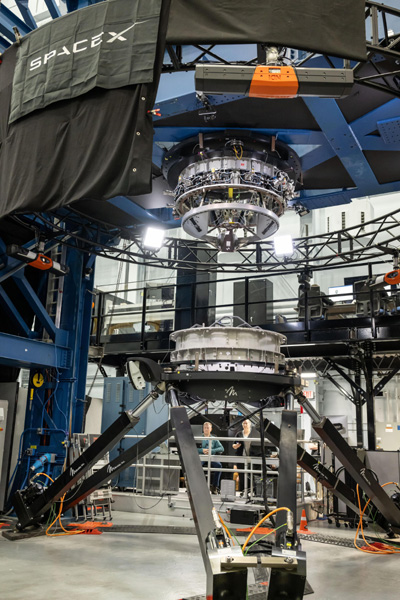
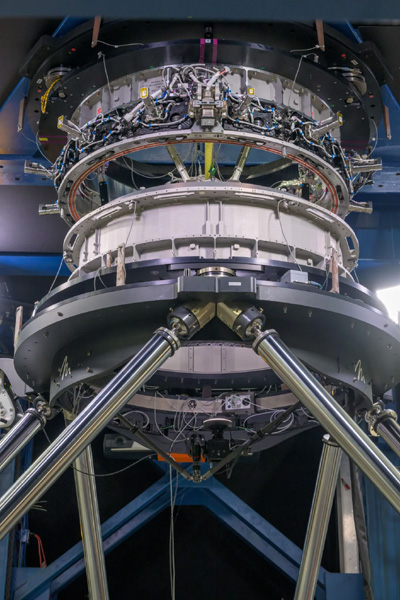
The docking system that will be used to connect SpaceX's Starship lunar lander to the Orion capsule or Gateway space station during Artemis missions is tested at NASA's Johnson Space Center in Houston, Texas.
SpaceX

NASA, SpaceX Test Starship Lunar Lander Docking System (News Release)

As part of NASA’s Artemis campaign that will establish the foundation for long-term scientific exploration at the Moon, astronauts will need to move between different spacecraft to carry out lunar landings. NASA and SpaceX recently performed qualification testing for the docking system that will help make that possible.

For the Artemis III mission, astronauts will ride the Orion spacecraft from Earth to lunar orbit, and then once the two spacecraft are docked, move to the lander, the Starship Human Landing System (HLS) that will bring them to the surface. After surface activities are complete, Starship will return the astronauts to Orion waiting in lunar orbit.

During later missions, astronauts will transfer from Orion to Starship via the Gateway lunar space station. Based on SpaceX’s flight-proven Dragon 2 docking system used on missions to the International Space Station, the Starship docking system can be configured to connect the lander to Orion or Gateway.

The docking system tests for Starship HLS were conducted at NASA’s Johnson Space Center over 10 days using a system that simulates contact dynamics between two spacecraft in orbit. The testing included more than 200 docking scenarios, with various approach angles and speeds.

These real-world results using full-scale hardware will validate computer models of the Moon lander’s docking system.

This dynamic testing demonstrated that the Starship system could perform a “soft capture” while in the active docking role. When two spacecraft dock, one vehicle assumes an active “chaser” role while the other is in a passive “target” role.

To perform a soft capture, the soft capture system (SCS) of the active docking system is extended while the passive system on the other spacecraft remains retracted. Latches and other mechanisms on the active docking system SCS attach to the passive system, allowing the two spacecraft to dock.

Since being selected as the lander to return humans to the surface of the Moon for the first time since Apollo, SpaceX has completed more than 30 HLS-specific milestones by defining and testing hardware needed for power generation, communications, guidance and navigation, propulsion, life support and space environments protection.

Under NASA’s Artemis campaign, the agency will land the first woman, first person of color, and first international partner astronaut on the lunar surface, and prepare for human expeditions to Mars for the benefit of all. Commercial human landing systems are critical to deep space exploration, along with the Space Launch System rocket, Orion spacecraft, advanced spacesuits and rovers, exploration ground systems and the Gateway space station.

Source: NASA.Gov

****

The docking system that will be used to connect SpaceX's Starship lunar lander to the Orion capsule or Gateway space station during Artemis missions is tested at NASA's Johnson Space Center in Houston, Texas.
SpaceX

Monday, February 26, 2024

The First Piece of Flight Hardware for Artemis 9 Is Already Taking Shape in Utah...

A Booster Obsolescence and Life Extension motor segment that will be used for NASA's Space Launch System rocket on Artemis 9 is transported to final assembly ahead of its first static fire test later this year...at the Northrop Grumman facility in Promontory, Utah.
Northrop Grumman

Northrop Grumman Completes First BOLE Solid Rocket Motor Segment for NASA’s Space Launch System (Photo Release)

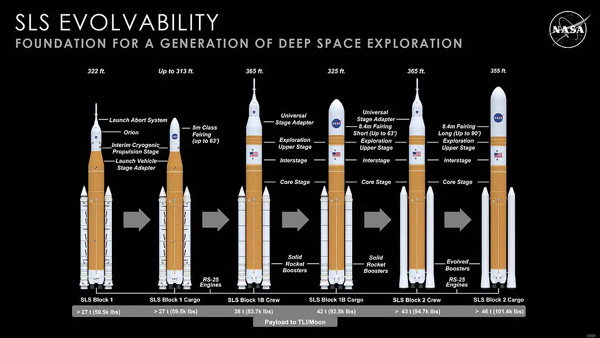
PROMONTORY, Utah – Northrop Grumman Corporation (NYSE: NOC) completed the first Booster Obsolescence and Life Extension (BOLE) motor segment for the next-generation Space Launch System (SLS) solid rocket booster. BOLE adds nearly five metric tons of payload capacity for SLS Block 2 Moon and Mars missions above the enhancements already in work for the SLS Block 1B configuration slated to fly on Artemis IV.

The new solid rocket boosters will be used on Block 2 beginning with Artemis IX when all of the recovered and refurbished shuttle-era steel cases have been expended.

Building on the foundation of the largest and most powerful solid rocket boosters ever flown, Northrop Grumman’s BOLE booster incorporates cutting-edge carbon fiber technology and a weight-saving composite case. Combined with other upgrades, it generates 11% more total impulse than the current five-segment solid rocket boosters.

The first BOLE demonstration test is scheduled for this year, featuring a full-scale static test with all five segments integrated and horizontally fired in a test bay.

Source: Northrop Grumman

****

An infographic showing all of the planned variants for NASA's Space Launch System rocket.
NASA / MSFC

Saturday, February 17, 2024

The Latest Update on the Third SLS Rocket...

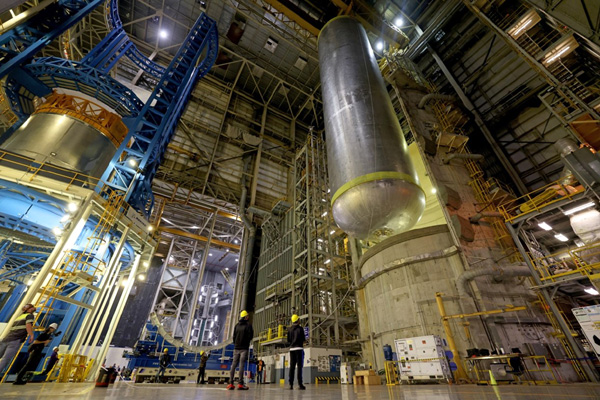
With both elements structurally complete, the liquid oxygen tank and liquid hydrogen tank for the Space Launch System's Artemis 3 rocket are ready for additional outfitting at NASA's Michoud Assembly Facility in New Orleans, Louisiana.
NASA / Michael DeMocker

Rocket Propellant Tanks for NASA’s Artemis III Mission Take Shape (News Release - February 16)

As NASA works to develop all the systems needed to return astronauts to the Moon under its Artemis campaign for the benefit of all, the SLS (Space Launch System) rocket will be responsible for launching astronauts on their journey. With the liquid oxygen tank now fully welded, all of the major structures that will form the core stage for the SLS rocket for the agency’s Artemis III mission are ready for additional outfitting.

The hardware will be a part of the rocket used for the first of the Artemis missions planning to land astronauts on the Moon’s surface near the lunar South Pole. Technicians finished welding the 51-foot liquid oxygen tank structure inside the Vertical Assembly Building at NASA’s Michoud Assembly Facility in New Orleans on January 8.

The mega rocket’s other giant propellant tank – the liquid hydrogen tank – is already one fully-welded structure. NASA and Boeing, the SLS core stage lead contractor, are currently priming the tank in another cell within the Vertical Assembly Building area called the Building 131 cryogenic tank thermal protection system and primer application complex.

The liquid hydrogen tank completed internal cleaning on November 14.

Manufacturing hardware is a multi-step process that includes welding, washing, and, later, outfitting hardware.The internal cleaning process is similar to a shower to ensure contaminants do not find their way into the stage’s complex propulsion and engine systems prior to priming.

Once internal cleaning is complete, primer is applied to the external portions of the tank’s barrel section and domes by an automated robotic tool. Following primer, technicians apply a foam-based thermal protection system to shield it from the extreme temperatures that it will face during launch and flight while also regulating the super-chilled propellant within.

“NASA and its partners are processing major hardware elements at Michoud for several SLS rockets in parallel to support the agency’s Artemis campaign,” said Chad Bryant, acting manager of the Stages Office for NASA’s SLS Program. “With the Artemis II core stage nearing completion, the major structural elements of the SLS core stage for Artemis III will advance through production on the factory floor.”

The two massive propellant tanks for the rocket collectively hold more than 733,000 gallons of super-chilled propellant. The propellant powers the four RS-25 engines and must stay extremely cold to remain liquid.

The core stage, along with the RS-25 engines, will produce two million pounds of thrust to help launch NASA’s Orion spacecraft, astronauts and supplies beyond Earth’s orbit and to the lunar surface for Artemis III. SLS is the only rocket that can send Orion, astronauts and supplies to the Moon in a single launch.

Through Artemis, NASA will send astronauts—including the first woman, first person of color, and first international partner astronaut—to explore the Moon for scientific discovery, economic benefits, and to build the foundation for a crewed mission to Mars. SLS is part of NASA’s backbone for deep space exploration, along with the Orion spacecraft, exploration ground systems, advanced spacesuits and rovers, Gateway and human landing systems.

Source: NASA.Gov

****

Friday, February 16, 2024

The Next Orion and Space Launch System Flight Hardware Are Receiving Their Decals...

Inside Kennedy Space Center's Neil Armstrong Operations and Checkout Building in Florida, the NASA 'worm' logo and ESA (European Space Agency) insignia are visible underneath the Orion spacecraft's crew module adapter...on January 28, 2024.
NASA / Rad Sinyak

Teams Add Iconic NASA ‘Worm’ Logo to Artemis II Rocket, Spacecraft (News Release)

Art and science merge as teams add the NASA “worm” logo on the SLS (Space Launch System) solid rocket boosters and the Orion spacecraft’s crew module adapter at NASA’s Kennedy Space Center in Florida for the agency’s Artemis II mission.

The iconic logo was introduced in 1975 by the firm of Danne & Blackburn as a modern emblem for the agency. It emerged from a nearly 30-year retirement in 2020 for limited use on select missions and products.

NASA’s Exploration Ground Systems and prime contractor Jacobs began painting the red logotype onto the segments that form the Moon rocket’s two solid rocket boosters on January 22. To do so, crews used a laser projector to first mark off the location of the logo with tape, then applied two coats of paint and finished by adding several coats of clear primer.

Each letter of the worm logo measures approximately 6 feet and 10 inches in height and altogether, stretches 25 feet from end to end, or a little less than the length of one of the rocket’s booster motor segments.

The location of the worm logo will be moderately different from where it was during Artemis I. While it will still be located on each of the rocket’s 17-story boosters, the modernist logo will be placed toward the front of the booster systems tunnel cover.

The SLS boosters are the largest, most powerful solid propellant boosters ever flown and provide more than 75% of the thrust at launch.

Around the corner inside the Neil Armstrong Operations and Checkout Building at Kennedy, personnel adhered the worm logo and ESA (European Space Agency) insignia on January 28 to the spacecraft’s crew module adapter. The adapter houses electronic equipment for communications, power and control, and includes an umbilical connector that bridges the electrical, data and fluid systems between the main modules.

In October 2023, technicians joined the crew and service modules together. The crew module will house the four astronauts as they journey around the Moon and back to Earth on an approximately 10-day journey.

The spacecraft’s service module, provided by ESA, will supply the vehicle with electricity, propulsion, thermal control, air and water in space.

NASA is working to land the first woman, first person of color, and first international partner astronaut on the Moon through Artemis. SLS and the Orion spacecraft are central to NASA’s deep-space exploration plans, along with advanced spacesuits and rovers, the Gateway space station planned for orbit around the Moon, and commercial human landing systems.

Source: NASA.Gov

****

Inside Kennedy Space Center's Rotation, Processing and Surge Facility in Florida, the NASA 'worm' logo is being painted onto a solid rocket booster segment for Artemis 2's Space Launch System rocket...on January 30, 2024.
NASA / Glenn Benson

Thursday, February 15, 2024

Nation #36 Has Joined NASA's Moon Exploration Initiative...

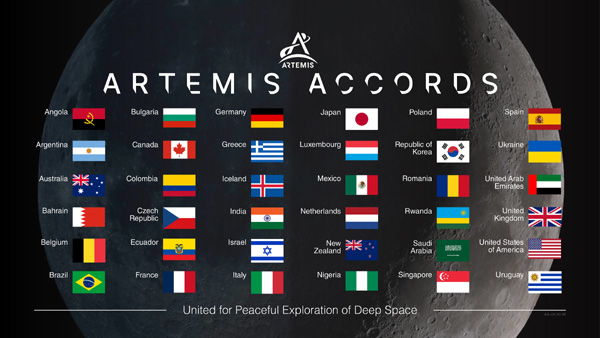
Uruguay is officially a member of the Artemis Accords...as of February 15, 2024.
NASA

NASA Welcomes Uruguay Foreign Minister for Artemis Accords Signing (News Release)

During a ceremony at NASA Headquarters in Washington on Thursday, Uruguay became the 36th country to sign the Artemis Accords. NASA Administrator Bill Nelson participated in the signing ceremony for the agency, and Omar Paganini, foreign minister, signed the Artemis Accords on behalf of Uruguay.

The accords establish a practical set of principles to guide space exploration cooperation among nations.

Also participating in the event were:

-- NASA Deputy Administrator Pam Melroy
-- Karen Feldstein, associate administrator for NASA’s Office of International and Interagency Relations
-- Kevin Sullivan, U.S. Department of State deputy assistant secretary
-- Andrés Augusto Durán Hareau, Uruguayan ambassador to the U.S.
-- Heide Fulton, U.S. ambassador to Uruguay

“NASA welcomes Uruguay as the newest member of the Artemis Accords family,” said Nelson. “The United States and Uruguay share a commitment to democracy and peace, and now, we expand these principles in the cosmos to commit to the safe and transparent exploration of space.”

The Artemis Accords were established in 2020 by the United States together with seven other original signatories. Since then, the Accords signatories have held focused discussions on how best to implement the Artemis Accords principles.

“We are honored to have the opportunity to introduce space cooperation as a new chapter in the robust bilateral agenda between Uruguay and the U.S.,” said Paganini. “We are sure that this signing ceremony is not an end in itself, but the beginning of a new bilateral track based on knowledge-intensive activities and new opportunities for our people.”

The Artemis Accords reinforce and implement key obligations in the 1967 Outer Space Treaty. They also strengthen the commitment by the United States and signatory nations to the Registration Convention, the Rescue and Return Agreement, as well as best practices that NASA and its partners support, including the public release of scientific data.

More countries are expected to sign the accords in the months and years ahead, which are advancing safe, peaceful and prosperous activities in space.

Source: NASA.Gov

Tuesday, February 13, 2024

SpaceX Continues to Prep for Starship Super Heavy's Third Flight Test...

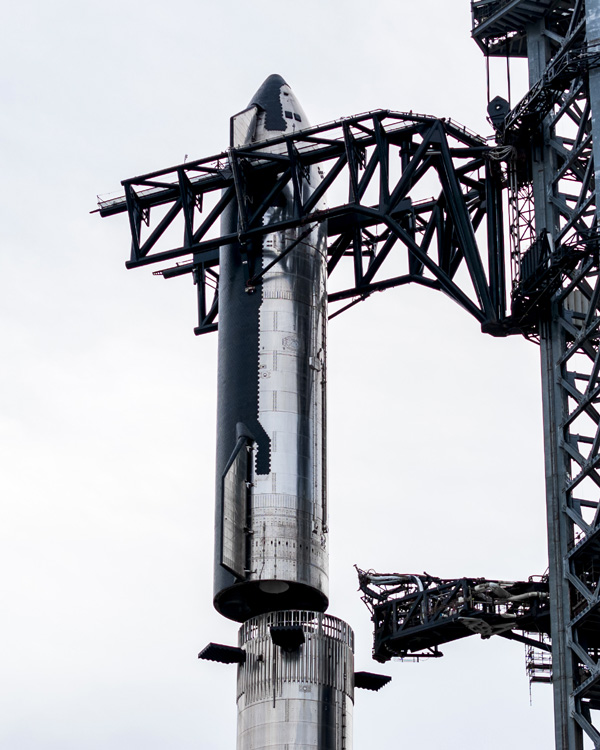
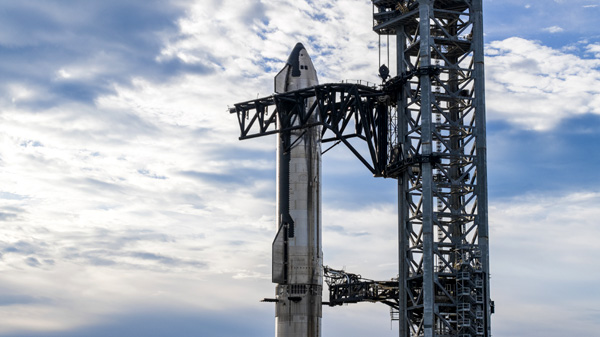
SpaceX's third Starship Super Heavy rocket stands tall at Starbase in Texas...on February 13, 2024.
SpaceX

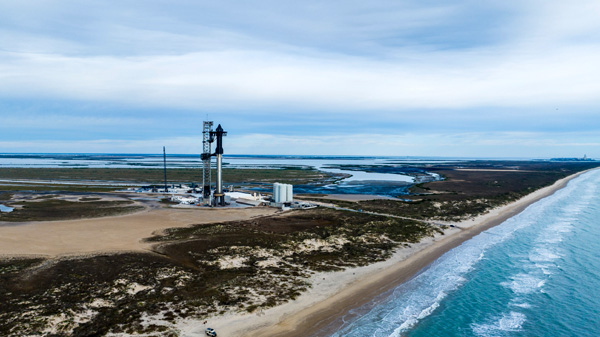
Earlier today, SpaceX shared on Twitter/X these hi-res photos of Starship Super Heavy after Ship 28 and Booster 10 were recently mated to form the mammoth rocket at Starbase in Texas.

While SpaceX is ready to perform a full launch rehearsal in preparation for the third Starship Flight Test, it continues to wait for approval by the Federal Aviation Administration (FAA) to conduct the upcoming suborbital demonstration...which may take place within the next month or so. The FAA should hopefully wrap up its formal investigation into last November's Integrated Flight Test 2 soon.

Stay tuned!

Ship 28 is about to be mated to Booster 10 to form the third Starship Super Heavy rocket at Starbase in Texas...on February 13, 2024.
SpaceX

Ship 28 is mated to Booster 10 to form the third Starship Super Heavy rocket at Starbase in Texas...on February 13, 2024.
SpaceX

SpaceX's third Starship Super Heavy rocket stands tall at Starbase in Texas...on February 13, 2024.
SpaceX

Saturday, February 10, 2024

Photo of the Day: Endeavour in the City of Angels...

Secured within the perimeter of the future Samuel Oschin Air and Space Center, Endeavour's Space Shuttle Stack stands tall with the downtown Los Angeles skyline visible in the distance...as of February 10, 2024.
California Science Center

Just thought I'd share this awesome image—taken by a drone operated by the California Science Center—of Endeavour's Space Shuttle Stack proudly standing tall with the downtown Los Angeles skyline visible in the distance.

Following the winter storm that soaked Southern California for a couple of days last week, the Science Center took this opportunity to capture a soon-to-be-iconic image of NASA's youngest retired orbiter poised in a vertical launch position for the first time since mission STS-134 almost 13 years ago...with L.A.'s infamous smog layer nowhere to be seen in this picture.

Eventually, the Science Center will fully cover the Space Shuttle Stack in scaffolding and plywood for temporary protection as construction continues on the future Samuel Oschin Air and Space Center!

Friday, February 9, 2024

Nation #35 Has Joined NASA's Moon Exploration Initiative...

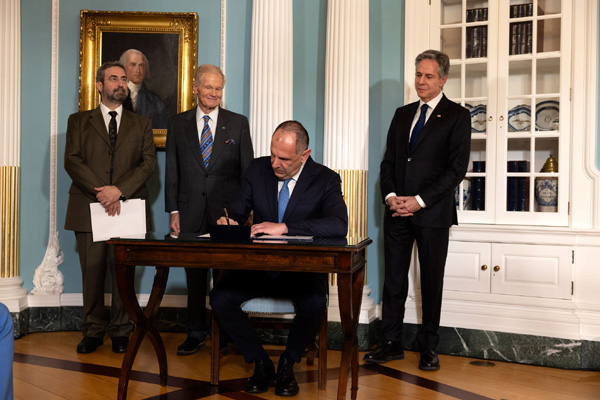
Greece is officially a member of the Artemis Accords...as of February 9, 2024.
Official State Department photo by Chuck Kennedy

NASA Welcomes Greece as Newest Artemis Accords Signatory (News Release)

NASA Administrator Bill Nelson participated in a signing ceremony on Friday with Greece’s foreign minister, Giorgos Gerapetritis, as his country became the 35th country to sign the Artemis Accords.

The accords establish a practical set of principles to guide space exploration cooperation among nations.

Also participating in the event at the U.S. Department of State were NASA Deputy Administrator Pam Melroy, U.S. Secretary of State Antony Blinken, and Dr. Ioannis Daglis, president of the Hellenic Space Center. The signing occurred during the fifth United States-Greece Strategic Dialogue in Washington.

“Congratulations to Greece on becoming the 35th country to join the Artemis Accords family,” said Nelson. “The U.S. and Greece are long-time partners and friends, and we are excited to expand this partnership in the cosmos. Together, we are shaping the future of cooperation in space for the Artemis Generation.”

The Artemis Accords were established in 2020 by the United States together with seven other original signatories. Since then, the Accords signatories have held focused discussions on how best to implement the Artemis Accords principles.

“As humanity embarks on a great adventure, returning to the Moon and preparing for traveling beyond the Moon, the Artemis Accords serve as a beacon of collaboration and cooperation among nations, paving the way for a sustainable and peaceful exploration of space,” said Gerapetritis.

The Artemis Accords reinforce and implement key obligations in the 1967 Outer Space Treaty. They also strengthen the commitment by the United States and signatory nations to the Registration Convention, the Rescue and Return Agreement, as well as best practices that NASA and its partners support, including the public release of scientific data.

More countries are expected to sign the accords in the months and years ahead, which are advancing safe, peaceful and prosperous activities in space.

****

Thursday, February 8, 2024

The Next Class of Explorers Will Soon Earn Their Wings for Spaceflight...

The next group of Artemis explorers will earn their astronaut wings on March 5, 2024...at NASA's Johnson Space Center in Houston, Texas.
NASA / James Blair

New Artemis Generation Astronauts to Graduate, NASA Sets Coverage (News Release - February 7)

NASA will honor the next generation of Artemis astronaut candidates to graduate at 10:30 a.m. EST on Tuesday, March 5, at the agency’s Johnson Space Center in Houston.

After completing more than two years of basic training, these candidates will earn their wings and become eligible for spaceflight, including assignments to the International Space Station, future commercial destinations, missions to the Moon, and eventually, missions to Mars.

The 2021 class includes 10 NASA candidates, as well as two United Arab Emirates (UAE) candidates from the Mohammed Bin Rashid Space Center who have been training alongside the NASA candidates.

After the ceremony, at 11:45 a.m., NASA will host a Q&A session with students and media in the audience. Those following the session on social media may ask questions using #AskNASA.

The new graduates will also be available for in-person and remote media interviews.

Both the ceremony and Q&A session will stream live on NASA+, NASA Television and the agency’s website. Learn how to stream NASA TV through a variety of platforms including social media.

International media must request credentials to participate in person by 5 p.m. on Wednesday, February 21, from the Johnson newsroom at 281-483-5111 or jsccommu@mail.nasa.gov. U.S. media wishing to participate in person must request credentials no later than 5 p.m. on Thursday, February 29, to the Johnson newsroom.

All media seeking an in-person or remote interview with the astronauts must request credentials by 5 p.m. on February 29, from the Johnson newsroom.

Source: NASA.Gov