Tuesday, June 22, 2021

Photos of the Day: The SLS First Stage Is Now Complete with Today's Installation of the LVSA...

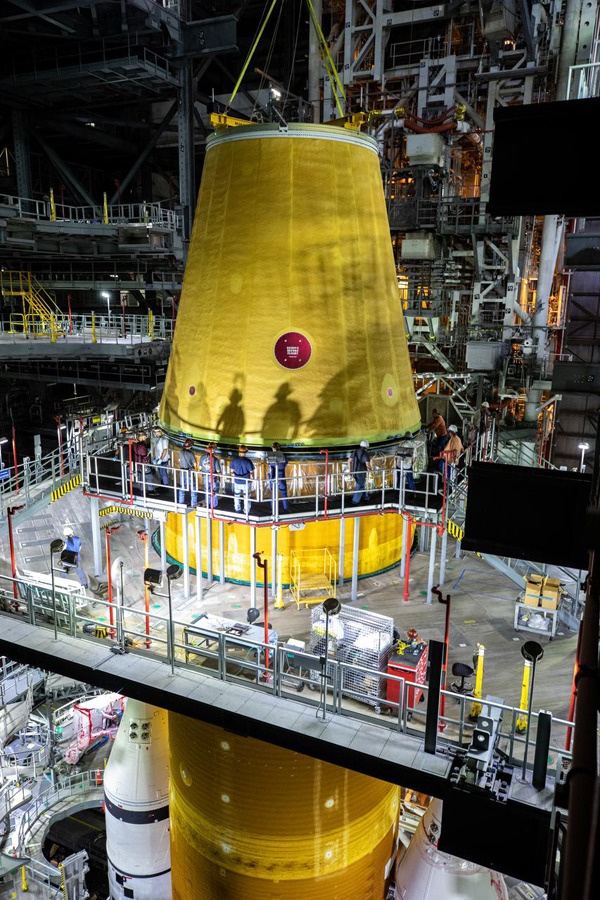
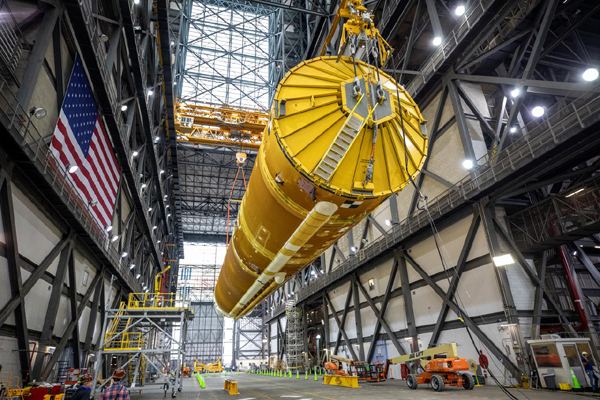
Inside the Vehicle Assembly Building (VAB) at NASA's Kennedy Space Center in Florida, the launch vehicle stage adapter (LVSA) is about to be placed atop the Space Launch System's (SLS) core stage booster...on June 22, 2021.
NASA / Frank Michaux

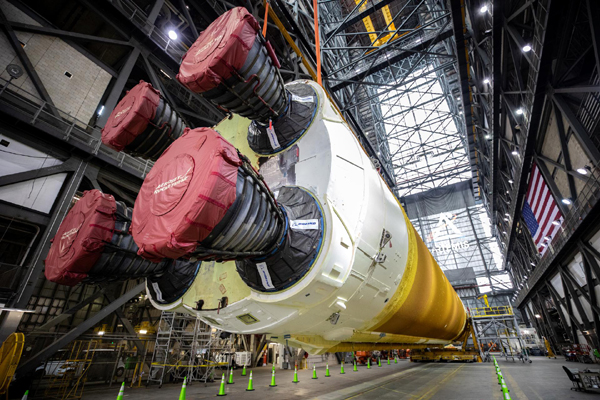
A few hours ago, technicians inside the Vehicle Assembly Building (VAB) at NASA's Kennedy Space Center in Florida succcessfully placed the launch vehicle stage adapter (LVSA) atop the Space Launch System's (SLS) core stage booster that will embark on the Artemis 1 mission. With the LVSA now stacked atop the SLS, the Interim Cryogenic Propulsion Stage is the next component that will be installed on the giant Moon rocket within the next few days. A series of tests on the SLS and its mobile launcher will then ensue inside the VAB over the next month or so before the Orion spacecraft and its Launch Abort System are attached to SLS in August...thus completing assembly of the 321-foot-tall rocket. Assuming things continue to go smoothly for launch preps throughout the summer and much of autumn, liftoff of Artemis 1 remains on schedule for this November.

Stay tuned.

Inside the VAB at NASA's Kennedy Space Center in Florida, the LVSA is about to be placed atop the SLS core stage booster...on June 22, 2021.
NASA / Frank Michaux

Inside the VAB at NASA's Kennedy Space Center in Florida, the LVSA is placed atop the SLS core stage booster...on June 22, 2021.
NASA / Frank Michaux

Sunday, June 20, 2021

ISS Update: A Personal Reason Why Today's iROSA Panel Deployment Was Very Exciting!

Spacewalking astronauts Thomas Pesquet and Shane Kimbrough work directly underneath the Roll-Out Solar Array that was deployed at the International Space Station...on June 20, 2021.
Oleg Novitskiy / Roscosmos

Around three hours ago, spacewalking astronauts Thomas Pesquet and Shane Kimbrough successfully deployed the first set of six new solar arrays that will provide additional power to the International Space Station (ISS). The 63-foot-long (19.2-meters-long) wings took at least six minutes to unfold. As someone who actually works in the entertainment industry (but obviously loves blogging about space stuff), I found today's milestone very cool due to the fact that some of my past assignments took place near the Southern California facility which built the iROSA (ISS Roll-Out Solar Array) panels.


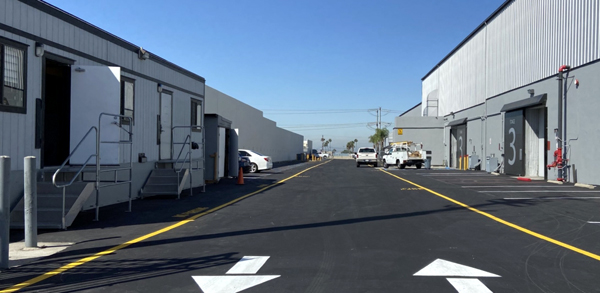
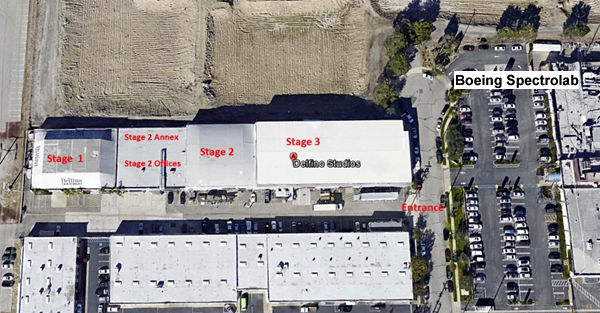
Over the past couple of years, I worked TV gigs at Delfino Studios...which is literally across the street from Boeing Spectrolab in Sylmar, California. I know that this subsidiary of Boeing constructs solar panels for spacecraft; I just didn't know which spacecraft they were placed on. The fact that the ISS is one of those satellites (the largest man-made satellite soaring in Earth orbit, that is) that Spectrolab built components for is very exciting. And considering that NASA's Lunar Gateway will also be powered by ROSA panels makes me stoked as well! It's amazing that a company based in the San Fernando Valley (about an hour's drive, without traffic, from my house) will soon build solar arrays for a space station destined to orbit the Moon...

The next iROSA deployment at the ISS is scheduled for Friday, June 25. Happy Father's Day and First Day of Summer (if you live in the Northern Hemisphere), everyone!

Delfino Studios in the city of Sylmar, California.
Delfino Studios

A Google Maps overhead view of Delfino Studios and Boeing Spectrolab.
Delfino Studios

Thursday, June 17, 2021

A Former Space Shuttle Commander Will Soon Become the Second-in-Command at NASA...

A 2003 portrait of former space shuttle astronaut Pamela Melroy...who will soon become the debuty administrator of NASA.
NASA

Statements on Pam Melroy’s Senate Confirmation as NASA Deputy Administrator (Press Release)

The following are statements from Pam Melroy and Administrator Bill Nelson on Thursday’s U.S. Senate confirmation of Melroy as deputy administrator of the National Aeronautics and Space Administration:

“It’s an honor to be confirmed by the Senate to serve as NASA Deputy Administrator, and I am humbled by President Biden and Vice President Harris’ confidence in me,” Melroy said. “I look forward to returning to the NASA family and working with Administrator Nelson to ensure the United States continues to lead in space and beyond – exploring the wonders of the universe, expanding the Earth science research critical to combatting climate change, unlocking scientific discoveries that will change the world as we know it, and inspiring the next generation of discoverers and dreamers.”

“Pam is a pioneer and veteran of NASA, and will be an outstanding leader as we venture farther out to the stars,”
said Nelson. “We certainly are lucky to have her on board, and I look forward to leading NASA with her as a team.”

****

Wednesday, June 16, 2021

Orbital Flight Test-2 Remains on Schedule for Launch Next Month...

Technicians prepare to push Boeing's Starliner vehicle for Orbital Flight Test (OFT)-2 to a new location inside the Commercial Crew and Cargo Processing Facility at NASA’s Kennedy Space Center in Florida...on June 2, 2021.
Boeing

NASA and Boeing Progress Toward July Launch of Second Starliner Flight Test (News Release)

NASA and Boeing are continuing preparations ahead of Starliner’s second uncrewed flight to prove the system can safely carry astronauts to and from the International Space Station.

Teams inside the Starliner production factory at NASA’s Kennedy Space Center in Florida recently began fueling the Starliner crew module and service module in preparation for launch of Orbital Flight Test-2 (OFT-2) at 2:53 p.m. EDT on Friday, July 30. The fueling operations are expected to complete this week as teams load propellant inside the facility’s Hazardous Processing Area and perform final spacecraft checks.

Once fueling operations are complete, teams from Boeing and United Launch Alliance (ULA) will prepare to transport Starliner to the Vertical Integration Facility (VIF) at Space Launch Complex-41 on Cape Canaveral Space Force Station for mating with ULA’s Atlas V rocket. Beginning this week, ULA will begin stacking, or assembling, the Atlas V rocket at the VIF during an operation called Launch Vehicle on Stand (or LVOS).

In preparation for Starliner’s next flight, NASA and Boeing have closed all actions recommended by the joint NASA-Boeing Independent Review Team, which was formed as a result of Starliner’s first test flight in December 2019. The review team’s recommendations included items relating to integrated testing and simulations, processes and operational improvements, software requirements, crew module communication system improvements, and organizational changes. Boeing has implemented all recommendations, even those that were not mandatory, ahead of Starliner’s upcoming flight.

“I am extremely proud of the NASA and Boeing Starliner teams as they methodically work toward the OFT-2 mission next month with final checks of the crew module and service module hardware and software as we prepare for this important uncrewed test mission,” said Steve Stich, NASA Commercial Crew Program manager. “Closing all of the Independent Review Team findings for the software and communications systems is a huge milestone for the Commercial Crew Program and included many long hours of testing and reviews by our dedicated Boeing and NASA teams during this COVID-19 pandemic.”

In the weeks ahead, mission control teams in Florida and Texas will continue conducting simulated mission dress rehearsals for the uncrewed OFT-2 and follow-on crewed missions. Starliner’s landing and recovery teams also will perform an on-site checkout of one of the vehicle’s landing zones.

During the OFT-2 mission, Starliner will test its unique vision-based navigation system to autonomously dock with the space station and deliver approximately 440 pounds, or roughly 200 kilograms, of cargo and crew supplies for NASA. Starliner is expected to spend five to 10 days in orbit before undocking and returning to Earth, touching down on land in the western United States.

Providing Starliner’s second uncrewed mission meets all necessary objectives, NASA and Boeing will look for opportunities toward the end of this year to fly Starliner’s first crewed mission, the Crew Flight Test (CFT), to the space station with NASA astronauts Barry “Butch” Wilmore, Nicole Mann, and Mike Fincke on board.

Boeing currently is refurbishing the first Orbital Flight Test crew module for crewed flight along with outfitting a brand new service module. The CFT Atlas V hardware is expected to arrive in Florida for processing next week as teams prepare for both missions in parallel.

Boeing has designed and developed the Starliner spacecraft in support of NASA’s Commercial Crew Program to provide safe and sustainable commercial transportation services for crew and cargo to the International Space Station and low-Earth orbit destinations.

NASA’s Commercial Crew Program is working with industry through a public-private partnership to provide safe, reliable, and cost-effective transportation to and from the International Space Station, which will allow for additional research time and will increase the opportunity for discovery aboard humanity’s testbed for exploration. The space station remains the springboard to space exploration, including future missions to the Moon and eventually to Mars.

Source: NASA.Gov

****

Boeing's Starliner vehicle for OFT-2 is prepared for flight inside the Commercial Crew and Cargo Processing Facility at NASA’s Kennedy Space Center in Florida...on June 2, 2021.
Boeing

Tuesday, June 15, 2021

The First South American Nation Has Joined NASA's Moon Exploration Initiative...

Brazil became the latest country, as well as the first South American nation, to sign the Artemis Accords...on June 15, 2021.
NASA

Brazil Signs Artemis Accords (News Release)

Brazil is the latest country to sign the Artemis Accords, affirming its commitment to ensuring sustainable space exploration that adheres to a common set of principles benefiting all of humanity.

Brazil Minister of Science, Technology, and Innovation Marcos Pontes signed the document during a ceremony June 15 in Brasília that featured President Jair Bolsonaro, Minister of Foreign Affairs Carlos Alberto França, and other officials.

“NASA has been looking forward to this day since last December when Minister Pontes and former NASA Administrator Jim Bridenstine signed a statement of intent regarding potential cooperation in the Artemis program,” said NASA Administrator Bill Nelson. “In undertaking this important commitment, Brazil is positioned to be a leader in safe and sustainable exploration.”

Brazil is the 12th country to sign the Artemis Accords and first in South America to do so. It joins Australia, Canada, Italy, Japan, Luxembourg, the Republic of Korea, New Zealand, the United Kingdom, the United Arab Emirates, Ukraine, and the United States in signing the document, which establishes a practical set of principles to guide space exploration cooperation among nations participating in NASA’s 21st century lunar exploration plans. Brazil is the third nation to sign the Artemis Accords under the Biden-Harris Administration, following the Republic of Korea and New Zealand.

"The signing of Artemis Accords is a historic moment for Brazil. Together with the U.S. and other countries we will have the opportunity to explore the Moon and initiate infinite other possibilities for international cooperation,” said Pontes. “We are promoting a great national effort, with the involvement of the Government and the Brazilian space industry. As an astronaut and Minister of Science, Technology and Innovation, it is an honor for me to sign Brazil's adhesion to the Artemis Accords."

NASA, in coordination with the U.S. Department of State, announced the establishment of the Artemis Accords in 2020. The Artemis Accords reinforce and implement the 1967 Treaty on Principles Governing the Activities of States in the Exploration and Use of Outer Space, Including the Moon and Other Celestial Bodies, otherwise known as the Outer Space Treaty. They also reinforce the commitment by the United States and partner nations to the Registration Convention, the Agreement on the Rescue of Astronauts, and other norms of behavior that NASA and its partners have supported, including the public release of scientific data.

Additional countries will join the Artemis Accords in the months and years ahead, as NASA continues to work with its international partners to establish a safe, peaceful, and prosperous future in space. Working with both new and existing partners will add new energy and capabilities to ensure the entire world can benefit from our journey of exploration and discovery.

Source: NASA.Gov

****

A computer-generated rendering of NASA's Orion spacecraft docked to the Lunar Gateway.
ESA

Monday, June 14, 2021

Blue Origin Founder Jeff Bezos Will Have a Third Passenger Join Him and His Brother on Their Historic Flight Next Month...

A New Shepard rocket lifts off from Blue Origin's launch site in West Texas on a flight that took it 389,846 feet above the Earth...on July 18, 2018.
Blue Origin

The Very First Seat on New Shepard Sells for $28 Million (News Release - June 12)

Today, Blue Origin concluded the online auction for the very first seat on New Shepard with a winning bid of $28 million. Nearly 7,600 people registered to bid from 159 countries.

The winning bidder will fly to space on New Shepard’s first human flight on July 20, and will join Blue Origin founder, Jeff Bezos, and his brother, Mark.

The winning bid amount will be donated to Blue Origin’s foundation, Club for the Future, whose mission is to inspire future generations to pursue careers in STEM and to help invent the future of life in space.

The name of the auction winner will be released in the weeks following the auction’s conclusion. Then, the fourth and final crew member will be announced—stay tuned.

Source: Blue Origin

****

Sunday, June 13, 2021

Artwork of the Day: Starship Super Heavy at Its Orbital Launch Site...

An artist's concept of SpaceX's Starship Super Heavy rocket atop its pad at the Orbital Launch Site in Starbase, Texas.
Artwork by Erc X - Twitter.com

Just thought I'd share this amazing illustration depicting the Starship Super Heavy rocket atop its pad at the Orbital Launch Site (OLS) in Starbase, Texas. This rendering comes courtesy of Erc X, in collaboration with Spaceport3D. As of right now, SpaceX is hard at work getting prepared for the first orbital flight test of Starship—which is set to take place before the end of this year. Engineers are currently building the launch tower at the OLS, while construction continues on Starship Serial No. 20 (SN20) and the Super Heavy BN3 rocket that will embark on the highly-anticipated demonstration. The orbital flight test will be a 90-minute-long journey in low-Earth orbit that will end with SN20 conducting a powered descent into the Pacific Ocean 100 kilometers (62 miles) off the coast of Kauai in Hawaii. Super Heavy BN3 itself will conduct its own water landing in the Gulf of Mexico...at a splashdown site 20 kilometers (12 miles) off the coast of Texas.

SpaceX continues to move full-steam ahead in its bid to land astronauts on the Moon aboard a Lunar Starship in 2024, even though its contract with NASA is currently on hold as the U.S. Congress continues to debate how it will provide additional funding for a second Human Landing System (which would be built by either Dynetics or Blue Origin) in the Artemis program. SpaceX's HLS contract is currently protected by law no matter the outcome.

Saturday, June 12, 2021

Artemis 1 Update: The SLS Core Stage Booster Has Now Been Soft-Mated with Its Twin SRBs in Florida...

Earlier this morning, workers inside High Bay 3 at Kennedy Space Center's (KSC) Vehicle Assembly Building (VAB) successfully lowered the Space Launch System's (SLS) Artemis 1 core stage between its twin solid rocket boosters (SRBs). Known as a soft mate, the positioning of the 212-foot-tall stage atop its mobile launcher allows the booster to be securely bolted, or hard-mated, to its SRBs by tomorrow. And sometime next week, the adjoining element to be installed on the SLS stack will be the launch vehicle stage adapter...which connects the United Launch Alliance-provided Interim Cryogenic Propulsion Stage (ICPS) and the Orion spacecraft to SLS. And on the week of June 20, the ICPS itself will be transported to the VAB for attachment to NASA's newest Moon rocket. A series of tests will then ensue on SLS and its ground support equipment inside High Bay 3 over the next month or so before Orion itself is placed on the mammoth vehicle in August—thus completing assembly of the 321-foot-tall rocket.

Following a wet dress rehearsal that's scheduled to take place at KSC's Launch Complex 39B in September, SLS will then commence America's long-awaited crewed return to the Moon as early as this November... Stay tuned.

Inside the Vehicle Assembly Building's High Bay 3 at NASA's Kennedy Space Center in Florida, the Space Launch System's core stage for Artemis 1 is soft-mated with its twin solid rocket boosters atop their mobile launcher...on June 12, 2021.
NASA

Friday, June 11, 2021

Photos of the Day: The SLS Core Stage Booster Finally Begins Official Launch Preparations for Artemis 1...

Inside the Vehicle Assembly Building (VAB), the Space Launch System's (SLS) core stage booster for Artemis 1 is lifted into vertical position at NASA's Kennedy Space Center in Florida...on June 11, 2021.
NASA / Cory Huston

Earlier today, engineers inside the mammoth Vehicle Assembly Building (VAB) at NASA's Kennedy Space Center in Florida finally used two giant cranes to place the Space Launch System's (SLS) core stage booster for Artemis 1 into vertical position. This milestone came after a couple of days spent by KSC workers to prepare ground support equipment inside the VAB for this much-anticipated lift...which will culminate with the SLS core stage being mated to its twin solid rocket boosters by tomorrow, and these three vehicle components being bolted together by this Sunday, June 13.

Here are photos showing the delicate process to raise the 212-foot-tall SLS booster into its final vertical launch position. The entire vehicle should complete stacking—with NASA's Orion spacecraft placed at the top of this giant rocket—by August. Artemis 1 is scheduled to take place as early as November 4...but could take flight as late as March of next year.

Inside the VAB, the SLS core stage booster for Artemis 1 is about to be lifted into the air by two large cranes at NASA's Kennedy Space Center in Florida...on June 10, 2021.
NASA / Frank Michaux

Inside the VAB, the SLS core stage booster for Artemis 1 is lifted into the air by two large cranes at NASA's Kennedy Space Center in Florida...on June 10, 2021.
NASA / Frank Michaux

Inside the VAB, the SLS core stage booster for Artemis 1 is lifted into the air by two large cranes at NASA's Kennedy Space Center in Florida...on June 10, 2021.
NASA / Frank Michaux

Inside the VAB, the SLS core stage booster for Artemis 1 is lifted into the air by two large cranes at NASA's Kennedy Space Center in Florida...on June 11, 2021.
NASA / Cory Huston

Inside the VAB, the SLS core stage booster for Artemis 1 is lifted into vertical position at NASA's Kennedy Space Center in Florida...on June 11, 2021.
NASA / Cory Huston

Inside the VAB, the SLS core stage booster for Artemis 1 is lifted into vertical position at NASA's Kennedy Space Center in Florida...on June 11, 2021.
NASA / Cory Huston

Inside the VAB, the SLS core stage booster for Artemis 1 is placed in its vertical launch position at NASA's Kennedy Space Center in Florida...on June 11, 2021.
NASA / Cory Huston

Tuesday, June 1, 2021

On This Day in 2011: Endeavour Returns Home from Space for the Final Time...

The orbiter Endeavour is about to touch down on Runway 15 at Kennedy Space Center's Shuttle Landing Facility in Florida...successfully completing her final space shuttle mission, STS-134, on June 1, 2011.
NASA / Kevin O'Connell

It was a decade ago this morning that the orbiter Endeavour safely touched down on Runway 15 at Kennedy Space Center's Shuttle Landing Facility in Florida. After completing a 15-plus day mission that involved delivering the Alpha Magnetic Spectrometer to the International Space Station, Endeavour began a year's-long decommissioning process before she made her way to her final retirement home in Los Angeles. Most of her propulsion tanks, which carried toxic hypergolic fuel during STS-134, were removed to ensure that the orbiter would be safe for permanent display at the California Science Center the following year. Also, additional components in Endeavour's propulsion system were taken out so that they could eventually be utilized on the space shuttle's successor, the Space Launch System rocket.

With two missions down, only one flight remained before the space shuttle program officially came to an end in 2011. More on STS-135 next month.