Showing posts with label Rocket Lab. Show all posts

Wednesday, May 21, 2025

Blue Origin Looks Ahead to Its Next Suborbital Passenger Flight...

The six-member crew of Blue Origin's NS-32 mission.
Blue Origin

Blue Origin Announces Crew for New Shepard’s 32nd Mission (News Release)

Blue Origin today announced the six people flying on its NS-32 mission. The crew includes Aymette Medina Jorge, Dr. Gretchen Green, Jaime Alemán, Jesse Williams, Mark Rocket and Paul Jeris.

This mission is the 12th human flight for the New Shepard program and the 32nd overall. The live webcast on BlueOrigin.com will start at T-30 minutes. The flight date will be announced soon.

Meet the Crew:

Aymette (Amy) Medina Jorge

Amy is a high school and middle school STEM teacher at Odyssey Academy in Galveston, Texas. She has led more than 60 space experiments and Zero-Gravity projects, including flying biometric sensors developed by her students and performing in-flight 3D printing as part of a parabolic Zero-G flight. Born in Puerto Rico, Amy’s mission is to boost Hispanic representation in STEM fields and push for greater inclusion in science for underrepresented communities.

Amy is the 2023 AIAA and Challenger Center Trailblazing STEM Educator Award recipient, which celebrates educators who go above and beyond to inspire the next generation of explorers and innovators in STEM. Her seat is sponsored by Farmacias Similares, a Mexican company committed to social impact and accessible healthcare across Latin America.

Dr. Gretchen Green

Dr. Green is a radiologist specializing in women’s imaging with over 20 years of clinical experience. An educator, explorer and lifelong space enthusiast, she first attended Space Camp in 1986, later worked as a Crew Trainer, chaired the Space Camp Alumni Association, and now serves on the U.S. Space & Rocket Center Education Foundation Board. Nationally recognized as a medicolegal expert witness and entrepreneur, she founded The Expert Resource to help physicians build expert witness businesses and improve patient care.

A certified life coach, Dr. Green empowers others to pursue their highest purpose. At 16, she bicycled across the U.S. to fight hunger and, in 2022, reached the North Pole. Dr. Green trained at Harvard, Yale, and Brown, earning degrees in neuroscience, history of medicine, and medicine from Brown, and is a proud graduate of the Illinois Mathematics and Science Academy.

Jaime Alemán

Jaime is a Panamanian attorney, businessman and former ambassador to the United States. A Notre Dame and Duke Law School graduate, Jaime serves as a Senior Partner at Alemán, Cordero, Galindo & Lee, a law firm that he co-founded in 1985, and sits on the board of directors of one of Panama’s largest private banks. He serves on Special Olympics International’s Board of Directors, Duke Law School's Board of Visitors, and the Woodrow Wilson Center’s Latin America Board.

A lifelong adventurer, Jaime will become the first person to travel to all 193 U.N.-recognized countries, the North and South Poles, and space.

Jesse Williams

Jesse is a Canadian entrepreneur and adventurer. He started his first digital marketing business at age 16 and currently serves as CEO of Car History Group, which he founded in 2012. A competitive cyclist and avid mountaineer, Jesse has summited six of the seven highest peaks on Earth, including Mt. Everest and Antarctica’s Mt. Vinson.

Mark Rocket

Mark is an entrepreneur and technology leader from Christchurch, New Zealand. He is CEO of Kea Aerospace, which develops solar-powered, stratospheric UAVs for aerial imaging and monitoring, and President of Aerospace New Zealand, whose mission is to promote the interests of the New Zealand aerospace community. He was a seed investor in Rocket Lab, where he served as co-Director until 2011.

Paul Jeris

Paul is a real estate developer and entrepreneur. Inspired by his NASA engineer father, Paul grew fascinated with space at a young age. He spent his childhood summers on Florida’s Space Coast, watching historic Apollo, Shuttle, Mariner, Voyager and Viking launches.

Driven by a passion for exploration, Jeris has visited more than 149 countries, aiming to see every nation. Despite his many adventures, Jeris' lifelong dream is to journey to space and witness Earth’s fragile beauty from above. In addition to his professional ventures, Paul actively serves on several local and regional tourism boards, giving back to the travel industry that has helped shape his life.

Source: Blue Origin

****

The New Shepard rocket carrying the six-member NS-30 crew lifts off from Blue Origin's Launch Site One in West Texas...on February 25, 2025.
Blue Origin

Friday, May 16, 2025

Photos of the Day: Endeavour's Permanent Home Continues to Take Shape in Los Angeles...

Taking a selfie with the Samuel Oschin Shuttle Gallery that's currently under construction at the California Science Center in Los Angeles...on May 16, 2025.

Earlier today, I drove down to the California Science Center near downtown Los Angeles to check on the status of Endeavour's permanent home, the Samuel Oschin Air and Space Center.

As shown in these images, the diagrid structure that enshrouds Endeavour and her Space Shuttle Stack is close to being fully assembled; the only task that needs to be done now is install all of the stainless-steel skin panels around the structure's exterior. The steel panels are also being attached to the rest of the building that will house scores of aerospace exhibits once the Air and Space Center is complete.

The "Work in Progress (WIP)" exhibit, shown at the very bottom of this entry, displays flight artifacts that will eventually be moved into the Air and Space Center after the WIP exhibit permanently closes this Sunday, May 18. The artifacts include a flown SpaceX Dragon freighter (designated C108), a Rocket Lab Electron booster, a Space Shuttle Main Engine as well as a Gemini capsule and Apollo-Soyuz Command Module.

I look forward to visiting the Samuel Oschin Air and Space Center for another status check later this year!

A snapshot of the Samuel Oschin Shuttle Gallery that's currently under construction at the California Science Center in Los Angeles...on May 16, 2025.
Richard T. Par

Another snapshot of the Samuel Oschin Shuttle Gallery that's currently under construction at the California Science Center in Los Angeles...on May 16, 2025.
Richard T. Par

A snapshot of a retired A-12 Blackbird near the Samuel Oschin Shuttle Gallery at the California Science Center in Los Angeles...on May 16, 2025.
Richard T. Par

A snapshot of a retired F/A-18 Hornet and the Samuel Oschin Shuttle Gallery at the California Science Center in Los Angeles...on May 16, 2025.
Richard T. Par

A snapshot of the Samuel Oschin Air and Space Center that's currently under construction at the California Science Center in Los Angeles...on May 16, 2025.
Richard T. Par

Another snapshot of the Samuel Oschin Air and Space Center that's currently under construction at the California Science Center in Los Angeles...on May 16, 2025.
Richard T. Par

The 'Work in Progress' exhibit at the California Science Center in Los Angeles...on May 16, 2025.
Richard T. Par

Sunday, May 26, 2024

Photos of the Day #2: Dragon and Electron on Display in Los Angeles...

SpaceX's Dragon C108 capsule and a Space Shuttle Main Engine on display at the California Science Center in Los Angeles...on May 23, 2024.
Richard T. Par

As mentioned in yesterday's blog entry, here are pictures that I took at the new exhibit that recently opened at the California Science Center in Los Angeles!

On display inside a large room on the Science Center's second floor is a flown SpaceX Dragon capsule—designated C108—and a Rocket Lab Electron booster. Also, there are a couple of video kiosks and the Space Shuttle Main Engine that were previously displayed along with Endeavour inside the Samuel Oschin Pavilion before it permanently closed last December.

Dragon C108 flew three times to the International Space Station...for CRS-6 in 2015, CRS-13 in 2017 and CRS-18 in 2019. This Dragon is one of only four SpaceX freighters now on display around the U.S.; C101 is on display at SpaceX Headquarters in Hawthorne, CA; C102 is at the Kennedy Space Center Visitor Complex in Florida; and C113 is on permanent exhibit at Chicago's Museum of Science and Industry in Illinois.

While it was awesome to see Dragon in person, I was mostly thrilled by seeing the Electron booster up-close! (I previously saw Dragon twice in person 11 years ago...outside the California Science Center for Endeavour Fest, and at the now-defunct E3 show near downtown Los Angeles.)

Don't forget that it was a Rocket Lab launch that officially kicked off the Artemis program almost two years ago—when an Electron booster sent NASA's CAPSTONE spacecraft to the Moon to study the near-rectilinear halo orbit that will be used by the Gateway lunar space station before the end of this decade. I'm sure that this Electron, along with Dragon C108, will be two of the permanent displays at the Samuel Oschin Air and Space Center once it opens to the public.

With Dragon and Electron being two unexpected pieces of flight hardware to go on display inside the California Science Center, one wonders what other exciting vehicles will appear at the museum in the future?

Perhaps a Crew Dragon or Cargo Dragon 2 capsule once SpaceX begins phasing out these spacecraft in favor of Starship? An Alpha rocket provided by Firefly Aerospace? Or a Starliner capsule if this vehicle flies enough that Boeing can donate a couple of them to museums nationwide?

We'll have to wait and see!

Rocket Lab's Electron booster on display at the California Science Center in Los Angeles...on May 23, 2024.
Richard T. Par

Rocket Lab's Electron booster and SpaceX's Dragon C108 capsule on display at the California Science Center in Los Angeles...on May 23, 2024.
Richard T. Par

Rocket Lab's Electron booster and the Space Shuttle Main Engine on display at the California Science Center in Los Angeles...on May 23, 2024.
Richard T. Par

Rocket Lab's Electron booster on display at the California Science Center in Los Angeles...on May 23, 2024.
Richard T. Par

SpaceX's Dragon C108 capsule on display at the California Science Center in Los Angeles...on May 23, 2024.
Richard T. Par

Taking a selfie with SpaceX's Dragon C108 capsule at the California Science Center in Los Angeles...on May 23, 2024.

Taking a selfie with Rocket Lab's Electron booster at the California Science Center in Los Angeles...on May 23, 2024.

Wednesday, March 22, 2023

The Terran 1 Rocket Has Made History Tonight...

A timelapse image showing the predominantly-blue, methane-fueled contrail created by Relativity Space's Terran 1 rocket as it launched on its maiden flight from Cape Canaveral Space Force Station in Florida...on March 22, 2023.
Relativity Space

This post isn't related to human spaceflight, but congratulations to Relativity Space for the successful launch of its Terran 1 rocket from Cape Canaveral Space Force Station in Florida over one hour ago!

Even though Terran 1 failed to reach Earth orbit due to an anomaly with its second stage motor, this launch vehicle still made history as it was the first 3D-printed and methane-fueled rocket to successfully head towards space. (In regards to other American-made launch vehicles, SpaceX's Starship prototypes were also methane-fueled but only reached suborbital altitudes during their test flights.)

Around 85% of Terran 1's components are 3D-printed, and it's a huge victory on Relativity's part that its rocket made it through Max Q—or the area of maximum dynamic pressure—unscathed. We'll see when Relativity sets a launch date for the second Terran 1 booster as engineers pour over data from today's maiden mission.

I'm rooting for Relativity to become the latest private company, after Rocket Lab, Virgin Orbit, Astra and Firefly, whose rocket achieves orbital flight! Happy Wednesday.


Tuesday, November 22, 2022

The First Artemis Mission Officially Begins Operations, Paving the Way for the Gateway Lunar Space Station...

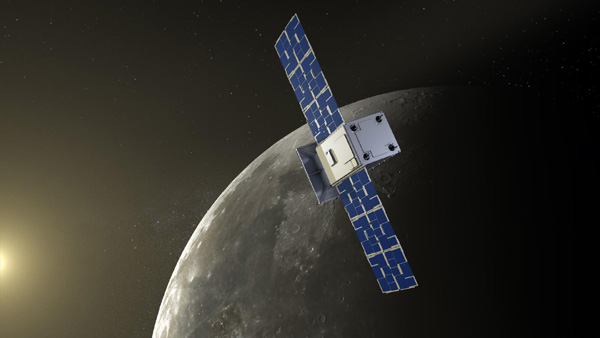
An artist's concept of NASA's CAPSTONE spacecraft orbiting the Moon.
NASA

CAPSTONE Forges New Path for NASA’s Future Artemis Moon Missions (Press Release - November 21)

NASA's CAPSTONE spacecraft has completed final maneuvers to place it in its target orbit around the Moon, refining its path in the orbit it arrived at last week.

The spacecraft is now in the operational phase of its pathfinding mission, during which it will test an orbit key to future Artemis missions and demonstrate new technologies for spacecraft operating near the Moon.

“NASA’s partnership with Advanced Space on CAPSTONE is enabling NASA to gain critical, additional capabilities at a lower cost,” said NASA Administrator Bill Nelson. “CAPSTONE is part of our new era of human exploration at the Moon, testing the unique orbit planned for the Gateway lunar space station.”

CAPSTONE – short for Cislunar Autonomous Positioning System Technology Operations and Navigation Experiment – is a technology demonstration, designed to prove the reliability of new capabilities so that they can be used in future missions. CAPSTONE is the first spacecraft to fly in a near-rectilinear halo orbit (NRHO) and the first CubeSat to operate at the Moon. This orbit is the same planned for Gateway, an upcoming Moon-orbiting space station that will support NASA's Artemis missions.

CAPSTONE will gather data on this orbit for at least six months to support Gateway's operational planning.

"Missions like CAPSTONE allow us to reduce risk for future spacecraft, giving us a chance to test our understanding and demonstrate technologies we intend to use in the future," said Jim Reuter, associate administrator for NASA's Space Technology Mission Directorate. "Partnering with innovative U.S. companies, including several small businesses, on CAPSTONE has given us the chance to forge new ground, merging commercial interests with NASA's goals."

CAPSTONE took a four-month journey from launch to orbit – overcoming challenges related to communications and propulsion along the way – and performed an initial orbit insertion maneuver on November 13. In the following days, the CAPSTONE mission operations team, led by Advanced Space of Westminster, Colorado, analyzed data from the spacecraft to confirm it was in the expected orbit and carried out two clean-up maneuvers to refine its track.

In addition to studying this unique orbit, CAPSTONE's mission also includes two technology demonstrations that could be used by future spacecraft. The Cislunar Autonomous Positioning System, or CAPS, is a navigational software developed by Advanced Space that would allow spacecraft operating near the Moon to determine their position in space without relying exclusively on tracking from Earth.

CAPSTONE will demonstrate this technology by communicating directly with NASA's Lunar Reconnaissance Orbiter, which has been in orbit around the Moon since 2009. CAPSTONE will also demonstrate one-way ranging using a chip-scale atomic clock, which could allow spacecraft to determine their position in space without the need for a dedicated downlink to ground stations.

"We have been working to this point since we started the company over 11 years ago. Getting into this orbit at the Moon validates so much hard work and grit by the combined CAPSTONE mission operations team," said Bradley Cheetham, principal investigator for CAPSTONE and chief executive officer of Advanced Space. "The capabilities we have demonstrated and the technologies still to be matured will support future missions for decades to come."

CAPSTONE launched on June 28, 2022, aboard a Rocket Lab Electron rocket from Mahia, New Zealand. After launch, a Photon upper stage raised CAPSTONE's orbit and injected the spacecraft into its ballistic lunar transfer, a long but fuel-efficient trajectory that carried the spacecraft to the Moon over the course of more than four months.

CAPSTONE is commercially owned and operated by Advanced Space. It represents an innovative collaboration between NASA and industry to provide rapid results and feedback to inform future exploration and science missions. The spacecraft was designed and built by Terran Orbital.

Operations are performed jointly by teams at Advanced Space and Terran Orbital. The mission is also supported by Stellar Exploration, Space Dynamics Laboratory, Orion Space Solutions, Tethers Unlimited, Inc. and Morehead State University.

NASA’s Small Spacecraft Technology program within the agency’s Space Technology Mission Directorate (STMD) funds the demonstration mission. The program is based at NASA’s Ames Research Center in California’s Silicon Valley.

The development of CAPSTONE’s navigation technology is supported by NASA’s Small Business Innovation Research and Small Business Technology Transfer (SBIR/STTR) program, also within STMD. The Artemis Campaign Development Division within NASA’s Exploration Systems Development Mission Directorate funded the launch and supports mission operations.

****

An artist's concept of NASA's Gateway orbiting the Moon.
NASA

Monday, October 31, 2022

Happy Halloween, Everyone! NASA's First Artemis Mission Is 13 Days Away from Arriving at the Moon...

An artist's concept of NASA's CAPSTONE spacecraft orbiting the Moon.
NASA

CAPSTONE Completes Successful Maneuver, Teeing Up Moon Orbit (News Release)

The CAPSTONE spacecraft successfully completed a trajectory correction maneuver on Thursday, October 27, teeing up the spacecraft’s arrival in lunar orbit on November 13.

CAPSTONE is no longer in safe mode following an issue in early September that caused the spacecraft to spin. The team identified the most likely cause as a valve-related issue in one of the spacecraft’s eight thrusters. The mission team will design future maneuvers to work around the affected valve, including the two remaining trajectory correction maneuvers scheduled before CAPSTONE’s arrival in orbit at the Moon.

CAPSTONE – short for Cislunar Autonomous Positioning System Technology Operations and Navigation Experiment – is owned by Advanced Space on behalf of NASA. The spacecraft was designed and built by Terran Orbital. Operations are performed jointly by teams at Advanced Space and Terran Orbital.

Source: NASA.Gov

****

Wednesday, July 27, 2022

The First Artemis Mission Continues Its Slow But Exciting Trek to Lunar Orbit...

An artist's concept of NASA's CAPSTONE spacecraft orbiting the Moon.
NASA

NASA’s CAPSTONE Executes Third Maneuver on Track to the Moon (News Release)

NASA’s Cislunar Autonomous Positioning System Technology Operations and Navigation Experiment (CAPSTONE) successfully completed its third trajectory correction maneuver (TCM) on Monday. CAPSTONE is taking a long but fuel-efficient route to the Moon, flying about 958,000 miles (1.54 million kilometers) from Earth before looping back around to its near-rectilinear halo orbit (NRHO).

At the completion of the maneuver, CAPSTONE was about 780,000 miles (1.25 million kilometers) from Earth and was moving at about 595 miles per hour (about 267 meters per second). CAPSTONE will perform several such maneuvers during its journey to lunar orbit to refine its trajectory to the Moon.

CAPSTONE remains on track to arrive at its lunar orbit on Nov. 13.

Read more about CAPSTONE’s ambitious mission to the Moon.

Source: NASA.Gov

****

Monday, July 4, 2022

Happy 4th of July, America! The First Artemis Mission Is Officially En Route to the Moon...

An artist's concept of NASA's CAPSTONE spacecraft orbiting the Moon.
NASA

CAPSTONE Leaves Earth Orbit, Headed to the Moon (News Release)

The Cislunar Autonomous Positioning System Technology Operations and Navigation Experiment (CAPSTONE) has left low-Earth orbit and started its solo journey to the Moon.

Following its launch on June 28, CAPSTONE orbited Earth attached to Rocket Lab’s Photon upper stage, which maneuvered CAPSTONE into position for its journey to the Moon. Over the past six days, Photon’s engines fired seven times at key moments to raise the orbit’s highest point to around 810,000 miles from Earth before releasing the CAPSTONE CubeSat on its ballistic lunar transfer trajectory to the Moon. The spacecraft is now being flown by the teams at Advanced Space and Terran Orbital.

Now, CAPSTONE will use its own propulsion and the Sun’s gravity to navigate the rest of the way to the Moon, a four-month journey that will have CAPSTONE inserting into its near-rectilinear halo orbit (NRHO) around the Moon on Nov. 13. The gravity-driven track will dramatically reduce the amount of fuel the CubeSat needs to get to its target orbit around the Moon.

In the coming days, you can follow CAPSTONE’s journey live using NASA’s Eyes on the Solar System interactive real-time 3D data visualization, riding along virtually with the CubeSat with a simulated view of our solar system.

Source: NASA.Gov

****

CLICK TO ENLARGE:
A screenshot of the DSN Now webpage showing that two Deep Space Network antennas in Madrid are currently communicating with NASA's CAPSTONE spacecraft...on July 4, 2022.
Courtesy of NASA's Deep Space Network

Tuesday, June 28, 2022

The First Mission of the Artemis Program Has Taken Flight!

An Electron rocket carrying NASA's CAPSTONE spacecraft lifts off for the Moon from Rocket Lab's Launch Complex 1 at New Zealand's Mahia Peninsula...on June 28, 2022.
Rocket Lab

CAPSTONE Launches to Test New Orbit for NASA’s Artemis Moon Missions (Press Release)

NASA’s CubeSat designed to test a unique lunar orbit is safely in space and on the first leg of its journey to the Moon. The spacecraft is heading toward an orbit intended in the future for Gateway, a lunar space station built by the agency and its commercial and international partners that will support NASA’s Artemis program, including astronaut missions.

The Cislunar Autonomous Positioning System Technology Operations and Navigation Experiment, or CAPSTONE, mission launched at 5:55 a.m. EDT (09:55 UTC) on Rocket Lab’s Electron rocket from the Rocket Lab Launch Complex 1 on the Mahia Peninsula of New Zealand Tuesday.

"CAPSTONE is an example of how working with commercial partners is key for NASA's ambitious plans to explore the Moon and beyond," said Jim Reuter, associate administrator for the Space Technology Mission Directorate. "We're thrilled with a successful start to the mission and looking forward to what CAPSTONE will do once it arrives at the Moon."

CAPSTONE is currently in low-Earth orbit, and it will take the spacecraft about four months to reach its targeted lunar orbit. NASA invites the public to follow the spacecraft’s journey live using NASA’s Eyes on the Solar System interactive real-time 3D data visualization. Starting about one week after launch, virtually ride along with the CubeSat with a simulated view of our solar system. NASA will post updates about when to see CAPSTONE in the visualization on NASA's Ames Research Center's home page as well as Twitter and Facebook.

CAPSTONE is attached to Rocket Lab’s Lunar Photon, an interplanetary third stage that will send CAPSTONE on its way to deep space. Shortly after launch, Lunar Photon separated from Electron’s second stage. Over the next six days, Photon’s engine will periodically ignite to accelerate it beyond low-Earth orbit, where Photon will release the CubeSat on a ballistic lunar transfer trajectory to the Moon. CAPSTONE will then use its own propulsion and the Sun’s gravity to navigate the rest of the way to the Moon. The gravity-driven track will dramatically reduce the amount of fuel the CubeSat needs to get to the Moon.

"Delivering the spacecraft for launch was an accomplishment for the entire mission team, including NASA and our industry partners. Our team is now preparing for separation and initial acquisition for the spacecraft in six days," said Bradley Cheetham, principal investigator for CAPSTONE and chief executive officer of Advanced Space, which owns and operates CAPSTONE on behalf of NASA. “We have already learned a tremendous amount getting to this point, and we are passionate about the importance of returning humans to the Moon, this time to stay!"

At the Moon, CAPSTONE will enter an elongated orbit called a near-rectilinear halo orbit, or NRHO. Once in the NRHO, CAPSTONE will fly within 1,000 miles of the Moon’s North Pole on its near pass and 43,500 miles from the South Pole at its farthest. It will repeat the cycle every six and a half days and maintain this orbit for at least six months to study dynamics.

“CAPSTONE is a pathfinder in many ways, and it will demonstrate several technology capabilities during its mission timeframe while navigating a never-before-flown orbit around the Moon,” said Elwood Agasid, project manager for CAPSTONE at NASA's Ames Research Center in California's Silicon Valley. “CAPSTONE is laying a foundation for Artemis, Gateway, and commercial support for future lunar operations.”

During its mission, CAPSTONE will provide data about operating in an NRHO and showcase key technologies. The mission's Cislunar Autonomous Positioning System, developed by Advanced Space with support from NASA's Small Business Innovation Research program, is a spacecraft-to-spacecraft navigation and communications system that will work with NASA’s Lunar Reconnaissance Orbiter to determine the distance between the two lunar-orbiting spacecraft. This technology could allow future spacecraft to determine their position in space without relying exclusively on tracking from Earth. CAPSTONE also carries a new precision one-way ranging capability built into its radio that could reduce the amount of ground network time needed for in-space operations.

In addition to New Zealand hosting CAPSTONE's launch, New Zealand's Ministry of Business, Innovation and Employment and a University of Canterbury-led team are collaborating with NASA on a research effort to track Moon-orbiting spacecraft. New Zealand helped develop the Artemis Accords – which establish a practical set of principles to guide space exploration cooperation among nations participating in NASA’s 21st century lunar exploration plans. In May 2021, New Zealand was the 11th country to sign the Artemis Accords.

The microwave-oven sized CubeSat was designed and built by Tyvak Nano-Satellite Systems, a Terran Orbital Corporation. CAPSTONE includes contributions from Stellar Exploration, Inc., Space Dynamics Lab, Tethers Unlimited, Inc., and Orion Space Systems. NASA’s Small Spacecraft Technology program within the agency’s Space Technology Mission Directorate (STMD) funds the demonstration mission. The program is based at NASA’s Ames Research Center in California’s Silicon Valley.

The development of CAPSTONE’s navigation technology is supported by NASA’s Small Business Innovation Research and Small Business Technology Transfer (SBIR/STTR) program, also within STMD. The Artemis Campaign Development Division within NASA’s Exploration Systems Development Mission Directorate funds the launch and supports mission operations. The Launch Services Program at NASA’s Kennedy Space Center in Florida manages the launch service. NASA’s Jet Propulsion Laboratory supports the communication, tracking, and telemetry downlink via NASA’s Deep Space Network, Iris radio design, and groundbreaking 1-way navigation algorithms.

****

Engineers work on the CAPSTONE spacecraft at Tyvak Nano-Satellite Systems Inc. in Irvine, California.
NASA / Dominic Hart

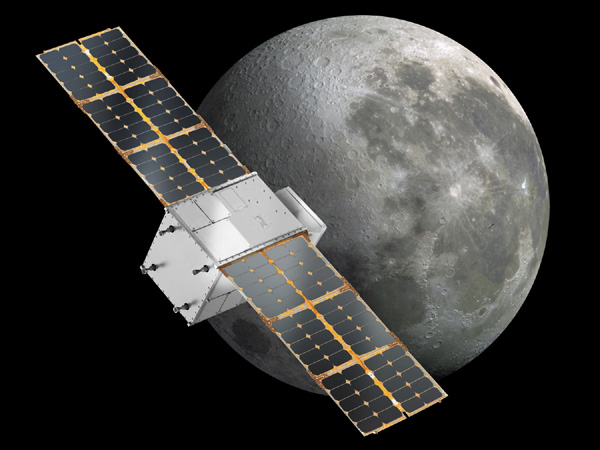
An artist's concept of Rocket Lab's Photon spacecraft transporting CAPSTONE to the Moon.
Rocket Lab

An artist's concept of NASA's Gateway orbiting the Moon.
NASA

Saturday, June 25, 2022

The First Mission of the Artemis Program Is Set to Take Flight This Monday...

At Rocket Lab's Launch Complex 1 in Mahia, New Zealand, a wet dress rehearsal is conducted for the Electron rocket that will send the CAPSTONE spacecraft to the Moon.
Rocket Lab

NASA Sets Live Launch Coverage for CAPSTONE Mission to Moon (Press Release - June 23)

NASA will air live launch coverage of the agency’s Cislunar Autonomous Positioning System Technology Operations and Navigation Experiment (CAPSTONE), the first spacecraft to fly a specific unique lunar orbit ahead of future missions with crew.

CAPSTONE is targeted to launch no earlier than Monday, June 27, aboard a Rocket Lab Electron rocket from the company's Launch Complex 1 in Mahia, New Zealand. The instantaneous launch opportunity is at 6 a.m. EDT (10:00 UTC). Live coverage will begin at 5 a.m. on NASA Television, the agency's website, and the NASA app.

The destination for this microwave oven-size CubeSat is a near-rectilinear halo orbit (NRHO). That same orbit is planned for Gateway, a multi-purpose outpost for long-term lunar missions as part of the agency’s Artemis program.

Six days after launch, the Photon upper stage will release CAPSTONE into space for the first portion of the spacecraft’s solo flight. After a four-month journey to the Moon, CAPSTONE will test the dynamics of the NRHO for at least six months, helping reduce risk for future spacecraft. CAPSTONE will also demonstrate innovative spacecraft-to-spacecraft navigation technology and one-way ranging capabilities that could help future spacecraft fly near the Moon with reduced need for communication with Earth.

Join Virtual NASA Social

Members of the public are invited to join the virtual NASA Social to get a behind-the scenes look at CAPSTONE, learn what makes CAPSTONE unique among NASA’s missions, meet the rocket launching CAPSTONE, and more.

Visualize CAPSTONE’s Flight in Real Time

You can follow CAPSTONE’s journey live using NASA’s Eyes on the Solar System interactive real-time 3D data visualization. Starting about one week after launch, you can virtually ride along with the CubeSat with a simulated solar system view. NASA will post updates in the visualization on the agency’s Ames Research Center home page as well as Twitter and Facebook.

CAPSTONE is commercially-owned and operated by Advanced Space in Westminster, Colorado, on behalf of NASA. It represents an innovative collaboration between NASA and industry to provide rapid results and feedback to inform future exploration and science missions. Tyvak Nano-Satellite Systems, a Terran Orbital Corporation, of Irvine, California, built the spacecraft. The mission also includes contributions from Stellar Exploration Inc., Space Dynamics Lab, Tethers Unlimited Inc., and Orion Space Systems.

NASA’s Small Spacecraft Technology program within the agency’s Space Technology Mission Directorate (STMD) funds the demonstration mission. The program is based at NASA’s Ames Research Center in California’s Silicon Valley. The development of CAPSTONE’s navigation technology is supported by NASA’s Small Business Innovation Research and Small Business Technology Transfer (SBIR/STTR) program, also within STMD. The Artemis Campaign Development Division within NASA’s Exploration Systems Development Mission Directorate funds the launch and supports mission operations. The Launch Services Program at NASA’s Kennedy Space Center in Florida manages the launch service. NASA’s Jet Propulsion Laboratory in Southern California supports the communication, tracking, and telemetry downlink via NASA’s Deep Space Network, Iris radio design, and groundbreaking one-way navigation algorithms.

Source: NASA.Gov

****

Engineers work on the CAPSTONE spacecraft at Tyvak Nano-Satellite Systems Inc. in Irvine, California.
NASA / Dominic Hart

Tuesday, May 17, 2022

The First Lunar Mission Under the Artemis Program Is Set to Launch at the End of This Month...

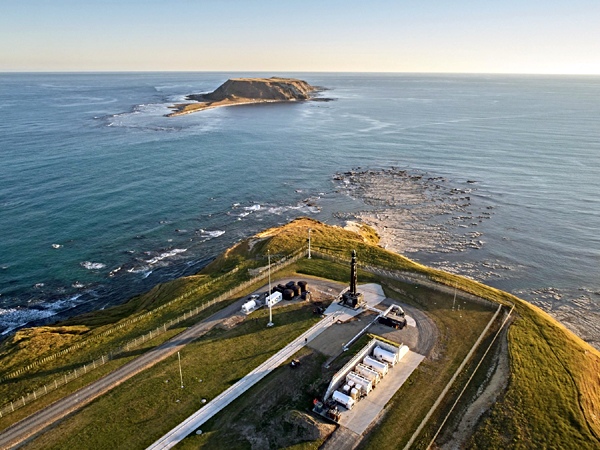
The Electron rocket that will send NASA's CAPSTONE spacecraft to the Moon sits atop its pad at Rocket Lab's Launch Complex 1 in New Zealand.
Rocket Lab

Rocket Lab Begins Payload Integration for CAPSTONE Mission to the Moon (Press Release - May 16)

Rocket Lab will launch the CAPSTONE spacecraft to a unique lunar transfer orbit using the Electron launch vehicle and Lunar Photon spacecraft bus, charting a new path for NASA's Moon-orbiting space station to be used by Artemis astronauts

LONG BEACH, Calif. -- Rocket Lab (Nasdaq: RKLB) (“Rocket Lab” or “the Company”), a leading launch and space systems company, today announced that the CAPSTONE spacecraft has arrived at Rocket Lab Launch Complex 1 in Mahia, New Zealand in preparation for launch to lunar orbit. With the spacecraft now at the launch site, Rocket Lab will begin payload integration with the Electron rocket and Photon spacecraft bus ahead of the launch window opening on May 31.

Designed and built by Tyvak Nano-Satellite Systems, a Terran Orbital Corporation, and owned and operated by Advanced Space, the Cislunar Autonomous Positioning System Technology Operations and Navigation Experiment (CAPSTONE) CubeSat will be the first spacecraft to test the Near-Rectilinear Halo Orbit (NRHO) around the Moon. Researchers expect this orbit to be a gravitational sweet spot in space – where the pull of gravity from Earth and the Moon interact to allow for a nearly-stable orbit – allowing physics to do most of the work of keeping a spacecraft in orbit around the Moon. NASA has big plans for this unique type of orbit. The agency hopes to park bigger spacecraft – including the lunar-orbiting space station Gateway – in an NRHO around the Moon, providing astronauts with a base from which to descend to the lunar surface as part of the Artemis program.

CAPSTONE will be launched to an initial low-Earth orbit by Rocket Lab’s Electron launch vehicle and then placed on a ballistic lunar transfer by Rocket Lab’s Lunar Photon spacecraft bus. Unlike the Apollo lunar missions of the 1960s and 70s, which took a free-return trajectory to the Moon, this fuel-efficient ballistic lunar transfer makes it possible to deploy CAPSTONE to such a distant orbit using a small launch vehicle. Standing at just 59 feet tall, Electron is the smallest rocket to attempt a launch to the Moon.

Around ten minutes after lift-off on Electron, Rocket Lab’s Lunar Photon spacecraft bus, with CAPSTONE attached, will separate from the rocket and carry out a series of orbit-raising maneuvers, stretching its orbit into a prominent ellipse around Earth. About six days after launch, a final burn from Photon’s 3D-printed HyperCurie engine will accelerate Photon to 24,500 miles per hour, enabling it to escape low-Earth orbit and set CAPSTONE on a course for the Moon. Within 20 minutes of the final burn, Photon will release CAPSTONE into space for the first leg of the CubeSat’s solo flight. CAPSTONE’s journey to NRHO is expected to take around four months from this point. Once successfully inserted into the orbit, CAPSTONE is expected to remain there for at least six months, allowing NASA to study the orbit dynamics.

“CAPSTONE’s arrival at Launch Complex 1 marks a major milestone in this historic mission. We’re excited to move into the final integration and test phase ahead of launch day,” said Rocket Lab founder and CEO, Peter Beck. “This is our most ambitious Photon mission yet and a significant step toward providing scientific missions with dedicated and affordable access to interplanetary orbits. Less than four years after our first Electron mission for NASA, it’s fantastic to be working with the agency and its partners again to go beyond low-Earth orbit and pave the way for humanity’s return to the Moon.”

Rocket Lab has carried out 26 Electron launches since 2017, but the CAPSTONE mission will be Rocket Lab’s first launch beyond low-Earth orbit. Rocket Lab also operates two Photon spacecraft in low-Earth orbit, but the CAPSTONE mission is the first to employ the high-energy variant of the Photon spacecraft bus, powered by the HyperCurie engine, designed to support lunar and interplanetary missions. CAPSTONE is the first in a series of interplanetary missions for Photon, including the ESCAPADE mission to Mars in 2024 and Rocket Lab’s private mission to Venus in 2023.

Source: BusinessWire.com

****

An artist's concept of Rocket Lab's Lunar Photon spacecraft transporting CAPSTONE to the Moon.
Rocket Lab

An artist's concept of NASA's Gateway orbiting the Moon.
NASA

Saturday, August 7, 2021

The First Lunar Mission Under the Artemis Program Is Set to Launch Later This Year...

An Electron rocket sits atop its pad at Rocket Lab's Launch Complex 1 in New Zealand.
Rocket Lab

Rocket Lab to Launch NASA-Funded Commercial Moon Mission from New Zealand (Press Release - August 6)

The CAPSTONE mission will be Rocket Lab’s first launch to the Moon

Long Beach, California – Rocket Lab, the leading launch and space systems company, today announced it will launch the CAPSTONE mission to the Moon from Launch Complex 1 in New Zealand from Q4 2021. It will be Rocket Lab’s first launch to the Moon. CAPSTONE (the Cislunar Autonomous Positioning System Technology Operations and Navigation Experiment) aids NASA’s Artemis program, which includes landing the first woman and the first person of color on the Moon and establishing a long-term presence there.

Launching on an Electron launch vehicle and deploying from Rocket Lab’s Photon spacecraft platform, CAPSTONE is a 55-pound satellite created by Advanced Space that will serve as the first spacecraft to test a unique, elliptical lunar orbit. As a precursor for Gateway and other Artemis elements, an international and commercial Moon-orbiting outpost that is part of NASA’s Artemis program, CAPSTONE will help reduce risk for future spacecraft by validating innovative navigation technologies and verifying the dynamics of this halo-shaped orbit.

The mission is the first time Rocket Lab will use its Photon spacecraft platform as a trans-lunar injection stage to place a satellite on a trajectory that will take it beyond Earth orbit to the Moon. After lifting off on Electron to an initial elliptical low-Earth orbit, Photon will separate and use its 3D printed HyperCurie engine to provide in-space propulsion to allow CAPSTONE to break free of Earth’s gravity and set a course for the Moon. After deploying the CAPSTONE satellite, Photon will continue on its own trajectory to conduct a lunar fly-by, while CAPSTONE will use its own propulsion system to enter a cislunar orbit.

Following a three-to-four-month trip to the Moon, the CAPSTONE CubeSat will enter a near rectilinear halo orbit (NRHO), which is a highly elliptical orbit over the Moon’s poles. During its six-month primary mission in orbit around the Moon, CAPSTONE will validate the propulsion requirements for maintaining this type of orbit as predicted by models, reducing logistical uncertainties for future missions. It will also test the accuracy of innovative spacecraft-to-spacecraft navigation solutions as well as demonstrate capabilities for commercial support of future lunar missions. The NRHO provides the advantage of an unobstructed view of Earth in addition to coverage of the lunar South Pole.

Originally slated for lift-off from Rocket Lab’s Launch Complex 2 in Virginia, the CAPSTONE mission will now take place from Launch Complex 1 to support a Q4 launch window.

“Flexible isn’t a word usually used to describe lunar missions but operating two launch complexes gives us the freedom to select a site that best meets mission requirements and schedule,” said Rocket Lab Chief Executive Officer, Mr. Peter Beck. “Our team is immensely proud to be launching one of the first pathfinding missions to support NASA’s goal of delivering a sustainable and robust presence on the Moon. We’ve teamed up with the NASA Launch Services Program on previous Electron missions to low-Earth orbit, so it’s exciting to be working with them again to go just a bit further than usual...some 380,000 km further.”

Advanced Space of Colorado, a leading commercial space solutions company, owns the satellite and operates the mission. CAPSTONE development is supported by NASA’s Space Technology Mission Directorate via the Small Spacecraft Technology Program at NASA’s Ames Research Center in California’s Silicon Valley. Advanced Exploration Systems within NASA’s Human Exploration and Operations Mission Directorate supports the launch and mission operations. NASA’s Launch Services Program at Kennedy Space Center in Florida is responsible for launch management.

Source: Rocket Lab

****

CAPSTONE’s propulsion system undergoes environmental testing at Stellar Exploration Inc. in San Luis Obispo, California.
Stellar Exploration Inc.

An artist's concept of Rocket Lab's Photon spacecraft transporting CAPSTONE to the Moon.
Rocket Lab

An artist's concept of NASA's Gateway orbiting the Moon.
NASA

Monday, March 22, 2021

Artemis Update: NASA Prepares for the Lunar Gateway with the CAPSTONE Mission...

CAPSTONE’s propulsion system undergoes environmental testing at Stellar Exploration Inc. in San Luis Obispo, California.
Stellar Exploration Inc.

Innovative Propulsion System Gets Ready to Help Study Moon Orbit for Artemis (News Release)

In 2021, NASA’s Cislunar Autonomous Positioning System Technology Operations and Navigation Experiment, or CAPSTONE, CubeSat will launch to a never-before-used cislunar orbit near the Moon.

As a pathfinder for Gateway, a Moon-orbiting outpost that is part of NASA’s Artemis program, CAPSTONE will help reduce the risk for future spacecraft by verifying the dynamics of a unique halo-shaped orbit. The mission will also demonstrate innovative spacecraft-to-spacecraft navigation technology and communications capabilities with Earth.

CAPSTONE’s journey to the Moon will take about three months, starting with its launch to low-Earth orbit on a Rocket Lab Electron. Rocket Lab’s Photon spacecraft will take over next and conduct a series of orbit-raising maneuvers to prepare the CubeSat for its transfer path to the Moon. After separating from Photon, CAPSTONE will utilize an energy-efficient ballistic lunar transfer using its onboard propulsion system and enter into a near rectilinear halo orbit in the vicinity of and around the Moon. There, it will maintain the orbit to inform future spacecraft and demonstrate new technologies.

CAPSTONE’s propulsion system is designed and built by Stellar Exploration Inc. of San Luis Obispo, California. Initially funded by NASA’s Small Business Innovation Research program, the system is approximately 8-inches square by 4-inches deep. The system’s eight thrusters are fed hydrazine propellant from an unpressurized tank. CAPSTONE’s super small, high-performance thrusters integrate proven NASA technology with state-of-the-art industry fabrication techniques.

CAPSTONE is led by Advanced Space of Westminster, Colorado. Tyvak Nano-Satellite Systems of Irvine, California, is building the microwave oven-sized CubeSat platform. NASA’s Small Spacecraft Technology program within the agency’s Space Technology Mission Directorate funds the demonstration mission. The program is based at NASA’s Ames Research Center in California’s Silicon Valley. The Launch Services Program at NASA’s Kennedy Space Center in Florida manages the launch service.

Source: NASA.Gov

****

An artist's concept of Rocket Lab's Photon spacecraft transporting CAPSTONE to the Moon.
Rocket Lab

An artist's concept of NASA's Gateway orbiting the Moon.
NASA