Sunday, May 12, 2024

The ISS Over Los Angeles County...

A photo I took of the International Space Station (white light streak at top) soaring across the night sky as seen from the Angeles National Forest in California's San Gabriel Mountains...on May 11, 2024.
Richard T. Par

Happy Mother's Day! So last night, I drove up to the Angeles National Forest in California's San Gabriel Mountains in an attempt to see auroras caused by the recent geomagnetic storm.

While I was unsuccessful in viewing the Northern Lights from Los Angeles County, I was able to catch a glimpse of the International Space Station (ISS) as it soared across the night sky under the Moon...as seen in the photos above and below. These images were taken with my Nikon D3300 DSLR camera.

(The red light streak in both pictures is an airliner.)

This is the second time in 15 years that I spotted the ISS 250+ miles overhead!

Back on March 16, 2009, I watched as the orbital outpost raced across the sky from my house in California's San Gabriel Valley...with space shuttle Discovery appearing not too far behind moments later. The orbiter was catching up with the microgravity laboratory one day after launching from NASA's Kennedy Space Center in Florida on flight STS-119.

It's so amazing to stare at a small bright dot, carrying seven human beings aboard, as it moved rapidly across the night sky. To spot the ISS from your neck of the woods, click here!

Another photo I took of the International Space Station soaring across the night sky as seen from the Angeles National Forest in California's San Gabriel Mountains...on May 11, 2024.
Richard T. Par

Saturday, May 11, 2024

Photos of the Day: SpaceX Looks Ahead to the Next Two Flights of Starship Super Heavy...

Ship 30 conducts a static fire on its suborbital launch pad at Starbase, Texas...on May 8, 2024.
SpaceX

Even though the launch of the fourth Integrated Flight Test (IFT) is still almost a month away, SpaceX is already rolling out hardware that will head to low-Earth orbit on the fifth IFT of Starship Super Heavy...while prepping for the impending launch of IFT-4.

On May 8, Ship 30—which will launch aboard IFT-5—successfully conducted a static fire at Starbase's suborbital launch pad in Texas. And late last night, Booster 11 (which will send Ship 29 to space on IFT-4) returned to Starbase's Orbital Launch Pad to undergo additional preps for the next flight.

Just like the three previous launches, SpaceX needs official approval by the Federal Aviation Administration to conduct IFT-4. Stay tuned!

Ship 30 conducts a static fire on its suborbital launch pad at Starbase, Texas...on May 8, 2024.
SpaceX

Booster 11 is about to be transported to the Orbital Launch Pad after exiting the High Bay at Starbase, Texas...on May 10, 2024.
SpaceX

Booster 11 is about to be transported to the Orbital Launch Pad after exiting the High Bay at Starbase, Texas...on May 10, 2024.
SpaceX

Booster 11 is about to be transported to the Orbital Launch Pad after exiting the High Bay at Starbase, Texas...on May 10, 2024.
SpaceX

Friday, May 10, 2024

Assembly on the Launch Platform for the SLS Block 1B Rocket Has Reached a Major Milestone...

Bechtel and NASA’s Exploration Ground Systems teams take a group photo below Mobile Launcher 2 as it underwent Jack and Set activities at NASA's Kennedy Space Center in Florida.
NASA

Bechtel Completes Jack and Set of Mobile Launcher 2 Base at Kennedy Space Center (Press Release)

Reaching new heights for the Artemis campaign in collaboration with NASA

Bechtel today announced the completion of the jacking and setting process for Mobile Launcher 2 at Kennedy Space Center. This achievement is a critical step in the process to design, build and commission NASA’s new mobile launcher.

The milestone was accomplished through collaboration with NASA’s crawler-transporter team – a one-of-a-kind vehicle used to transport hardware critical to the Artemis campaign around Kennedy.

"This is an incredible achievement," said Mike Costas, Bechtel’s General Manager of Defense and Space. "Lifting a 2.6-million-pound launcher base more than 20 feet into the air, moving it nearly the length of a football field, and then setting it down safely at a height of 25 feet, requires both great skill and careful planning. I am proud of the dedication, innovation and collaboration of our combined Bechtel-NASA team in accomplishing that."

Establishing safety as a top priority, Bechtel and NASA’s Exploration Ground Systems teams worked to address and reduce potential risks to the craft professional team by planning for the base’s primary steel to be assembled at a lower height. The collaboration resulted in a creative and efficient method for later raising the base’s primary steel assembly to its full height using NASA’s crawler.

With the base at operating height, the work now transitions to installing critical electrical equipment and piping in preparation for erecting the mobile launcher tower, which is scheduled to begin in late 2024.

To perform Jack and Set, the project team assembled and aligned the 43 primary steel assemblies comprising the mobile launcher base. Four Self-propelled Motor Transporters then raised the base to allow for the temporary mount mechanisms to be removed and eight jacks to be set.

The jacks raised the base 18 feet allowing the crawler-transporter crew to drive underneath the mobile launcher base, carry it roughly 200 feet, and then lower the base pins into the permanent mount mechanisms. The Jack and Set process took one week of careful coordination to execute.

"The safety of our craft professional team has been the primary focus of Bechtel and NASA throughout the assembly of the base," said Paul Podolak, Mobile Launcher 2 Project Manager. "I am grateful for the dedicated work of our team to design the base, procure critical materials, and assemble it safely. We are fully committed to delivering this key component for the Artemis campaign."

Mobile Launcher 2 will support the Artemis IV mission and beyond, once the larger and more intense Space Launch System (SLS) Block 1B rocket is used to begin delivering large cargo to the Moon, including to the lunar Gateway, along with crew. Reaching a height of 390 feet, Mobile Launcher 2 will be taller and wider than mobile launcher 1.

Mobile Launcher 2 will implement a new umbilical arm during rocket transport and launch. This second iteration will continue to apply lessons learned from the Artemis I launch.

The second mobile launcher is designed, built and commissioned by Bechtel.

Source: Bechtel.com

****

An image of Mobile Launcher 2 prior to the commencement of Jack and Set activities at NASA's Kennedy Space Center in Florida...on April 24, 2024.
NASA / Isaac Watson

Bechtel and NASA’s Exploration Ground Systems teams gather near Mobile Launcher 2 as it underwent Jack and Set activities at NASA's Kennedy Space Center in Florida.
NASA

Crawler-transporter 2 prepares to relocate Mobile Launcher 2 to its permanent work site at NASA's Kennedy Space Center in Florida...on May 9, 2024.
NASA / Madison Tuttle

Bechtel and NASA’s Exploration Ground Systems teams watch as crawler-transporter 2 is about to relocate Mobile Launcher 2 to its permanent work site at NASA's Kennedy Space Center in Florida...on May 9, 2024.
NASA / Madison Tuttle

An artist's concept of the Space Launch System Block 1B rocket standing tall at Kennedy Space Center's Launch Complex 39B in Florida.
NASA

Thursday, May 9, 2024

America's Newest ISS-Bound Freighter Will Soon Head to Florida for Launch...

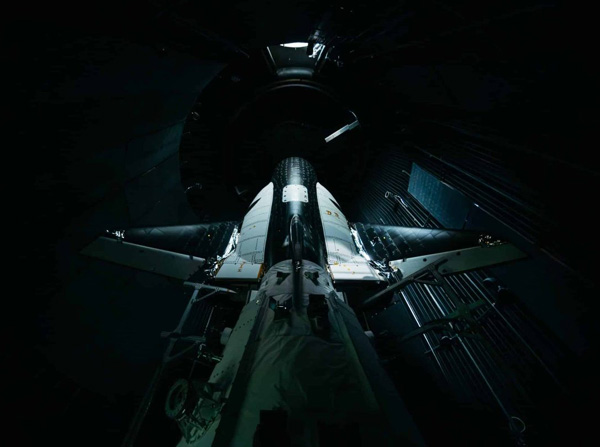
A snapshot of Dream Chaser and its Shooting Star cargo module inside the thermal vacuum chamber at NASA’s Neil Armstrong Test Facility in Sandusky, Ohio...on April 26, 2024.
Joshua Teplitz / Sierra Space

Sierra Space Reinvents Space Transportation with Dream Chaser® (Press Release)

LOUISVILLE, Colo. – Sierra Space, a leading commercial space company and emerging defense tech prime building a platform in space to benefit and protect life on Earth, announced today the successful completion of a rigorous environmental test suite on the revolutionary Dream Chaser® spaceplane, Tenacity®, at NASA’s Neil Armstrong Test Facility in Sandusky, Ohio.

As the first Dream Chaser moves toward orbital operations, Sierra Space and NASA test team members are preparing the vehicle, along with its Shooting Star® cargo companion, for shipment to NASA’s Kennedy Space Center in Florida for final testing and integration ahead of its inaugural launch later this year.

Over the past several months, Dream Chaser and Shooting Star have undergone intense shock, vibration and thermal vacuum testing at the sprawling Armstrong Test Facility. In December, the test teams conducted shock tests with Sierra Space’s launch partner United Launch Alliance (ULA), using the flight separation system that will deploy the spacecraft from the upper stage of ULA’s second Vulcan Centaur rocket.

The two vehicles were then stacked in launch configuration on the world’s most powerful spacecraft shaker table inside the test center’s Mechanical Vibration Facility. Sine vibration testing – conducted over a five-week period – simulated the intense conditions and environment of a launch on a Vulcan Centaur rocket. See video here.

After vibe testing concluded, the teams conducted another shock test – this time with the flight separation system between Dream Chaser and Shooting Star – to simulate the dynamic environment during separation of the two vehicles prior to de-orbit and re-entry.

Next, the Sierra Space and NASA test teams transported the vehicles to the In-Space Propulsion Facility at Armstrong for thermal vacuum or “TVAC” testing. Temperatures in space can range from the extremely cold – hundreds of degrees below freezing – to several hundred degrees Fahrenheit due to radiation from the sun.

TVAC testing is a realistic thermal simulation of the flight environment and critical to ensuring mission success. For more than five weeks, Dream Chaser and Shooting Star were subjected to multiple cold-hot cycles in a vacuum environment, between -150°F to +250°F, with teams conducting functional tests at temperature plateaus to verify system performance.

Sierra Space is releasing some stunning new imagery with this announcement, and you can download it here.

Dream Chaser and Shooting Star will soon be transported to NASA’s Kennedy Space Center and staged inside the storied Space Systems Processing Facility (SSPF) – originally built to be the last stop for components of the International Space Station – for final integration and testing.

The final environmental tests – acoustic testing and electromagnetic interference and compatibility testing – will be performed onsite inside the SSPF. Remaining work on the thermal protection system will also be completed there.

Dream Chaser Tenacity, the first in a fleet of spaceplanes, remains on track for a 2024 launch on the first of seven missions to resupply the International Space Station for NASA under a Commercial Resupply Services-2 (CRS-2) contract. A second spaceplane, named Reverence™, is in production in Sierra Space’s Louisville, Colo., factory.

Armstrong Test Facility is part of NASA’s Glenn Research Center in Cleveland. Located on 6,400 acres in Sandusky, Ohio, it is home to some of the world’s largest and most capable space simulation test facilities, where ground tests are conducted for the U.S. and international space and aeronautics communities.

Source: Sierra Space

Tuesday, May 7, 2024

Calypso Won't Take Flight For At Least 10 More Days...

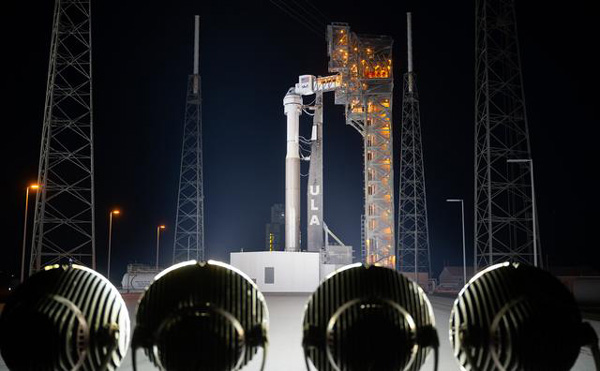
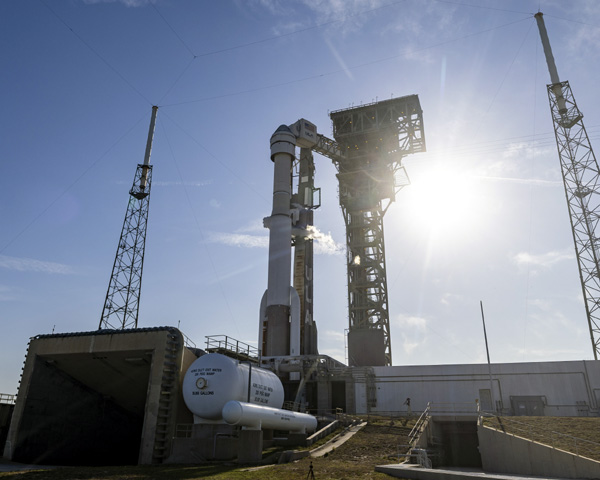
Standing tall at Cape Canaveral Space Force Station's SLC-41 in Florida, United Launch Alliance's Atlas V rocket and Boeing's Starliner Calypso spacecraft will return to the Vertical Integration Facility tomorrow, May 8, after Atlas' first launch attempt for the Crew Flight Test was scrubbed on May 6, 2024.
NASA / Joel Kowsky

NASA’s Boeing Crew Flight Test Targets New Launch Date (News Release)

NASA’s Boeing Crew Flight Test is now targeted to launch no earlier than 6:16 p.m. EDT on Friday, May 17, to the International Space Station. Following a thorough data review completed on Tuesday, ULA (United Launch Alliance) decided to replace a pressure regulation valve on the liquid oxygen tank on the Atlas V rocket’s Centaur upper stage.

ULA plans to roll the rocket, with Boeing’s Starliner spacecraft, back to its Vertical Integration Facility at Cape Canaveral Space Force Station in Florida on Wednesday, May 8, to begin the replacement. The ULA team will perform leak checks and functional checkouts in support of the next launch attempt.

The oscillating behavior of the valve during prelaunch operations, ultimately resulted in mission teams calling a launch scrub on May 6. After the ground crews and astronauts Butch Wilmore and Suni Williams safely exited from Space Launch Complex-41, the ULA team successfully commanded the valve closed and the oscillations were temporarily dampened.

The oscillations then re-occurred twice during fuel removal operations. After evaluating the valve history, data signatures from the launch attempt, and assessing the risks relative to continued use, the ULA team determined that the valve exceeded its qualification and mission managers agreed to remove and replace the valve.

Mission managers discussed the details leading to the decision to scrub the May 6 launch opportunity during a news conference shortly after the scrub call at NASA’s Kennedy Space Center in Florida.

Wilmore and Williams will remain in crew quarters at NASA Kennedy in quarantine until the next launch opportunity. The duo will be the first to launch aboard Starliner to the space station as part of the agency’s Commercial Crew Program.

Source: NASA.Gov

Monday, May 6, 2024

Calypso Will Have to Wait Till At Least Friday, May 10, to Fly Butch and Suni to the ISS...

United Launch Alliance's Atlas V rocket was fully-fueled for the first launch attempt of the Crew Flight Test from Cape Canaveral Space Force Station's SLC-41 in Florida...on May 6, 2024.
United Launch Alliance

First Launch Attempt for Starliner Crew Flight Test Scrubbed (News Release)

Flight teams standing down due to valve issue on upper stage of launch vehicle.

United Launch Alliance (ULA), with concurrence from Boeing and NASA, scrubbed the launch a little more than two hours ahead of the originally-scheduled liftoff time of the CST-100 Starliner Crew Flight Test on Monday, May 6. NASA astronauts Butch Wilmore and Suni Williams safely exited Starliner and returned to crew quarters, following the decision to stand down from launch for the day.

The scrub was recommended after launch control teams detected anomalous behavior by the pressure regulation valve in the liquid oxygen tank of the Centaur upper stage of the ULA Atlas V launch vehicle. Engineers are analyzing the data to fully understand the issue and determine any corrective actions.

Mission managers will convene to decide next steps and potential timing for another launch attempt.

Click here to watch a news conference with representatives from NASA, Boeing and United Launch Alliance discussing the scrub in more detail.

Source: StarlinerUpdates.com

****

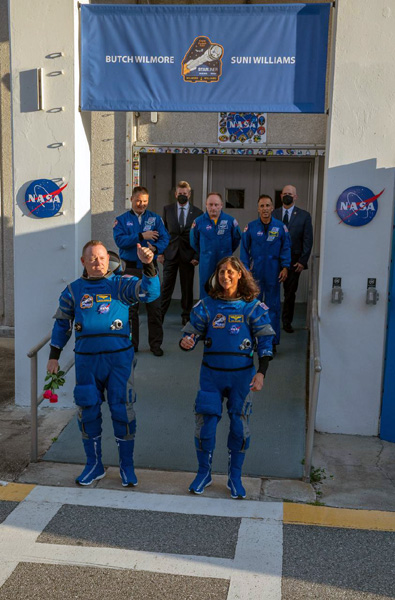
After exiting Kennedy Space Center's Neil A. Armstrong Operations and Checkout Building, NASA astronauts Butch Wilmore and Suni Williams greet well-wishers prior to heading out to Cape Canaveral Space Force Station's SLC-41 for the first launch attempt of the Crew Flight Test to the International Space Station...on May 6, 2024.
NASA / Kim Shiflett

Sunday, May 5, 2024

Astronauts Will Soon Be Able to Perform Spacewalks Outside of SpaceX's Crew Dragon Capsule...

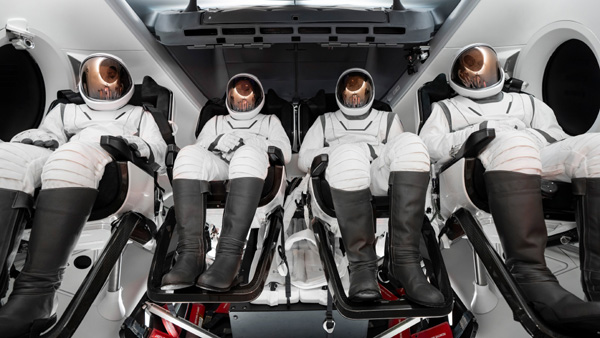
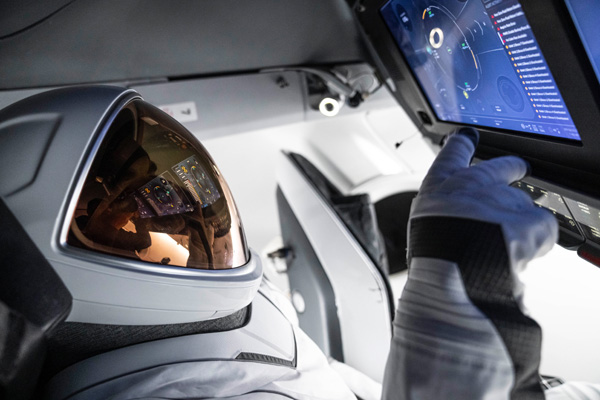
Donning SpaceX's new EVA suit, the Polaris Dawn crew takes a group photo inside a Crew Dragon capsule.
Polaris Program

The Extravehicular Activity (EVA) Suit (News Release - May 4)

In February 2022, Jared Isaacman and SpaceX announced the Polaris Program, an effort designed to rapidly advance human spaceflight capabilities, while also supporting important causes here on Earth.

Polaris Dawn, the first of the program’s three human spaceflight missions, is targeted to launch to orbit no earlier than summer 2024. During the five-day mission, the crew will perform SpaceX’s first-ever Extravehicular Activity (more commonly known as an EVA or spacewalk) from Dragon, which will also be the first-ever commercial astronaut spacewalk.

This historic milestone will also be the first time that four astronauts will be exposed to the vacuum of space at the same time.

Supporting the crew throughout the spacewalk will be SpaceX’s newly-developed EVA suit, an evolution of the Intravehicular Activity (IVA) suit that crews currently wear aboard Dragon human spaceflight missions. Developed with mobility in mind, SpaceX teams incorporated new materials, fabrication processes and novel joint designs to provide greater flexibility to astronauts in pressurized scenarios while retaining comfort for unpressurized scenarios.

The 3D-printed helmet incorporates a new visor to reduce glare during the EVA in addition to the new Heads-Up Display (HUD) and camera that provide information on the suit’s pressure, temperature and relative humidity. The suit also incorporates enhancements for reliability and redundancy during a spacewalk, adding seals and pressure valves to help ensure that the suit remains pressurized and the crew remains safe.

All of these enhancements to the EVA suit are part of a scalable design, allowing teams to produce and scale to different body types as SpaceX seeks to create greater accessibility to space for all of humanity.

While Polaris Dawn will be the first time that the SpaceX EVA suit is used in low-Earth orbit, the suit’s ultimate destiny lies much farther from our home planet. Building a base on the Moon and a city on Mars will require the development of a scalable design for the millions of spacesuits required to help make life multiplanetary.

Source: SpaceX

****

Wearing SpaceX's new EVA suit, Polaris Dawn commander Jared Isaacman works the flight console inside the Crew Dragon capsule.
Polaris Program

Saturday, May 4, 2024

Calypso's Rocket Is Now Poised for Launch This Monday...

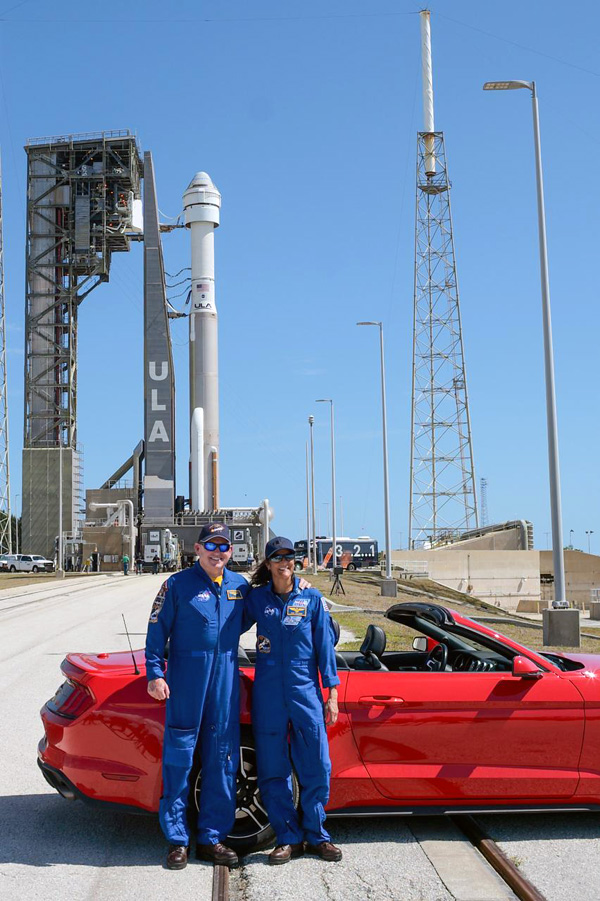
NASA astronauts and Crew Flight Test members Butch Wilmore and Suni Williams pose in front of the Atlas V rocket and their Starliner Calypso capsule at Cape Canaveral Space Force Station's SLC-41 pad in Florida...on May 4, 2024.
NASA / Joel Kowsky

NASA’s Boeing Crew Flight Test Rolls to Pad (News Release)

NASA’s Boeing Crew Flight Test mission to send two of the agency’s astronauts to the International Space Station is in the final stages of prelaunch operations.

Boeing’s Starliner spacecraft, stacked on a ULA (United Launch Alliance) Atlas V rocket, rolled from ULA’s Vertical Integration Facility to the launch pad at Space Launch Complex-41 at Cape Canaveral Space Force Station on May 4, in preparation for launch.

The 45th Weather Squadron predicts a 95% chance of favorable weather conditions for launch, with the cumulus cloud rule being the primary weather concern.

NASA astronauts Butch Wilmore and Suni Williams are the first to launch aboard Starliner to the International Space Station as part of the agency’s Commercial Crew Program. Liftoff is scheduled for 10:34 p.m. EDT on Monday, May 6.

The astronauts will spend about a week at the orbiting laboratory before returning to Earth and making a parachute and airbag-assisted landing in the southwestern United States.

After successful completion of the mission, NASA will begin the final process of certifying Starliner and its systems for crewed rotation missions to the space station. The Starliner capsule, with a diameter of 15 feet (4.56m) and the capability to steer automatically or manually, will carry four astronauts, or a mix of crew and cargo, for NASA missions to low-Earth orbit.

NASA will provide live coverage of the launch, beginning at 6:30 p.m. on May 6, on NASA+, NASA Television, the NASA app, YouTube and the agency’s website. Learn how to stream NASA TV through a variety of platforms including social media.

Source: NASA.Gov

****

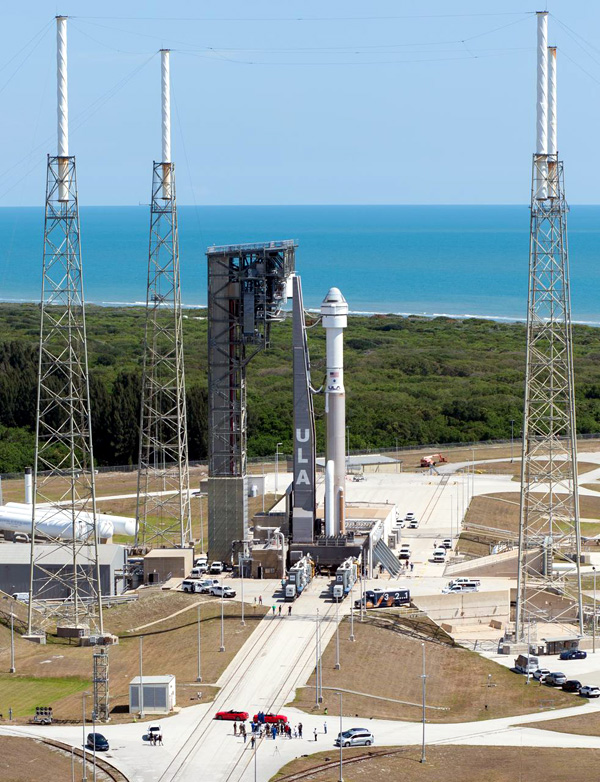
The Atlas V rocket carrying the Starliner Calypso capsule stands tall at Cape Canaveral Space Force Station's SLC-41 pad in Florida...on May 4, 2024.
NASA / Joel Kowsky

Friday, May 3, 2024

L-Minus 3 Days Before Calypso Embarks on Its First Crewed Flight to the ISS...

Inside the Vertical Integration Facility at Cape Canaveral Space Force Station's SLC-41 in Florida, Boeing's Starliner capsule (named 'Calypso') sits atop its Atlas V rocket as the two vehicles continued final preps for next Monday's Crew Flight Test to the International Space Station.
Boeing

NASA to Hold Prelaunch News Conference Following ULA Launch Readiness Review (News Release)

Plans to send two NASA astronauts aboard Boeing’s Starliner spacecraft on a United Launch Alliance (ULA) Atlas V rocket early next week remain on track.

ULA completed its Launch Readiness Review on May 3 and gave a “go” to proceed towards launch at 10:34 p.m. EDT on Monday, May 6, from Space Launch Complex-41 at Cape Canaveral Space Force Station in Florida.

Teams at ULA assessed the readiness of the rocket, discussed the pre-flight work, reviewed launch day operations, and previewed the early weather forecast.

NASA’s Boeing Crew Flight Test will launch NASA astronauts Butch Wilmore and Suni Williams on Starliner for about a week-long mission to the International Space Station, culminating with a parachute landing in the southwestern United States.

At 12:30 p.m., NASA will host its prelaunch news conference with the following participants:

- NASA Administrator Bill Nelson
- Steve Stich, manager, NASA’s Commercial Crew Program
- Dana Weigel, manager, NASA’s International Space Station Program
- Jennifer Buchli, chief scientist, NASA’s International Space Station Program
- Mark Nappi, vice president and program manager, Commercial Crew Program, Boeing
- Gary Wentz, vice president, Government and Commercial Programs, ULA
- Brian Cizek, launch weather officer, 45th Weather Squadron, Cape Canaveral Space Force Station

The prelaunch news conference airs live on NASA+, NASA Television, the NASA app, YouTube and the agency’s website. Learn how to stream NASA TV through a variety of platforms including social media.

Here is a list of other upcoming events leading up to the mission.

Source: NASA.Gov

****

Thursday, May 2, 2024

ISS Update: Endeavour Makes Way for Calypso's Arrival Next Week...

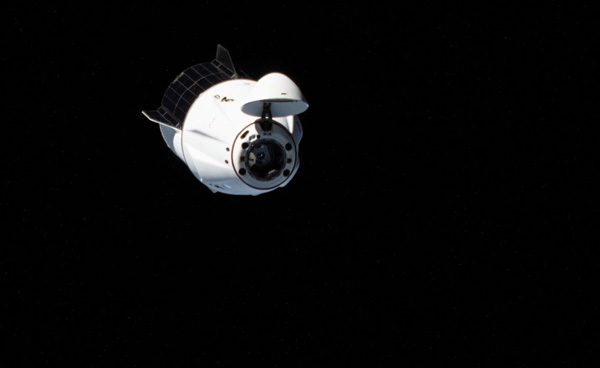
A snapshot of SpaceX's Crew Dragon Endeavour floating away from the International Space Station (off-screen) on May 2, 2024...to make way for the arrival of Boeing's Starliner capsule during next week's Crew Flight Test.
NASA

NASA’s SpaceX Crew-8 Makes Room for Boeing Starliner at Space Station (News Release)

NASA’s SpaceX Crew-8 crew members aboard the International Space Station relocated the Dragon spacecraft on May 2, to make room for Boeing Starliner’s upcoming visit.

NASA astronauts Michael Barratt, Matthew Dominick and Jeannette Epps, as well as Roscosmos cosmonaut Alexander Grebenkin, undocked the Dragon spacecraft, named Endeavour, from the forward-facing port of the station’s Harmony module to the zenith port, freeing up the forward port for Starliner to autonomously dock to during NASA’s Boeing Crew Flight Test.

Watch the NASA replay of the relocation activities here.

NASA astronauts Butch Wilmore, commander, and Suni Williams, pilot, will be the first to launch on Boeing’s Starliner on a United Launch Alliance (ULA) Atlas V rocket from Space Launch Complex-41 at Cape Canaveral Space Force Station in Florida. Liftoff is targeted for 10:34 p.m. EDT on Monday, May 6, and the crew is set to dock at the space station on Wednesday, May 8.

Source: NASA.Gov

****

Inside the Vertical Integration Facility at Cape Canaveral Space Force Station's SLC-41 in Florida, Boeing's Starliner capsule (named 'Calypso' by NASA astronaut and Crew Flight Test pilot Sunita Williams) is mated to United Launch Alliance's Atlas V rocket...on April 16, 2024.
United Launch Alliance